
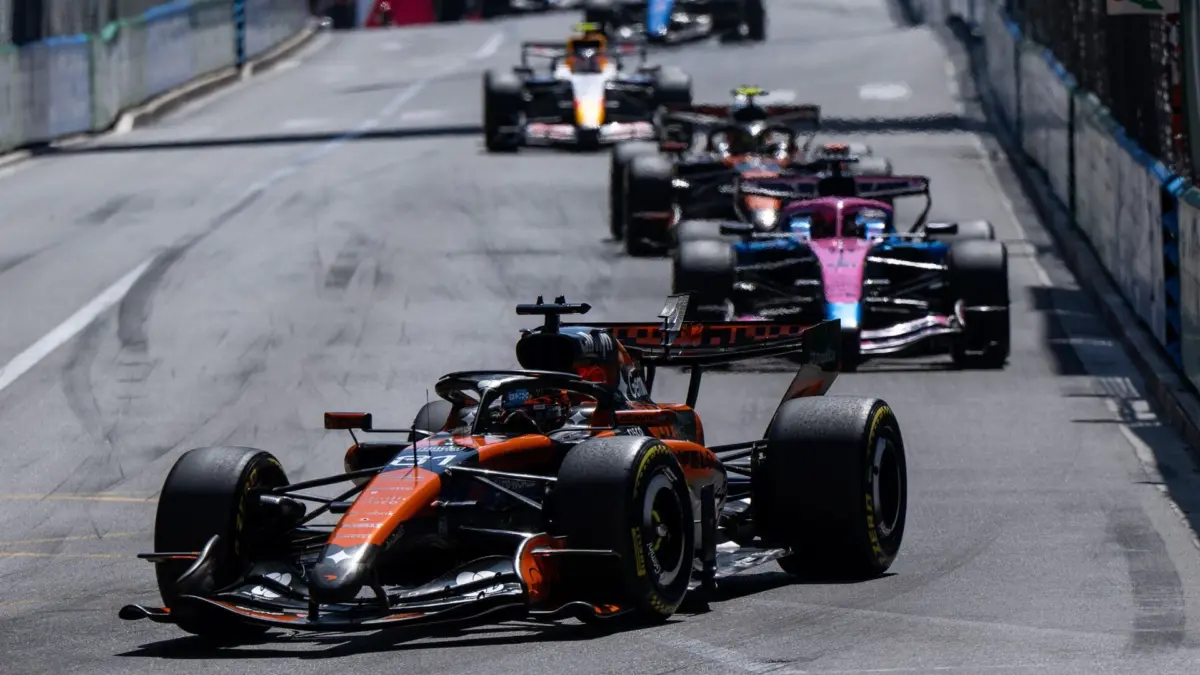
The debate was sparked following the release of the 2027 F1 calendar last week, which revealed a significant expansion in the number of Sprint events from the current six up to 10. Among the most notable changes is the inclusion of Monaco in the alternative weekend format, which features an additional qualifying session on Friday ahead of a 100km Sprint race on Saturday, shaking up the traditional schedule on the tightest and most historic street circuit on the calendar.
Formula 1 officials have defended the inclusion of Monaco by highlighting the unique prospect of two qualifying sessions, arguing it will provide drivers with an exceptional platform to demonstrate their world-class skill and precision within the unforgiving, narrow confines of Monte Carlo. However, the historic circuit has long been notorious for being one of the most difficult tracks in motorsport when it comes to overtaking, a reality that has frequently led to processional Grands Prix on Sunday afternoons.
Speaking ahead of this week’s race at the Azerbaijan Grand Prix, Ferrari driver Lewis Hamilton made his skepticism clear, admitting that the decision to bring a Sprint format to the Principality defies logic from a racing perspective.
"It makes no sense to me, but I’m not making the decisions obviously," Hamilton said. "On the positive, we get another qualifying session, which is quite cool. But I’ve always said that Monaco needs something different. I don’t think it should be the same race formula that’s everywhere else. It needs to be something different."
Hamilton acknowledged that while Sprint weekends have injected a fresh dynamic into other rounds on the calendar, applying that same formula to Monaco misses the mark. He praised the location as a stunning country and an incredible circuit to drive from behind the wheel, but pointed out that the actual Grand Prix can often be exceptionally dull due to the near-impossibility of overtaking.
"We’ve already included the Sprints, which I think have really brought something new to the sport. But I think we’ve got to come up with something new for somewhere like that because it’s a beautiful place, such a beautiful country, an incredible circuit to drive, but the race is as dull as it gets. I don’t know what that is, but a Sprint race is not the answer for it I would say," Hamilton added.
In stark contrast, Hamilton’s former Mercedes team-mate George Russell adopted a much more optimistic outlook when addressing the media during the FIA press conference in Baku, arguing that the shake-up is a welcome development for both drivers and fans.
"I personally think it’s good because we’ve had Sprints for quite a while, normal race weekends feel quite long-winded and we all want to fight," Russell stated. "As much fun as driving a Formula 1 car around the track is, the enjoyment comes from the competition and that adrenaline you get from a qualifying session."
While Russell conceded that Sunday’s Grand Prix around the winding streets of Monte Carlo may not suddenly transform into an overtaking thriller, he believes the broader weekend schedule will benefit immensely from the increased competitive stakes.
"Of course the race isn’t going to be the most exciting one, but that will be compensated by having a more exciting Friday. Sprint Qualifying is way more exciting than FP2, so I think on the whole it makes sense," Russell said.
The debate over the expansion of Sprint weekends has long been a talking point among the sport’s grid, with reigning world champion Max Verstappen having voiced vehement opposition in the past. Back in 2023, Verstappen famously warned that adding more Sprints to the calendar could prompt him to reconsider his future in the sport, suggesting he "won’t be around for too long" if the format continued to grow.
While the Red Bull driver has adopted a more diplomatic stance in recent seasons, confirming he has already communicated his personal views directly to F1 chief executive Stefano Domenicali, his fundamental indifference toward the Sprint format remains unchanged.
"Maybe Monaco wanted it [the Sprint], I don’t know. For me, I honestly don’t care where the Sprints are. I participate, and of course you try to do the best you can," Verstappen remarked. "I have no emotion attached to winning a Sprint race or not winning it. My focus is always from, when I was a kid, you look forward to the Grand Prix."
Cadillac driver Sergio Perez revealed a more lighthearted introduction to the news, explaining that he first found out about Monaco’s addition to the Sprint schedule through the official drivers’ WhatsApp group chat, which he noted became "a bit busy" as reactions poured in from across the grid. Perez suggested that shaking up the traditional weekend structure could ultimately benefit a venue where the competitive order has historically been heavily dictated by Saturday’s qualifying results.
"Monaco, I think you just make it a little bit more variable, to be honest. I think it was just a Saturday event in the last few years. Whatever happened on Saturday was basically done," Perez said. "I think right now it can mix things around a little bit more. I think it’s going to be an interesting weekend. I’m definitely looking forward to it."
Meanwhile, McLaren driver and reigning world champion Lando Norris suggested that the voices of the fanbase should carry greater weight when determining which circuits host the alternative weekend formats.
"If the fans have a better time then I’m happy," Norris said, before expressing mild reservations about the choice of venue. "I think they could have picked better races to do it. I think there’s some races that could have been picked that you could actually have an exciting Sprint race. But it’s not our decision to make."
The inclusion of Monaco forms part of a broader global calendar for the 2027 Formula 1 season, which maps out a demanding 24-race schedule spanning the globe from Bahrain in mid-March through to the season finale in Abu Dhabi in December. Alongside traditional mainstays like Great Britain, Belgium, and Italy, the expanded slate of 10 Sprint events reflects F1’s ongoing commercial and sporting push to maximize on-track entertainment throughout the championship year.
As the paddock prepares for the immediate challenges of the current campaign—including this weekend’s high-stakes action at the Baku City Circuit—the polarizing announcement regarding Monte Carlo ensures that discussions over the future direction of race formats and circuit suitability will remain a central theme among drivers, teams, and fans alike for the foreseeable future.