
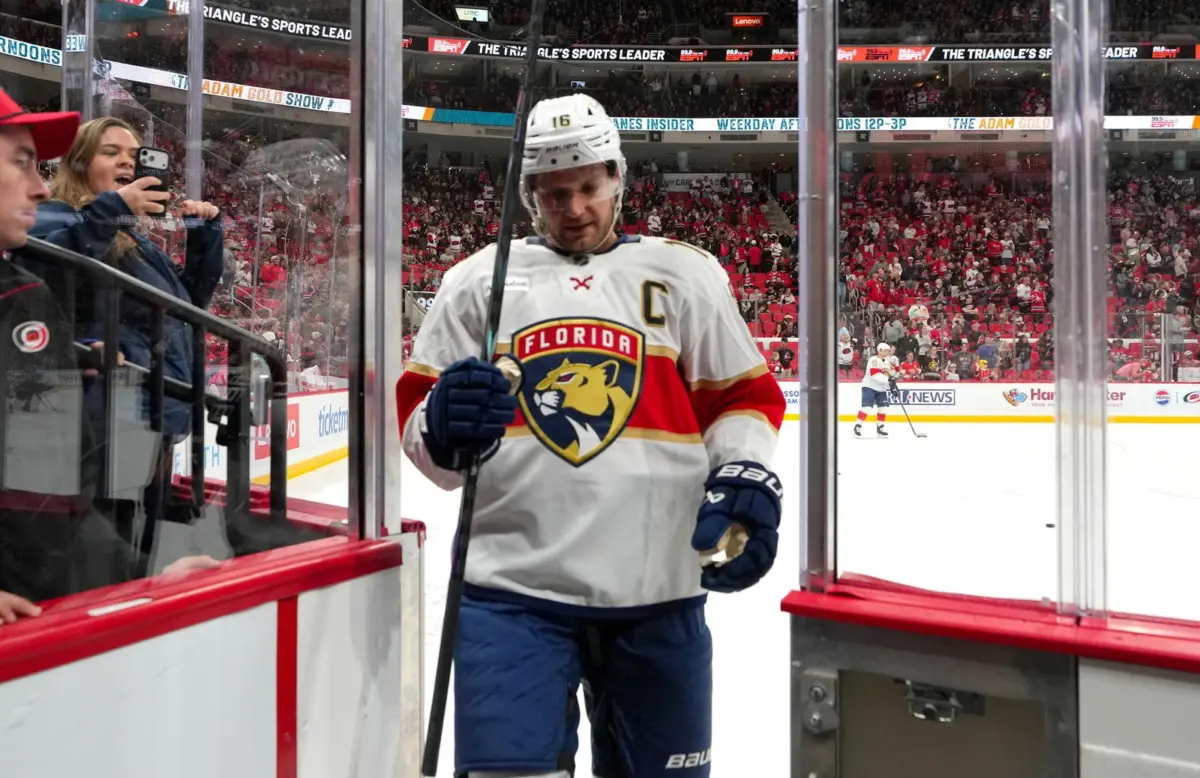
The Florida Panthers have earned their status as one of the National Hockey League’s most formidable and successful franchises over recent years, driven largely by a calculated organizational philosophy. General manager Bill Zito built a powerhouse through a heavy reliance on seasoned veteran players, a strategy that famously carried the franchise to back-to-back Stanley Cup appearances and a thrilling third straight trip to the championship round during the 2024-25 campaign.
Yet, betting heavily on experience is a classic double-edged sword in professional hockey. As the calendar shifts and the NHL moves deeper into the 2026-27 campaign—following a challenging 2025-26 season—the Panthers are witnessing the harsh downside of stocking a roster with high-mileage talent. Father Time is an undefeated opponent, and even the most meticulously constructed rosters eventually have to reckon with the physical toll exacted by deep playoff runs and grueling competitive schedules.
The Early-Season Blow: Barkov and Marchand Sidelined
The most pressing concern for the defending contenders involves the health of star center and team captain Aleksander Barkov alongside veteran left winger Brad Marchand. Both elite forwards have suffered significant early-season injuries, forcing Florida to navigate the opening weeks of the schedule without two of its most vital offensive and leadership pillars.
Fortunately, the Panthers have managed to dodge a catastrophic bullet. Neither Barkov nor Marchand is expected to miss the entirety of the campaign, avoiding a repeat of the devastating, long-term absence that Barkov endured the previous year. There is light at the end of the tunnel for the training staff and coaching staff alike, but that glimmer of hope does not erase the systemic risks inherent in building a roster that relies so heavily on veteran bodies.
A closer look at the league’s demographic data underscores the precarious nature of Zito’s roster construction. The Panthers stand as the second-oldest team in the entire NHL, boasting an average age of 30.58 years. Only the Los Angeles Kings carry a higher average age, sitting slightly older at 30.79 years. By surrounding their core with relative greybeards in an effort to power a major bounce-back season, the Panthers’ front office is unquestionably playing with fire.
Squeezing Production from the Depth Chart
The fragility of this veteran-reliant ecosystem has already been exposed during the opening weeks of the schedule. To illustrate the strain on the lineup, one need only look at 37-year-old center Lars Eller. While Eller is a respected professional with a wealth of postseason experience, the fact that he is currently tied for the second-most points on the team with a modest three points through the first four games points to a glaring offensive void. When a team must lean so heavily on depth pieces of that vintage to generate immediate offense in the absence of superstars, it reveals a worrying lack of insulation within the roster.
Of course, hockey purists are quick to point out that there is no absolute, direct correlation between a player’s chronological age and their immediate health status. Freak accidents happen, and competitive hockey is a violent, high-speed contact sport where bad luck with injuries can strike any franchise regardless of whether the dressing room is filled with twenty-somethings or battle-tested veterans.

Nevertheless, accumulated miles on competitive odometers take an undeniable toll on human tissue and joints. While nobody could have realistically predicted that Barkov and Marchand would specifically sustain major injuries right out of the gate this year, it should surprise precisely no one when an older roster encounters health roadblocks. Over the course of an 82-game schedule, statistical probability dictates that bad luck will eventually catch up with every NHL team. Going through an entire grueling campaign completely unscathed by major injuries is an extreme statistical anomaly.
Navigating the Gauntlet of the Atlantic Division
Consequently, Florida’s early-season misfortune threatens to become a critical mitigating factor in their pursuit of a high playoff seed. In today’s NHL, where league-wide parity ensures that the razor-thin margin between qualifying for the postseason and watching from home often comes down to a mere handful of points, losing key contributors for any notable stretch can prove fatal.
This reality is amplified within the fiercely competitive Atlantic Division, where divisional rivals leave zero room for error. A sluggish start can quickly snowball into an insurmountable deficit by the time spring rolls around.
The Panthers currently sit with a modest 2-1-2 record. While a .500-plus points percentage means things could certainly have been worse out of the gate, it also highlights an underwhelming trajectory for a club accustomed to dominating the standings. The longer their high-impact veterans are forced to watch from the press box rather than driving play on the ice, the more apparent it becomes that Florida faces an uphill battle to secure a playoff berth.
Looking Ahead and Managing the Risk
The immediate priority for the organization is clear: the sooner Barkov and Marchand can safely return to the lineup, the better the outlook for the franchise. However, a clean bill of health for those two stars offers no absolute guarantee that the injury bug will spare the remainder of the roster for the rest of the year.
The unpredictable nature of professional sports means that the next Panthers player to suffer a major injury could leave a gaping hole in the lineup—one that even an astute general manager like Bill Zito might struggle to adequately fill with external acquisitions or internal call-ups. As the season progresses, Florida’s championship pedigree will be tested not just by their opponents on the ice, but by their own physical resilience against the unrelenting grind of time.