
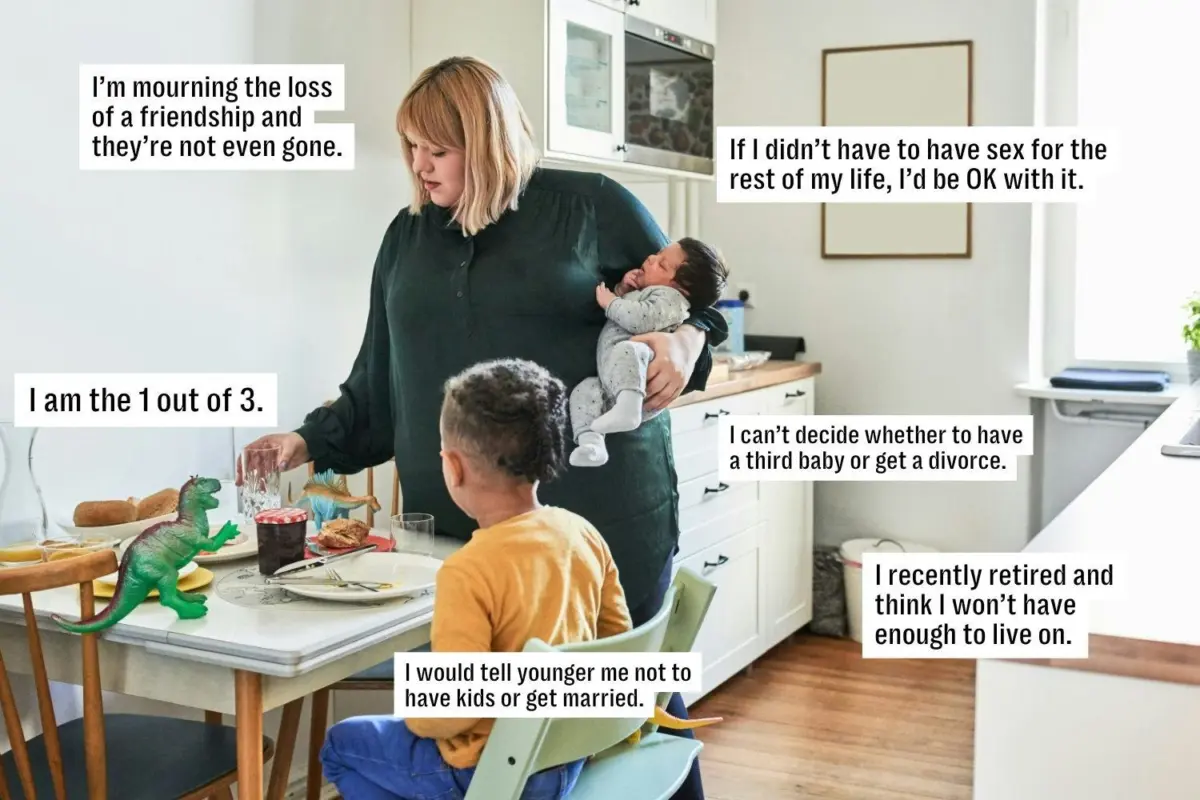
Every week, the anonymous confessions submitted to online parenting communities arrive as a diverse, unpredictable grab bag of human experience. They capture the miniature triumphs and chronic relationship woes of modern life, the relentless, often invisible struggles of contemporary parenting, and the complex friction of dealing with extended family and in-laws. This week is no exception, true to form in its chaotic variety. However, to look at the latest batch of dispatches and ignore the dominant undercurrent would be a disservice to the thousands of women pouring their hearts out. That undercurrent is fear.
A profound sense of anxiety has courged through the latest submissions, driven largely by broader cultural conversations surrounding recent headlines. Numerous mothers wrote in about the widely discussed Cornell 7 case, with some confessing that the details triggered painful, long-suppressed memories of their own traumatic pasts. Beyond personal triggers, a striking number of contributors expressed deep alarm over the apparent complicity of the other boys involved in the group text at the center of the story. These mothers voiced valid, heavy concerns about what such behavior reveals regarding the current state of raising young boys, and by extension, what it signals for the safety and future of their daughters.
Consequently, this week’s collection carries a dense weight of fear, accompanied by a simmering, palpable anger. Many contributors noted that anger is an entirely appropriate and justified response to being told, yet again, that this systemic dysfunction is simply how the world works, how things are.
Yet, as the platform’s ongoing ethos demonstrates, women contain multitudes. Even while buckling under the heaviness of alarming national headlines, mothers are simultaneously juggling the mundane, everyday friction of domestic life. They are feeling profoundly annoyed by their husbands’ dramatic man-colds, celebrating hard-won health milestones, and privately wishing that someone—anyone—other than them would make the unilateral executive decision about what is for dinner just for one damn night. As these platforms repeatedly remind their communities, experiencing these conflicting emotions simultaneously does not make a person "too much" or overly dramatic. It simply means they are paying close attention to the world around them, and that they have found a vital space to pour it all out.
The resulting haul of anonymous dispatches paints a vivid, unvarnished portrait of the psychological landscape of modern motherhood. The spectrum of these shared thoughts ranges from marital disillusionment to existential dread about the future. One participant confessed simply that her husband was annoying her to an extreme degree, while another admitted to mourning the loss of a friendship with someone who is still very much alive.
The weight of the current social and political climate is a recurring theme. One mother shared that she hates raising her daughter in this specific timeline, expressing profound fear for her future, a sentiment echoed by another who noted that she lives in a very scary world where all she is trying to do is survive alongside her boys. The Cornell case specifically prompted raw grief and terror, with one contributor writing that the story has left her terrified to send her girls out into a world that she perceives as fundamentally hostile to women. Another contributor captured a similar fury and desperation, noting that she is ready to start engaging in vigilante behavior if men do not step up and show up for women.
For many women, the structural pressures of marriage and family have pushed them to the brink of profound questioning. Multiple respondents admitted to grappling with thoughts of divorce, hindered by logistical realities, financial sacrifices made to raise babies at the start of relationships, or a debilitating lack of self-confidence. One contributor confessed to wanting a divorce but feeling trapped because she sacrificed everything in the early years, while another bluntly stated that she wishes she had gotten divorced years ago and feels entirely trapped in her current reality. Others questioned their long-term compatibility with their partners, asking aloud who would even want them if they left, or admitting starkly that they simply hate their husbands. Several respondents confessed to feeling more like roommates and babysitters than wives, noting that sex has deteriorated since having children or that they would be entirely content if they never had to have sex again for the rest of their lives.
The dispatches also expose complex psychological and emotional struggles, from severe mental health hurdles to professional burnout. One contributor revealed she is finally admitting to her doctor that her crippling anxiety at age 47 has forced her to ask for help, while another confessed to realizing the severity of her obsessive-compulsive disorder because she cannot function with an unorganized house. Health scares also surfaced, including a mother who suffered a seizure over the weekend and now lives in fear that she has developed epilepsy, and another who is contemplating taking a GLP-1 medication for weight loss but worries about the prospect of needing it forever. Professional anxiety looms large as well, with women reporting impending job cuts by top administration that make them feel physically ill, long-term careers spanning over two decades that they have grown to hate, and the persistent guilt of feeling inadequate as both employees and mothers in a society that makes it exceptionally difficult to balance both roles.
Intergenerational trauma and family dynamics add further strain to the mix. Mothers confessed to the crushing weight of parenting a neurodivergent child when institutional experts offer no answers, the exhaustion of raising a four-year-old with an absent co-parent, and the deep-seated guilt of not wanting a second child when a partner desperately does. Others navigated complicated feelings toward extended family, such as loving a mother-in-law while simultaneously feeling immense relief when a two-week visit finally concludes, or dealing with a mother-in-law who treats her grandchildren like second-class citizens.
Amidst the heavy confessions of past sexual assault resurfacing decades later, complex clandestine affairs, and the agonizing uncertainty of whether to have a third child or dissolve a marriage, these anonymous dispatches serve as a crucial pressure valve. They reflect a demographic of women caught at the intersection of private domestic labor and public-facing societal dread, seeking solace, validation, and community in the shared acknowledgment that they are not alone in their burdens.