
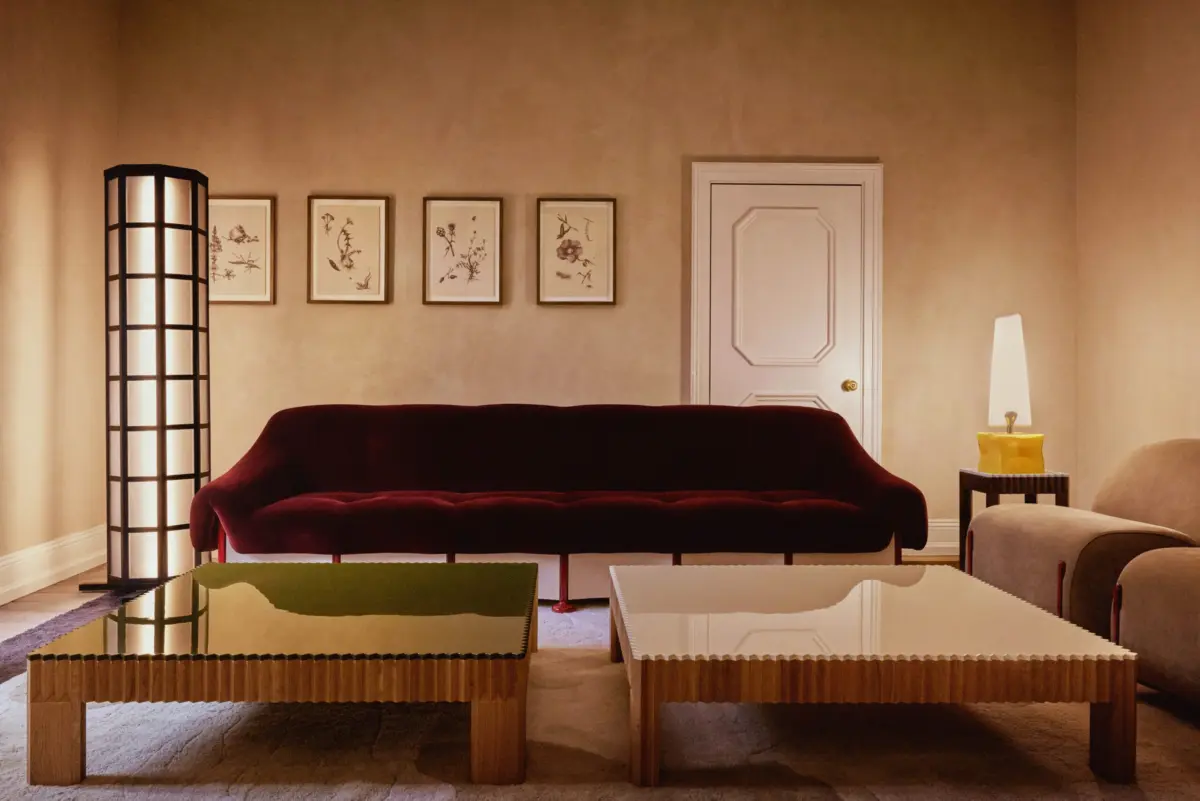
For nearly a decade, visionary filmmaker Luca Guadagnino and accomplished architect Stefano Baisi have been quietly and deliberately constructing alternative worlds together. Ever since Guadagnino tapped Baisi in 2017 to take the helm of his interior architecture studio, Studio Luca Guadagnino, the creative duo has consistently pushed the boundaries of spatial design. Their collaborative footprint spans diverse mediums and cultural touchpoints, ranging from bringing a replica of the Louvre’s iconic glass pyramid to a high-profile Dior catwalk in the historic Jardin des Tuileries, to crafting a dreamy, surrealist, mid-century iteration of 1950s-era Mexico City for Guadagnino’s acclaimed 2024 feature film Queer. They have even transformed a centuries-old 16th-century school building into an opulent luxury boutique hotel, cementing a reputation for cinematic environments that feel simultaneously rooted in history and entirely otherworldly.
Now, the celebrated pair is translating their distinct architectural and cinematic language into a much broader commercial sphere. Their newest and perhaps most accessible collaboration is an expansive, highly anticipated collection for Zara Home. Comprising more than 200 distinct pieces of furniture and home decor, alongside a curated ready-to-wear clothing line, the collection represents a major milestone for Studio Luca Guadagnino, making their signature aesthetic available to a global consumer base for the very first time.

Reflecting on the development of the sprawling collection, Guadagnino explains that the creative process began in a remarkably organic, tactile manner. The duo started by literally laying out their vast and eclectic array of inspirations across a table. These references included digital images saved on their phones, historical works of art, influential artists, and foundational intellectuals who have shaped their collective worldview. From these initial touchstones, a deeper phase of research took shape, gradually guiding the creators and instilling a profound sense of stylistic coherence across the entire project.
While eagle-eyed design enthusiasts will undoubtedly spot subtle visual nods to French Art Deco, the organic curves and warmth of Brazilian modernism, and the provocative forms of Italian radical design, Guadagnino and Baisi note that they were particularly drawn to the precise, geometric, and decorative innovations of the Vienna Secession movement. Among the myriad historical artifacts and images reviewed during their research, a small, exquisite silver and coral box from this period, originally designed by the visionary Austrian artist and architect Koloman Moser, exerted a particularly powerful influence on the development of the collection’s overall aesthetic direction.

The resulting product line is a true meeting of the minds between the film director and the architect, bridging cinematic narrative with functional domestic objects. Baisi emphasizes that through years of working side-by-side on complex sets, retail spaces, and hospitality projects, they discovered a shared stylistic code—one that remains deeply respectful of historical traditions while continuously striving to forge its own distinct contemporary identity.
This vision manifests across the Zara Home catalog as a collection defined by sharp angles, rigid lines, and a polished, almost tailored precision. The objects are structured and firm, reminiscent of impeccable haute couture tailoring, leading Guadagnino to describe the entire lineup as a constellation of objects, rooms, and parallel worlds. Sleek stainless steel chairs and white oak coffee tables featuring high-gloss lacquered tops exude a cool, contemporary sophistication. Meanwhile, lighting fixtures like the Elsewhere table lamp—featuring a thin, arching steel neck and a sharp triangular shade—evoke a striking, space-age minimalism.

Even the upholstered furniture pieces carry a commanding physical presence and exceptional posture. The scallop-backed Bretonita sofa, upholstered in a rich hunter-green flannel and accented with contrasting burgundy cord piping, cuts a stately and sturdy figure in any room. Positioned nearby in the conceptual layout, the Uncollected sofa sits notably lower and longer, grounded by a sycamore wood base and topped with a dramatic black velvet cushion. Elsewhere in the collection, items like the Qubit stool in crisp white offer understated elegance against contrasting backdrops like a green-clad kitchen, while the Sound chandelier towers over an octagonal dining table surrounded by ten classic Purkersdorf chairs, further channeling the austere elegance of Vienna Secessionism down to the smallest detail, including octagonal dinnerware.
For Baisi, the most exciting aspect of the partnership is the democratization of their design ethos. He notes that the same object can now cross the threshold into vastly different homes, integrating into completely separate, everyday lives. In this sense, the collection exists simultaneously across a multitude of parallel worlds, bridging high-concept interior architecture with the daily domestic routines of people around the world.

To celebrate the global launch of the collection, Guadagnino directed a high-profile short film written by acclaimed screenwriter Scott Z. Burns. The cinematic project stars an ensemble cast featuring Jamie Bell, Chase Sui Wonders, Michael Stuhlbarg, and Patricia Arquette, naturally featuring comprehensive set design crafted by Baisi. In addition to the short film and digital campaign, the collection will be physically unveiled to the public through a two-day pop-up exhibition held at La Pelota in Milan, coinciding directly with Milan Fashion Week.
The extensive Zara Home collection features items ranging in price from $16.90 for smaller decor pieces to $18,400 for larger statement furniture, and officially becomes available to shoppers online at the brand’s official e-commerce platform.