
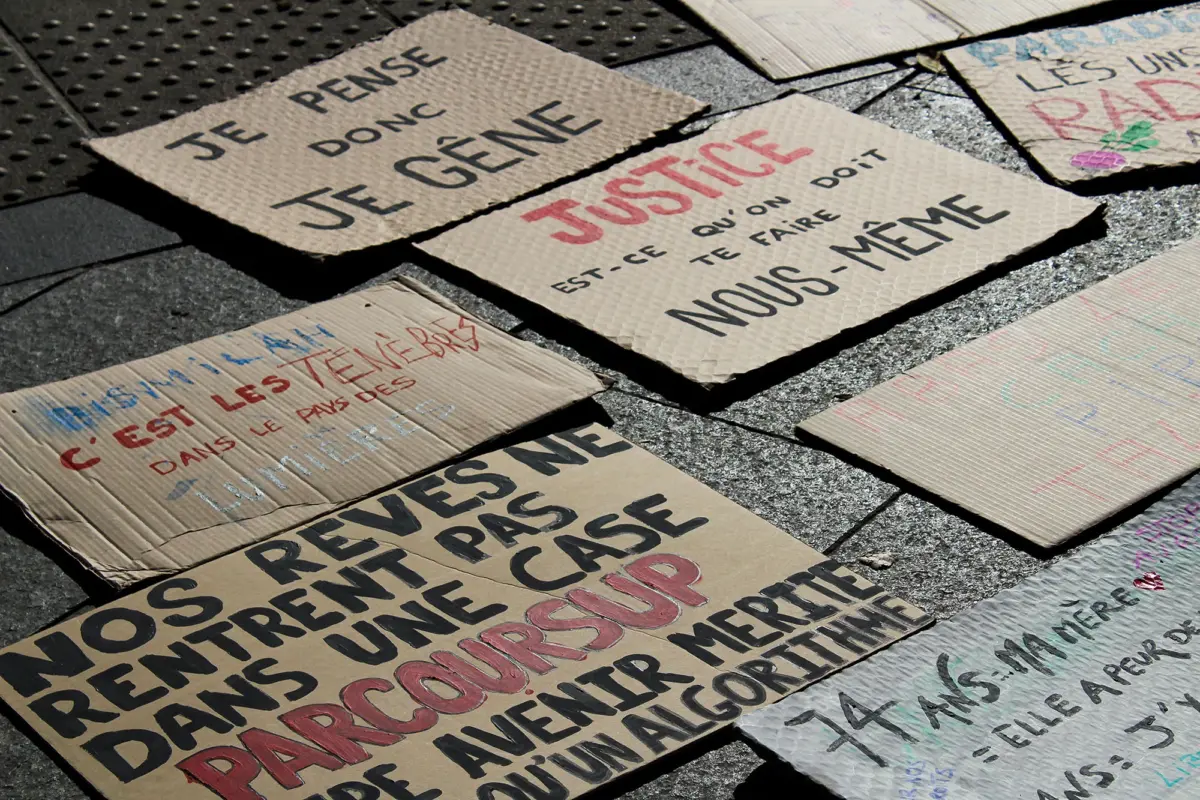
PARIS — A sign reading “Halloween dressed as an angry citizen,” a decapitated effigy of Marie Antoinette, and Marianne, the allegorical figure of France, waving the national tricolor while a jazz band played Bella Ciao, the famous Italian protest song. These striking and historically charged images were on display on a Saturday in Paris, capturing the eclectic, defiant spirit of a nationwide movement that has steadily swept across the country.
As France entered its third consecutive weekend of widespread national mobilization, between 320,000 and 500,000 people rallied across the nation on October 31 to protest the soaring cost of living and a mounting national debt that citizens fear will dismantle the country’s cherished social safety net. The unrest represents a significant escalation in domestic political pressure, bringing together a broad coalition of labor organizations, political factions, and students following five weeks of rolling demonstrations that originally began in high schools across the Paris suburbs. Those initial school-based walkouts focused on demands for increased public education funding, mounting teacher shortages, and the rapidly deteriorating physical condition of educational facilities.
For many participating citizens, the demonstrations offer a vital platform to voice deep-seated economic anxieties that they feel have been ignored by the administration of President Emmanuel Macron.
“I am here to continue the fight, to support the people who are fighting for their rights and their demands of a government that is not listening to us,” Robin Pimond, a 26-year-old data scientist, told journalists. “We believe we deserve to be heard by the government and we are here to show we are still here.”
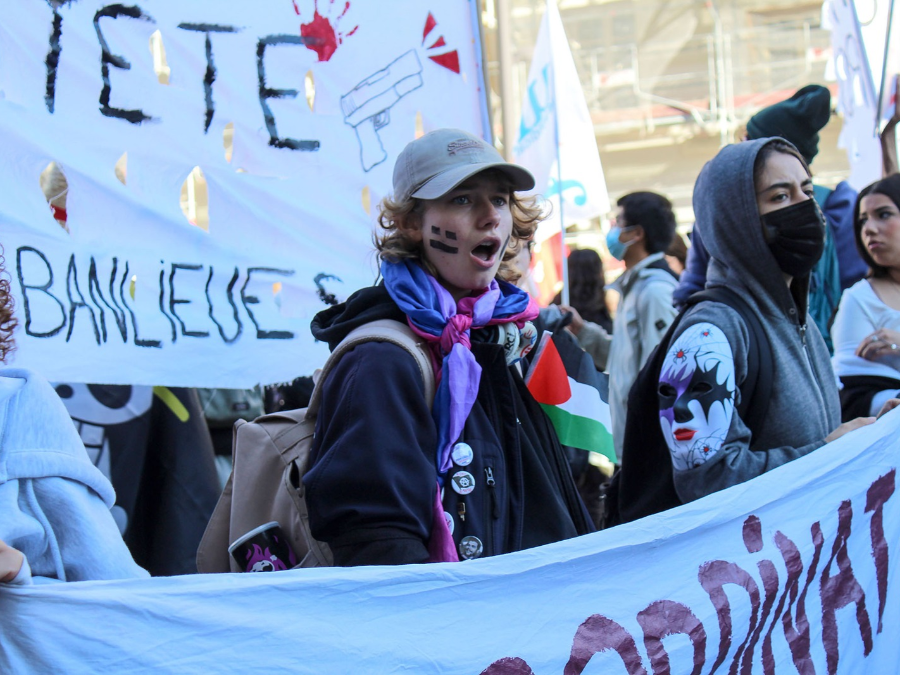
Reflecting strategic shifts in crowd management and protest organization, the Paris march on October 31 stayed largely on the outskirts of the city, deliberately steering clear of affluent neighborhoods and traditional seats of power. Organizers also bypassed the symbolic Place de la Bastille, the historic gathering place deeply tied to France’s long tradition of revolutionary movements, choosing instead to march through peripheral districts.
The decision to decentralize protest routes follows intense clashes and widespread riots that engulfed various French cities on October 17, leaving an initially unprepared police force overwhelmed. In response to the mid-October turmoil, the French government significantly ramped up security operations, deploying 70,000 law enforcement officers nationwide on October 24 and October 31. Authorities in several major urban centers, including Lyon and Marseille, took the drastic step of banning demonstrations altogether ahead of the weekend.
Labor leaders have warned that the government’s heavy-handed response risks pouring fuel on an already volatile situation.
“It has become a crucial moment and at the end of this day, [the government] will wait to see if this is a movement that will continue to grow or if, once again, the repression, the unresponsiveness, the disregard will have the upper hand,” said Karl Ghazi, co-secretary general of the Paris branch of the Confédération générale du travail (CGT), one of France’s largest and most influential labor federations.
The widespread national unrest is rooted in deeper, compounding economic pressures and mounting public discontent directed squarely at President Emmanuel Macron. Since Macron first assumed office in 2017, annual inflation has climbed significantly, reaching an estimated 3.4 percent by October 2026, a sharp contrast to the comparatively mild 1.1 percent inflation rate recorded when he took power. For millions of working-class and middle-class households, this prolonged economic squeeze has severely eroded purchasing power, creating a tinderbox of public frustration.
Léna Guerrier, spokesperson for L’Union Étudiante, a major French student union, highlighted the widespread nature of the grievances during an interview late last month.
“It’s really a frustration that has exploded everywhere in France,” Guerrier said. “Macron and his government are afraid of the demands that emerged from both the youth and the rest of the population because they are trying to silence the movement in every possible way and to systematically send us a repressive response toward legitimate demands.”
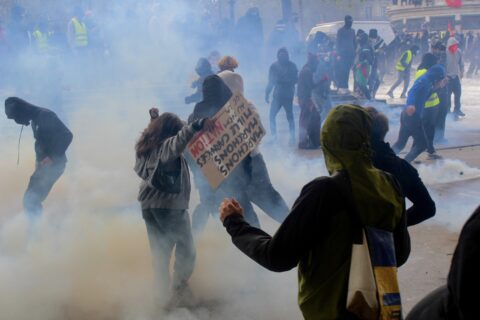
While organizers maintain that the vast majority of the demonstrations have been peaceful—with individual days of action drawing up to 800,000 participants nationwide—media coverage has been heavily dominated by dramatic scenes of rioting, alleged looting, and fires set to public property. To disperse crowds and maintain order, police have deployed aggressive tactical measures, including tear gas, stun grenades, rubber bullets, and water cannons. Hundreds of demonstrators and bystanders have reportedly sustained injuries since the movement erupted weeks ago, with some individuals suffering severe, life-changing trauma.
The tactics utilized by law enforcement have triggered intense national scrutiny and widespread public debate. According to recent reports, more than 4,000 people have been arrested across the country since the unrest escalated on October 17.
Following the severe violence that marred the mid-October demonstrations, French Prime Minister Sébastien Lecornu publicly threw his full support behind law enforcement personnel. At the same time, Lecornu laid direct blame for the escalating violence on far-left political groups, specifically pointing fingers at the opposition political party La France Insoumise for allegedly encouraging and condoning aggressive tactics.
“To those who clearly want to make these acts of violence ‘a warm-up lap’ ahead of the presidential elections, I will say it clearly: we will not be intimidated. No one will impose their political agenda with violence,” Lecornu wrote in a public statement shared on social media.
In an apparent bid to de-escalate tensions and directly address the grievances driving the protests, President Macron and Prime Minister Lecornu held closed-door meetings with student representatives in late October. However, the olive branch failed to win over protest leaders, who promptly dismissed the administration’s proposed policy concessions as mere “crumbs.”
With the government’s initial offerings rejected, labor unions and student organizers have already laid the groundwork for further escalation, scheduling additional nationwide strikes and protest actions for November 3 and November 5.