
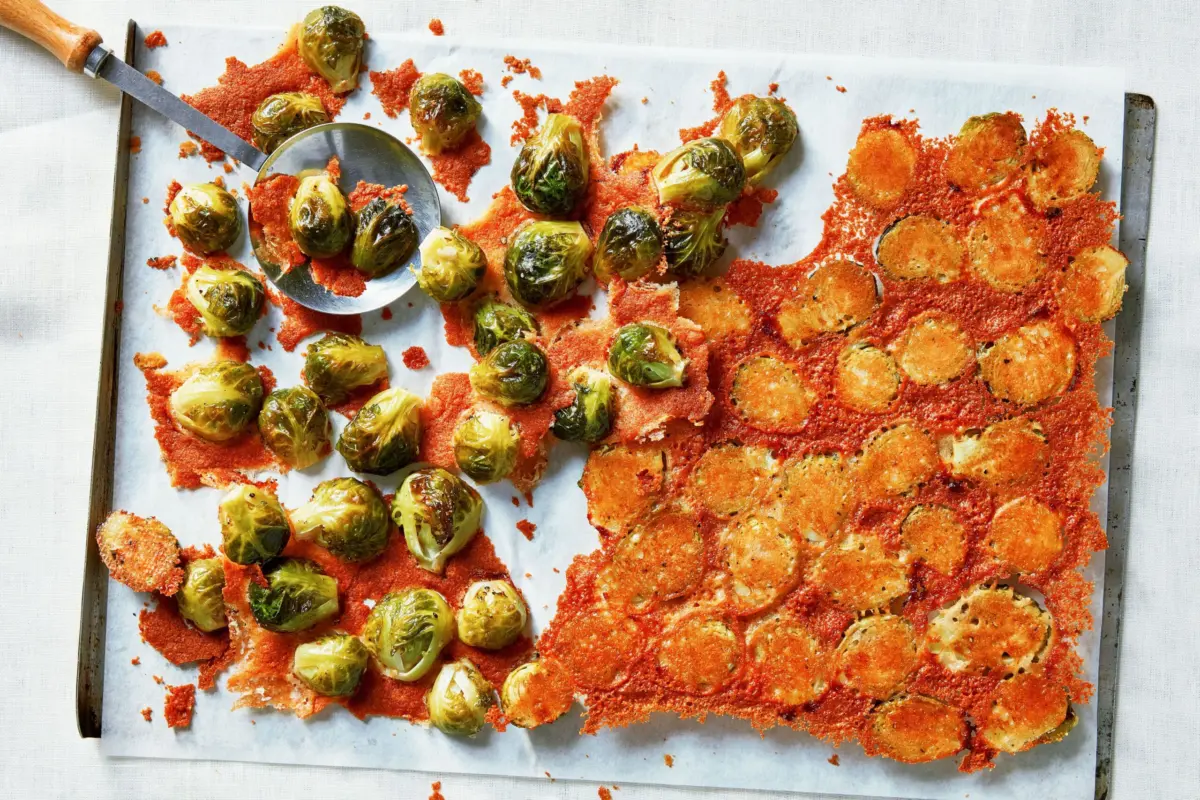
This particular culinary approach relies on a straightforward yet remarkably effective transformation. When Brussels sprouts are roasted while snuggled securely into a blanket of grated Parmesan cheese, something magical happens within the heat of the oven. The cheese melts down, spreads, and bakes into a deeply savory, crispy, frico-like sheet. This golden layer firmly clings onto the individual sprouts, ultimately surrounding them in a delicate, lace-like halo that redefines how the vegetable looks and tastes on the plate.
It is undeniably a dramatic side dish, but one that manages to make a serious statement without demanding complicated preparation or an intimidating array of specialty ingredients. Part of the appeal lies in the tactile, interactive nature of the dish. When roasted correctly, and if the culinary stars align favorably in the kitchen, the cook can unpeel the entire sheet of golden, crispy cheese off the baking pan in one swift swoop. Presenting it intact reveals a genuine culinary masterpiece, offering a delightful experience for anyone who appreciates a touch of playfulness alongside serious flavor. For fans of culinary fun, this method represents the absolute intersection of ease and excitement.
The concept finds its natural home within the broader culinary philosophy championed by ongoing food features that celebrate effortless cooking. Series dedicated to simplicity focus on recipes so fundamentally easy that home cooks could theoretically execute them with their eyes closed. The hallmarks of this approach include remarkably concise ingredient lists, laid-back techniques that demand zero stress, and final results that taste so profoundly delicious that diners feel compelled to text home about them immediately.
At its core, the appeal of adding a crispy cheese skirt to Brussels sprouts speaks to a wider movement in contemporary home cooking. Green vegetables, particularly those belonging to the brassica family, have long suffered from bad reputations earned during decades of overcooking, steaming into sulfurous oblivion, or simply being served uninspired and plain. Modern culinary culture has thankfully rescued the Brussels sprout through high-heat roasting, which caramelizes the natural sugars, chars the outer leaves to a nutty crispness, and tames any bitter undertones.
Adding the grated Parmesan element takes this established technique and elevates it by introducing dairy fats and proteins that undergo the Maillard reaction alongside the vegetable. As the cheese hits the hot surface of the pan, the moisture evaporates, leaving behind a lacy, golden web of lipids and toasted milk solids. This creates an irresistible contrast between the tender, steam-cooked interior of the sprout, its charred exterior leaves, and the shattering crunch of the surrounding cheese wafer.
Despite the impressive visual presentation and the sophisticated flavor profile achieved through the combination of nutty cheese and earthy brassicas, the barrier to entry remains remarkably low. There are no elaborate stocks to reduce, no complex emulsions to maintain, and no specialized kitchen gadgets required. The magic relies entirely on the interaction of raw ingredients, sustained heat, and timing.
For home cooks navigating busy weeknights or searching for a side dish that can effortlessly steal the spotlight from the main course, this technique offers a reliable path forward. It proves that culinary excellence does not require endless hours of labor or an exhaustive grocery list. Sometimes, all it takes to reinvent a classic is a blanket of grated cheese, a hot oven, and a willingness to embrace a little bit of fun in the kitchen.