
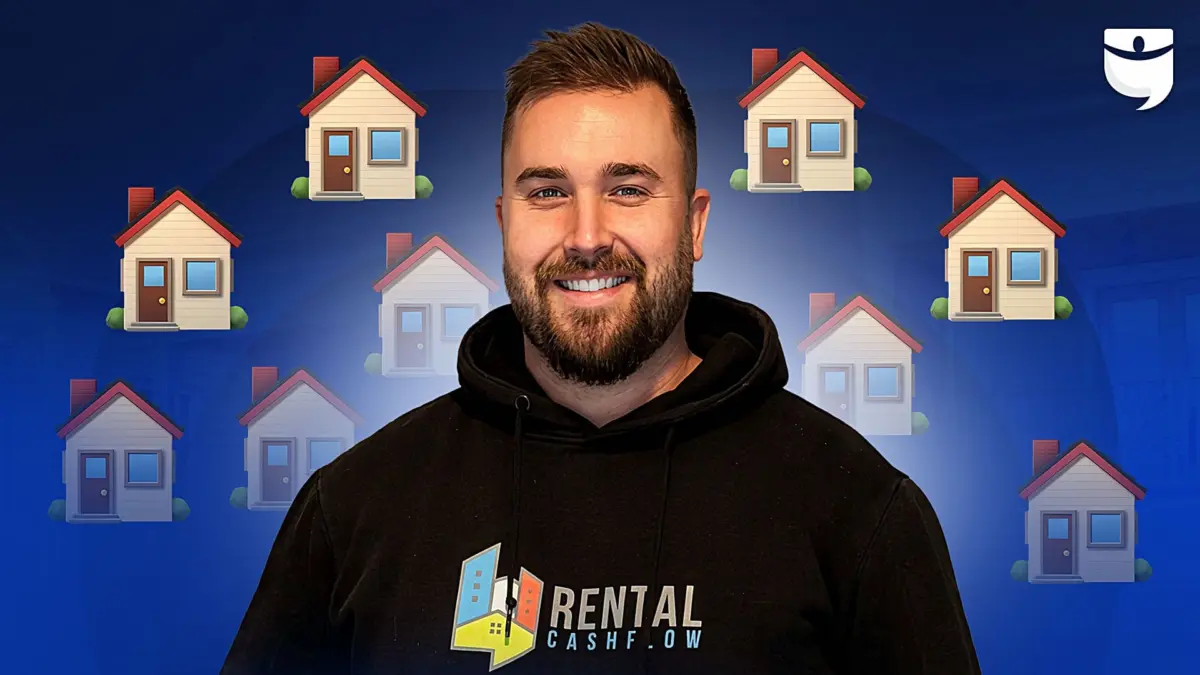
Before diving headfirst into the world of real estate investing, Matt Krueger was making a modest $35,000 a year working in cellular retail sales at a Sprint store in Des Moines, Iowa. Newly married in 2014 and facing the impending arrival of their first child, Krueger and his wife, Mariah, were barely getting by. With a strong desire for Mariah to be a stay-at-home mother, Krueger quickly realized that his entry-level salary would not sustain their growing family. Seeking a way to drastically increase his income and reclaim his time, he turned to the strategy his in-laws had successfully used for years: real estate investing.
There was just one significant obstacle standing in their way. Krueger had virtually no money saved up, and with a baby on the way, the margin for error was razor-thin. Inspired by the financial independence his in-laws had achieved through property ownership—retiring early and spending winters in Tucson, Arizona—Krueger began listening to the BiggerPockets podcast during his daily commute. It was there that he encountered the concept of house hacking, specifically tailored to single-family homes rather than traditional multi-family complexes. Instead of putting down the standard 20 percent, he learned he could purchase a home with a much smaller down payment by utilizing first-time homebuyer programs, move in, fix it up over time, and eventually rent it out.
Determined to make it work, Krueger scraped together every penny he could find. He secured a $1,000 first-time homebuyer grant through a local promotion with the Iowa Wild hockey team, even participating in a promotional event on the ice. Combined with other assistance, he successfully found an affordable property priced at $90,000—a classic, outdated "grandma’s house" featuring orange shag carpet, wood-paneled walls, and even carpeted kitchen floors. Krueger offered $92,000 with the seller covering $2,000 in closing costs, allowing him to walk away from the closing table having brought just $2,500 out of pocket.
Financing the purchase in 2015 was only the first step. Moving into the property meant living directly inside a construction zone, a challenge that tested both Krueger and his wife. The couple opted to handle every aspect of the renovation themselves to keep costs to an absolute minimum. They ripped up the old carpeting, painted the dated wood-paneled walls, and purchased budget-friendly materials from local hardware stores and the Habitat for Humanity ReStore. Over the course of a year, they poured roughly $5,000 into the property while living there, satisfying the owner-occupant loan requirements before moving out.
Once they rented out the property, the financial transformation became immediately apparent. With a monthly principal, interest, taxes, and insurance payment of approximately $620, Krueger rented the home out for $1,200 a month, generating nearly $600 in monthly cash flow. Roughly a year and a half later, they sold the house for $135,000, netting a profit of about $30,000—nearly matching Krueger’s entire annual W-2 salary at the time.
Encouraged by their early success, the couple decided to replicate the process. Over the span of four years, Krueger and his wife repeated the live-in fixer-upper strategy four times, purchasing low-priced properties requiring cosmetic updates, utilizing low-down-payment loans, and slowly building a portfolio of rental properties while expanding their family.
Managing the constant relocations alongside a growing family was undeniably difficult, putting an emotional strain on the household that Krueger openly acknowledges was not for the faint of heart. Yet, working as a team proved essential. While Krueger brought the high-energy drive to take immediate action, his wife Mariah provided the steady analytical grounding and relentless work ethic—often installing tile backsplashes with a baby strapped to her back—that kept the venture moving forward.
Eventually, the family decided to put down permanent roots. They purchased an acreage property that offered the location and land they desired, signaling an end to their constant moving cycle. Rather than acquiring more properties immediately, they spent the next two and a half years plowing the cash flow from their existing rentals directly into renovating their permanent home. This strategy substantially built their home equity, allowing them to qualify for a $160,000 Home Equity Line of Credit (HELOC). Having bought their permanent residence for $180,000, the property’s value climbed significantly over the years, giving them a powerful financial tool to fund future investments.
With access to capital through the HELOC, Krueger expanded his investment strategy into short-term rentals, capitalizing on the booming popularity of platforms like Airbnb. Eager to maintain a hands-on approach initially, he purchased his first local short-term rental in Des Moines for $160,000 in 2021. Applying the same budget-conscious renovation methods—sourcing materials from thrift stores and the ReStore—he spent roughly $25,000 on renovations and furnishings. The property quickly proved to be a lucrative venture, generating $57,000 in bookings during its first year alone.
The proven success of his short-term rental model gave Krueger the confidence to make a life-altering career move. Following the purchase and rapid renovation of a second short-term rental property, and having acquired a few additional multi-family properties including a duplex and a fourplex along the way, Krueger officially walked out of a closing office and called his boss to quit his W-2 job. At that point, the passive income generated by his growing portfolio had successfully surpassed his annual salary.
Krueger’s approach to short-term rentals focused largely on non-vacation markets, a niche he terms "accommodation locations." By investing in areas driven by weddings, family reunions, funerals, and business travel rather than pure vacation tourism, his properties experienced consistent demand year-round, insulating his business from typical seasonal downturns. Strategic amenities like hot tubs, game rooms, and fire pits allowed his properties to stand out against local competition.
Alongside his real estate ventures, Krueger began documenting his journey on social media platforms like TikTok, Instagram, and YouTube. Initially launched with the sole intention of educating ordinary workers trapped in lower-paying jobs about the viability of real estate investing, his online presence grew rapidly. By sharing the unfiltered realities of building a portfolio from scratch without massive upfront capital, Krueger attracted a substantial following. Over time, his online presence evolved beyond education into brand partnerships with property management and insurance software companies, allowing him to monetize his content while continuing to speak at industry conferences and share his playbook with aspiring investors.
Today, Krueger manages a diversified portfolio comprising 12 rental units, including single-family long-term rentals, short-term rentals, and a multi-family fourplex. While he continues to evaluate new investment opportunities, such as expanding into the self-storage sector, his primary focus remains anchored on maintaining a balanced leverage strategy and spending quality time with his family.