
For many aspiring real estate investors, running the initial numbers on a prospective property and seeing negative cash flow can feel like a dead end. Faced with high interest rates, conservative expense assumptions, and competitive local markets where the traditional rules of thumb seem completely out of reach, beginners often assume that real estate investing is simply out of their financial reach. However, as hosts Ashley Kehr and Tony J. Robinson explore in a recent episode of the Real Estate Rookie Podcast, the path to financial independence rarely follows a straight line. Sometimes, turning a deal that initially looks impossible into a profitable venture requires creative strategies, a willingness to look beyond conventional financing, and the courage to ask the right questions.
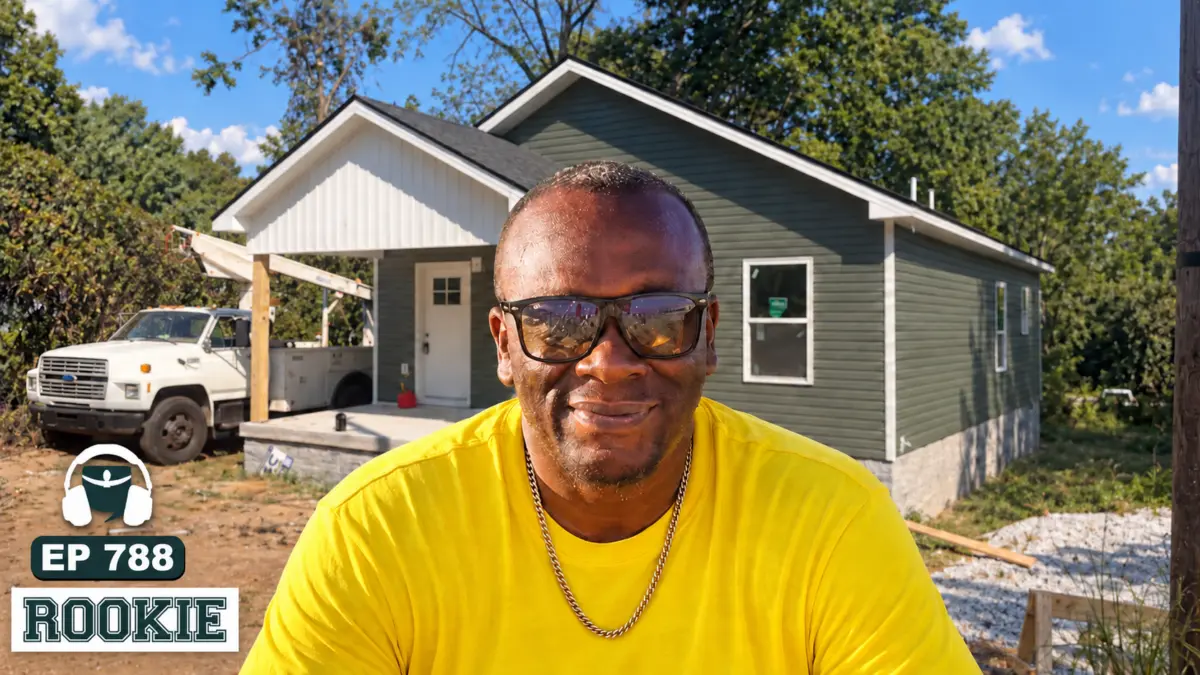
The episode features Reginald Calloway, an entrepreneur and real estate investor whose remarkable journey from a mobile car wash operator in Miami to a multi-property commercial owner in Kentucky demonstrates the extraordinary power of leverage, persistence, and thinking outside the box. Calloway’s story is a masterclass in how resourceful negotiation and a shift in mindset can completely transform an unpromising financial situation into a thriving portfolio.
The Foundation of an Entrepreneur
Calloway’s entrepreneurial spirit was forged long before he owned a single piece of real estate. Originally from Miami, Florida, he relocated to a small town in Kentucky in 2009 during the height of the Great Recession. With traditional job opportunities drying up in South Florida, Calloway sought a fresh start alongside his fiancée, Jennifer.
Upon arriving in Kentucky, Calloway attempted to establish a mobile car wash business. Coming from Miami, where keeping a vehicle immaculate was a priority, he quickly discovered that in a small Kentucky town, a layer of dust on a truck was practically worn like a badge of honor. The business was far less lucrative than anticipated. Meanwhile, Jennifer had set her sights on a local building, boldly declaring that she would own it one day, even though she had no prior background in real estate or mortgages.
That casual observation proved prophetic. The previous owner of the building eventually reached out to Jennifer, asking her to help run a newly established childcare center on the premises. As the childcare venture began to grow, Jennifer wanted her own center, prompting Calloway to search for a dedicated facility. With virtually no savings and poor credit, the couple managed to secure a modest $20,000 to $25,000 loan through a local mentorship program designed to assist individuals who lacked traditional financial qualifications. That narrow approval laid the groundwork for their very first childcare business.
Redefining Wealth and Financial Advice
A pivotal turning point in Calloway’s financial education occurred while he was taking economics courses during the recession-era job downturns. He encountered a professor named Mel Evans, who was also an active real estate investor. Evans frequently discussed his property investments during class and repeatedly challenged Calloway to consider why he was not investing in real estate himself.
When Calloway struggled to provide sound financial advice beyond what he had been taught growing up—such as his grandmother’s classic adage to "make a dollar, save a quarter"—Professor Evans challenged the conventional wisdom of his upbringing. Evans argued that simply saving money in a low-yield account is a trap for the middle class and the working poor, famously asserting that "you can’t save yourself rich; you have to invest." Evans outlined a philosophy where wealthy families allocate 50 percent to investments, 25 percent to savings, and 25 percent to personal enjoyment, emphasizing that growth requires active capital allocation rather than passive accumulation.
This mindset shift fundamentally altered how Calloway viewed money, risk, and property ownership. It prepared him for an extraordinary conversation that would alter the trajectory of his professional life.
The Accidental Acquisition
Operating their childcare center out of a rented building, Calloway and Jennifer faced a standard lease escalation: $1,000 a month for the first year, $1,500 for the second, and $2,000 for the third. As Calloway prepared to deliver the second year’s payment to the property owner, a man named Mr. Grace, he decided to test the lessons he had learned from Professor Evans about seller financing and land contracts.
Without any prior discussion about a sale, Calloway casually asked Mr. Grace what he would want for the building if he were to sell it. Mr. Grace replied that he could not let it go for less than $124,000. Operating on instinct and a rudimentary understanding of negotiation, Calloway countered that the price was a bit high, then proposed a creative structure: they would purchase the property at $124,000, but apply the previous year’s $1,000 monthly lease payments—totaling $12,000—as an immediate cash down payment, effectively reducing the purchase price to $112,000 while satisfying the seller’s valuation.
To Calloway’s astonishment, after several silent, agonizing minutes of deliberation, Mr. Grace agreed. With zero prior experience, no real estate agent, and no formal legal representation at that exact moment, Calloway had successfully negotiated a reverse lease-to-own seller-financed agreement.
Reflecting on the transaction, Calloway acknowledges that signing the contract without legal counsel was a massive gamble that could have gone disastrously wrong. However, the deal featured a 15-year term at a 10 percent interest rate with no balloon payment and no money out of pocket for the acquisition. Mr. Grace acted as the lender, bypassing traditional bank qualification hurdles like credit scores and cash reserves.
Scaling Through Resilience and Mentorship
The success of that first building served as a catalyst for expansion. Over the next few years, as the childcare business continued to thrive, Calloway and Jennifer acquired two additional adjacent buildings from Mr. Grace. What began as a single rented space eventually evolved into a cohesive commercial childcare campus: the first building served infants and toddlers, the second operated as a preschool, and the third became an after-school center.
By the time Calloway refinanced the properties to pay off Mr. Grace and fund further renovations, the three buildings—acquired through creative seller financing with minimal initial capital—appraised for a combined $1.3 million.
Despite this major commercial success, Calloway’s transition into residential real estate and house flipping was not without its painful lessons. Eager to expand into residential investing, he purchased a home sight unseen at a public auction for $157,000, committing the classic rookie mistake of falling in love with a property and refusing to let it go during the bidding process.
The home required nearly $100,000 in heavy renovations. Compounding the challenge, just as the property was listed on the market, the local area experienced severe flooding. Although the house itself remained on dry ground, prospective buyers were scared off by the surrounding flood conditions. Calloway exhausted his credit cards and promotional zero-interest financing periods, sitting on the property much longer than anticipated. While he successfully sold the home, the prolonged timeline and accrued interest meant he walked away having learned a harsh lesson about profit margins, contractor scopes of work, and the hidden costs of real estate development.
Recognizing the need for structured guidance, Calloway joined Henry Washington’s real estate mastermind group. This mentorship transformed his approach to sourcing deals. Transitioning away from public auctions and relying instead on targeted direct mail campaigns, Calloway secured his next major residential property directly from an elderly seller who responded to his marketing letters.
Purchasing the home for $55,000—well below its appraised value of $142,000—Calloway inherited a long-term tenant who had lived in the house for over a decade. The property cash-flowed from day one and provided the equity needed to secure a substantial line of credit from his bank, paving the way for future flips and new construction projects.
Overcoming Fear and Building a Legacy
Throughout the podcast conversation, hosts Ashley Kehr and Tony Robinson emphasize a recurring theme in Calloway’s trajectory: his ability to take decisive action despite fear and uncertainty. Whether cold-pitching a landlord on a property purchase, bidding on a house sight unseen, or navigating the initial backlash of direct mail marketing, Calloway attributes his resilience to a mindset shaped by early hardships.
Rather than viewing past failures as permanent roadblocks, Calloway has come to view them as essential building blocks for personal and professional growth. Today, through his company ASC Real Estate Solutions and his published writing, including his book One Step Above: The Visible Ceilings That Shape Ambition, Identity and Growth, Calloway aims to help other aspiring entrepreneurs break through their own self-imposed limitations.
His journey stands as a powerful reminder that while real estate math and market conditions matter, resourcefulness, creative problem-solving, and the willingness to ask the uncomfortable questions can ultimately turn an impossible deal into a life-changing success.