
Every Sunday morning, on the westernmost edge of Toronto’s historic Cabbagetown neighbourhood, a vibrant scene plays out inside a tiny chapel at Saint Luke’s United Church. Roughly 45 worshippers cram tightly into the space, with every single seat in the wooden pews spoken for, prompting volunteers to squeeze extra chairs into the narrow aisles. Yet, these cramped quarters have done nothing to stifle the church’s profound sense of community. For decades, Saint Luke’s has proudly carried the moniker of the “House of Friendship.” Longtime congregants, a significant portion of them of Filipino heritage, make it a point to warmly welcome every newcomer who happens to stumble in off the streets or find their way to the chapel after a quick online search for a “church near me.”
During the traditional passing of the peace, the room instantly comes alive with a flurry of heartfelt hugs, warm handshakes, and friendly fist bumps. David Hallman, the chair of the church council, still vividly remembers walking through the doors for the very first time alongside his late partner in the early 2000s. Even before the Sunday service officially began, over a dozen warm-hearted churchgoers had approached them to introduce themselves and extend a hand of fellowship. But as the congregation has come to realize over the years, sustaining that kind of authentic, radical welcome has taken far more than goodwill and community spirit alone.
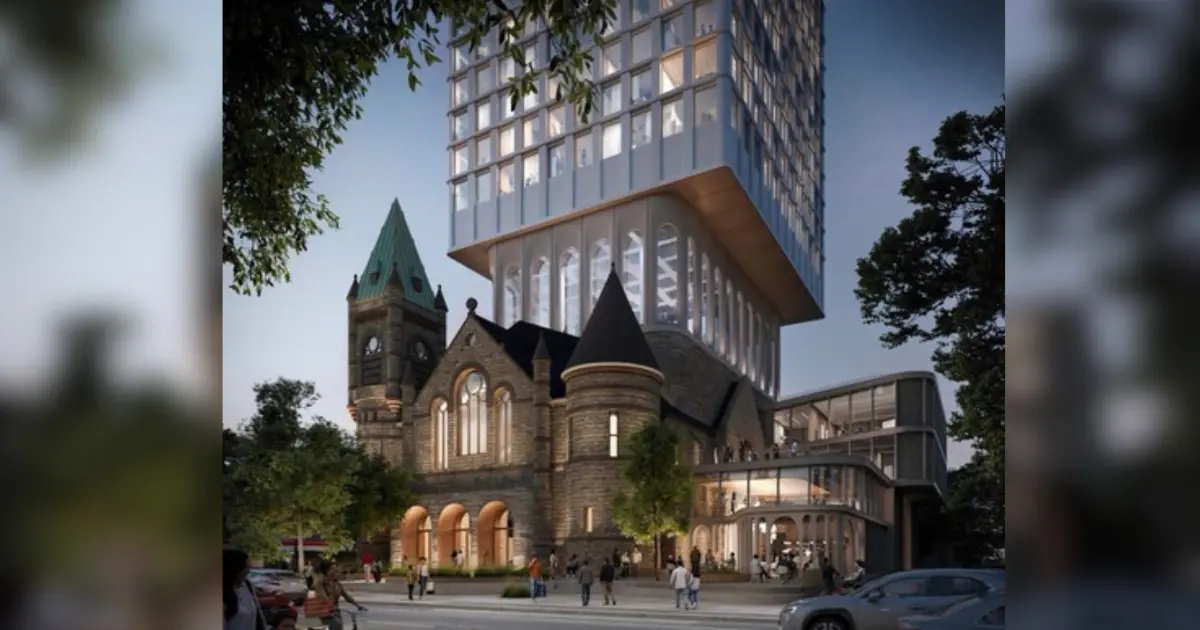
The physical reality of Saint Luke’s presents a striking contrast: the church is housed in a grand, landmark Richardsonian Romanesque structure that dates all the way back to 1887. While the historical architecture is a point of local pride, it has also become the root of the institution’s deepest financial and structural troubles. Maintaining an aging heritage building requires hefty coffers, and in recent years, the magnificent main sanctuary—famous for its pipe organ and soaring, beautiful acoustics—began to severely deteriorate.
Trouble truly mounted when the roof sprung a persistent leak, allowing water damage to spread rapidly through the upper levels and causing heavy plaster to begin crumbling down from the ceiling. While the Toronto United Church Council stepped in to provide a much-needed loan to repair the structural integrity of the roof, the expansive sanctuary space remained unsafe for public use. Consequently, the congregation was forced to shift its Sunday worship services into the much smaller, ground-level chapel starting in 2022.
At the same time, the financial math was working fiercely against them. Saint Luke’s had traditionally rented out rooms in the building to various local community organizations to generate revenue. However, by 2019, escalating maintenance and operational costs had dramatically outpaced that rental income by roughly $60,000 every single year. Just five years later, the historic church had completely drained its financial reserves and was teetering dangerously on the absolute brink of bankruptcy.
The dissolution or closure of Saint Luke’s would have sent shockwaves far beyond its Sunday morning worshippers. The church serves as a vital anchor for the surrounding neighbourhood, which is heavily populated by rooming houses, street encampments, and emergency shelters. Through its active food bank and well-regarded Out of the Cold meal program, the church provides essential sustenance to some of the city’s most vulnerable residents. As Rev. Jim Harbell succinctly puts it, “Our impact is much greater than our footprint.”
Fortunately, salvation began to take shape through a collaborative spirit championed by the broader church community. Guided by the United Church’s Toward 2035 strategic plan, which explicitly calls on individual congregations to forge closer partnerships, two local churches stepped forward to funnel crucial multi-year donations directly into Saint Luke’s ministry and ongoing operations. Furthermore, five additional congregations organized a rotating schedule to gather once a month, dutifully making 200 sandwiches at a time to supplement the hot meals distributed through the Out of the Cold program. This outpouring of solidarity and financial assistance allowed the church to pull back from the very edge of permanent closure, laying the crucial groundwork for an even larger, more transformative evolution.
Last year, the congregation reached a milestone agreement with housing development firm Kindred Works to launch a massive redevelopment project on the property, backed significantly by a loan from the United Church’s Shining Waters Regional Council. The ambitious plan proposes replacing the aging portions of the property with a towering 48-storey apartment building. Crucially, a full third of the building’s projected 440 rental units are slated to be rented out at rates well below market value, directly addressing the city’s pressing need for affordable housing. Under the current plans, only three of the original historic church walls will remain standing. With construction set to officially break ground this year, the congregation’s Sunday worship services will once again be displaced to an as-yet-undetermined temporary location.
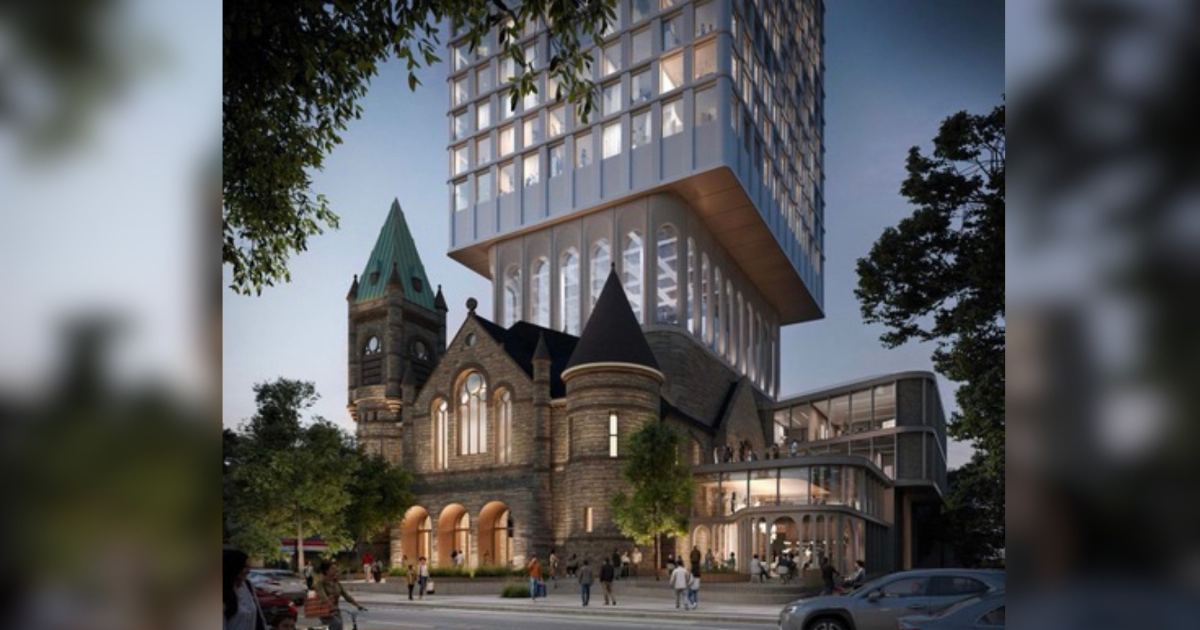
This monumental undertaking is actually not the church’s first attempt at pursuing such a redevelopment project. Back in 2012, a previous proposal failed to make it past municipal planning hurdles due to intense local and civic concerns regarding the proposed height and density of the structure. However, the city of Toronto has since shifted its urban planning strategy, aggressively pursuing densification across transit-oriented corridors to ease an unprecedented housing crisis. Recognizing this shift, the city officially approved Kindred Works’ revised proposal this past February.
Rev. Jim Harbell acknowledges that temporarily relocating Sunday morning services for a second time will be relatively manageable work, noting that the congregation has successfully navigated displacement before. However, the logistical hurdle of finding a new temporary home goes far beyond a quiet room with chairs; the church will desperately need a space equipped with adequate physical infrastructure to keep its critical outreach programs running smoothly, including commercial refrigerators, freezers, and a functional kitchen.
Other practical hurdles weigh even more heavily on the leadership team. Significant financing must still be securely locked down from both private investors and the Canada Mortgage and Housing Corporation. Fortunately, the church has a unique asset in its leadership: Harbell was previously a partner at a prominent Bay Street law firm, where he specialized in housing development. The complex redevelopment process is territory he understands intimately, positioning him well to guide the congregation safely through the regulatory and financial maze.
As the congregation prepares to temporarily bid farewell to its long-standing physical structure, Harbell notes that there will naturally be a period of collective grieving. The building has supported the local community for generations and is deeply imbued with spiritual touchstones: the historic baptismal font, the cherished communion table, and solemn memorials dedicated to community members who lost their lives during global conflicts. Some of these sacred objects will travel with the congregation to its forthcoming temporary location, while others will be carefully tucked away in safe storage. Meanwhile, Saint Luke’s breathtaking stained-glass windows are scheduled to be carefully removed and thoroughly restored before eventually returning to their original positions in the preserved historic exterior walls.
When the construction dust finally settles and the Saint Luke’s community is able to return to its home ground, the financial vision is that the new building’s commercial and residential rental income will do more than simply fund the worshiping congregation. The revenue stream is designed to support the entirety of the church’s expansive mission, including an active newcomers’ program specifically tailored to assist African refugees fleeing hardship.
David Hallman expects that the future architectural layout will feature a flexible, multi-use space for worship outfitted with movable chairs rather than fixed pews. Beyond those broad strokes, church leadership admits they do not yet know exactly what the final interior facilities will look like. Still, Hallman emphasizes that the congregation is overwhelmingly excited that a sustainable path forward has finally been secured, noting with a smile that some members have already begun inquiring about how they can secure a spot on the waiting list for an apartment rental in the new tower.
Despite the multitude of unknowns that lie ahead during the construction phase, Hallman remains thoroughly confident that the community’s long, enduring history of hospitality will easily buoy it through the upcoming period of transition.
“It has nothing to do with fancy structures or bells and whistles,” he reflects. “It has to do with how people relate to each other and care for each other.”
“We’ve lived with fragility for a long time,” Hallman adds, capturing the enduring spirit of the historic Cabbagetown institution. “We’re not a wealthy congregation. But there’s something about that that allows the spirit to be so palpable and present.”