
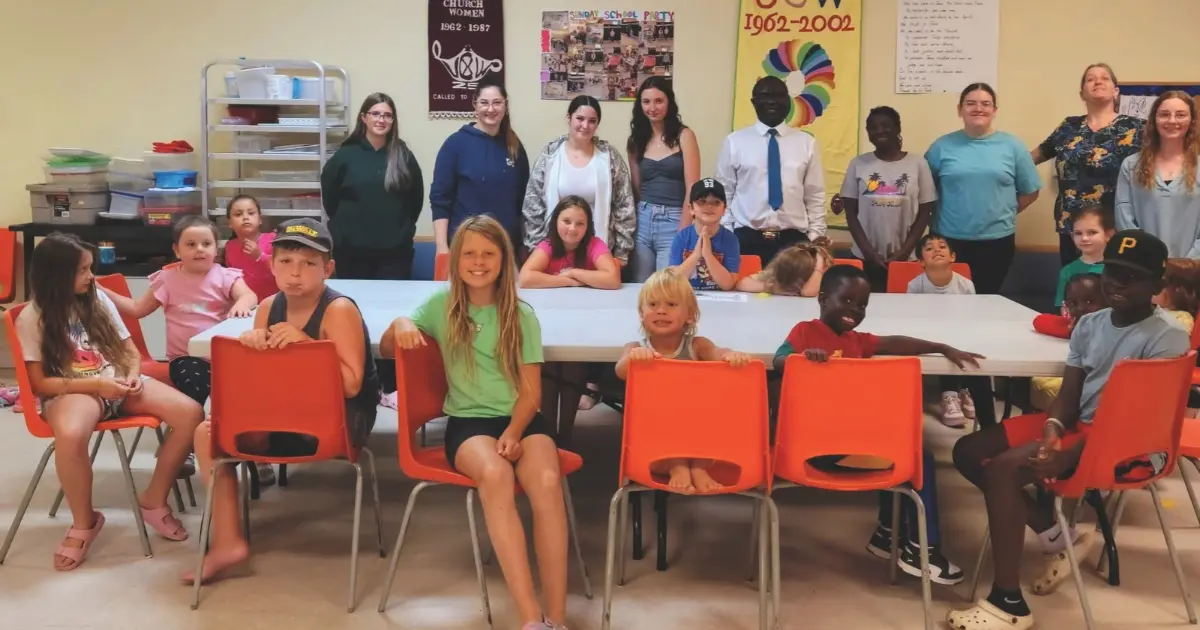
DEER LAKE, N.L. — When the Reverend Simon Muwowo arrived at St. Paul’s United Church in Deer Lake about three and a half years ago, the congregation’s future was described to him in clinical, sobering terms.
"Before I moved here, I was told that the church was in ICU," Muwowo recalls, looking back at a period that tested religious communities across the globe. "It was after COVID had hit and, of course, they had suffered quite a lot of decline in the membership."
For a small congregation consisting mostly of seniors, the reality of that decline was visible every single week in the quiet sanctuary. "They would print less than 25 bulletins on a Sunday," he said.
Today, that same church tells an entirely different story. On any given Sunday, the pews regularly welcome 80 people, with attendance occasionally surging upwards of 140. Families and individuals of all generations now fill the space, singing together in praise. Teenagers participate actively through dance and leadership, children perform in holiday plays for Christmas and Easter, and new members are continuously joining from across the broader cultural spectrum of the region.
The catalyst for this dramatic turnaround? A free after-school program designed to meet a practical need in the community.
Muwowo, who is affectionately known in the community as "Rev. Simon," hit upon the initiative after spending roughly a year exploring various ways "to create something new." After speaking with local parents and realizing the community lacked accessible after-school programming, and drawing on his own memories as a busy father of four on Newfoundland’s Burin Peninsula—where he previously served as a minister—he proposed that the church step in to offer a safe, interactive environment for children of working or busy parents.
"They also learn about life and morals, and encounter Christ in the process," Muwowo explains of the program’s underlying philosophy.
The after-school initiative, which officially launched in October 2024, welcomes children from kindergarten to Grade 5. Operating three days a week from 3:00 p.m. to 5:00 p.m., the program had successfully registered 27 children by May.
The structure of the afternoons balances recreation with community-building. Children enjoy dedicated story time—which incorporates select Bible stories alongside other literature—alongside creative crafts, healthy snacks, and free playtime. Every few months, St. Paul’s Sunday school hosts special birthday celebrations, inviting the after-school participants and other children from the congregation to share pizza, cake, games, and loot bags. These celebrations often follow a morning worship service where the children sing for the congregation.
The personal impact of the program extends far beyond basic childcare, rippling outward into families who previously had little to no connection to the church.
Deidre Stirling recalls dropping off a tearful Lucy, now 11, at the after-school program for the very first time a couple of years ago. When she returned to pick her up later that afternoon, Lucy "could not explain how much fun she had," Stirling says. "And she never missed a day since."
The transformation in the young girl has been profound. "She went from a kid who was extremely shy to just narrating the Easter play—so the last couple of years have been exponentially amazing," Stirling notes, adding that her five-year-old son has since joined the program as well.
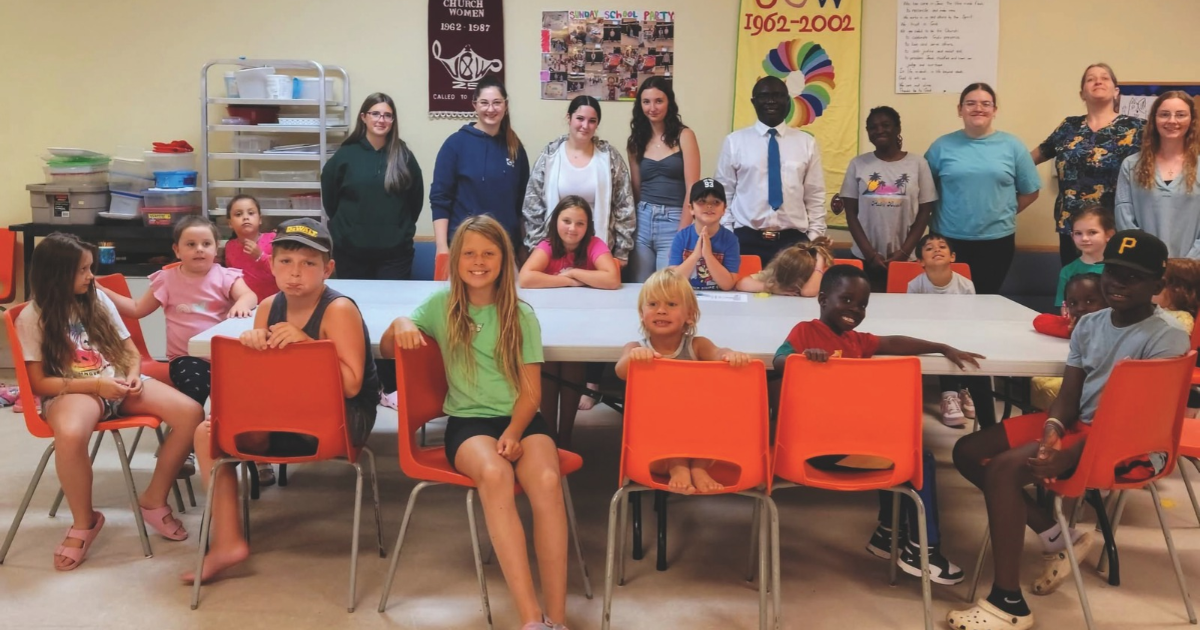
Though Stirling is not a member of St. Paul’s, her involvement runs deep. She volunteers with the after-school initiative, even helping the children build their award-winning float for the local community Christmas parade last year. "I’m not a member, but I’m a part," she says. "I feel welcome here."
The program has simultaneously created vital roles for older youth in Deer Lake. Teenage students are given the opportunity to earn volunteer hours while discovering their potential and building practical leadership skills. Currently, 15 youth help lead the program, supported by an early childhood education student.
Samantha Parsons, an 18-year-old volunteer, has been so deeply impacted by her experience that she was recently confirmed as a full member of St. Paul’s. "I enjoy being with the kids," she says. "They look like they’re always happy to be here."
According to Katelyn Brearley, St. Paul’s director of youth and children’s ministries, these young volunteers form the absolute heart of the after-school program and are vital to its day-to-day success.
"They help with pretty much everything," Brearley says. "I’m the director, but I wouldn’t be able to do it if it wasn’t for all the help of the volunteers. And the kids really look up to [them]."
Building on the momentum of the after-school initiative, St. Paul’s expanded its reach in April by introducing a Friday evening drop-in program tailored for youth in grades 6 to 12. Brearley describes the initiative as "a safe space for youth to come and hang out with their friends, play some board games and just to get them comfortable coming into the church and [feeling] like it’s something that belongs to them as well."
For Helen Reid, a longtime Catholic who was searching for a church featuring a strong Sunday school program for her five-year-old granddaughter, finding St. Paul’s proved to be life-changing for both of them.
"I gotta say, it was the best decision I’ve made in a long time," Reid says, her voice catching with emotion. "For my granddaughter, I’d say the biggest impact on her has been [that] she has a sense of belonging. She was a very shy child… she’d come in church with her head down. But she started in Sunday school and then she started in that program, and she absolutely loves it. It has done so much for her character."
Reid eventually became a member of St. Paul’s church two years ago and now serves as its secretary. She observes that the after-school program is "being nurtured by the whole congregation," noting that it has served as a primary engine for growth, with more than 40 new members joining the church over the past couple of years.
Reflecting the old adage that it takes a village to raise a child, local businesses and community members—including individuals with no formal affiliation with the church—have stepped forward to donate funds and food in support of the program. Supporters recognize that the effort is fundamentally about nurturing young people today and cultivating a sense of belonging so they can grow into compassionate citizens tomorrow.
For Muwowo, the secret to the church’s revitalization lies in its intentional departure from rigid dogma.
"Most of the churches around today, they emphasize so much on doctrine. We don’t talk about doctrines at our after-school program, and we don’t talk about doctrines in our church on Sunday. So everyone finds a sense of belonging," Muwowo says. "You just have to be you."