
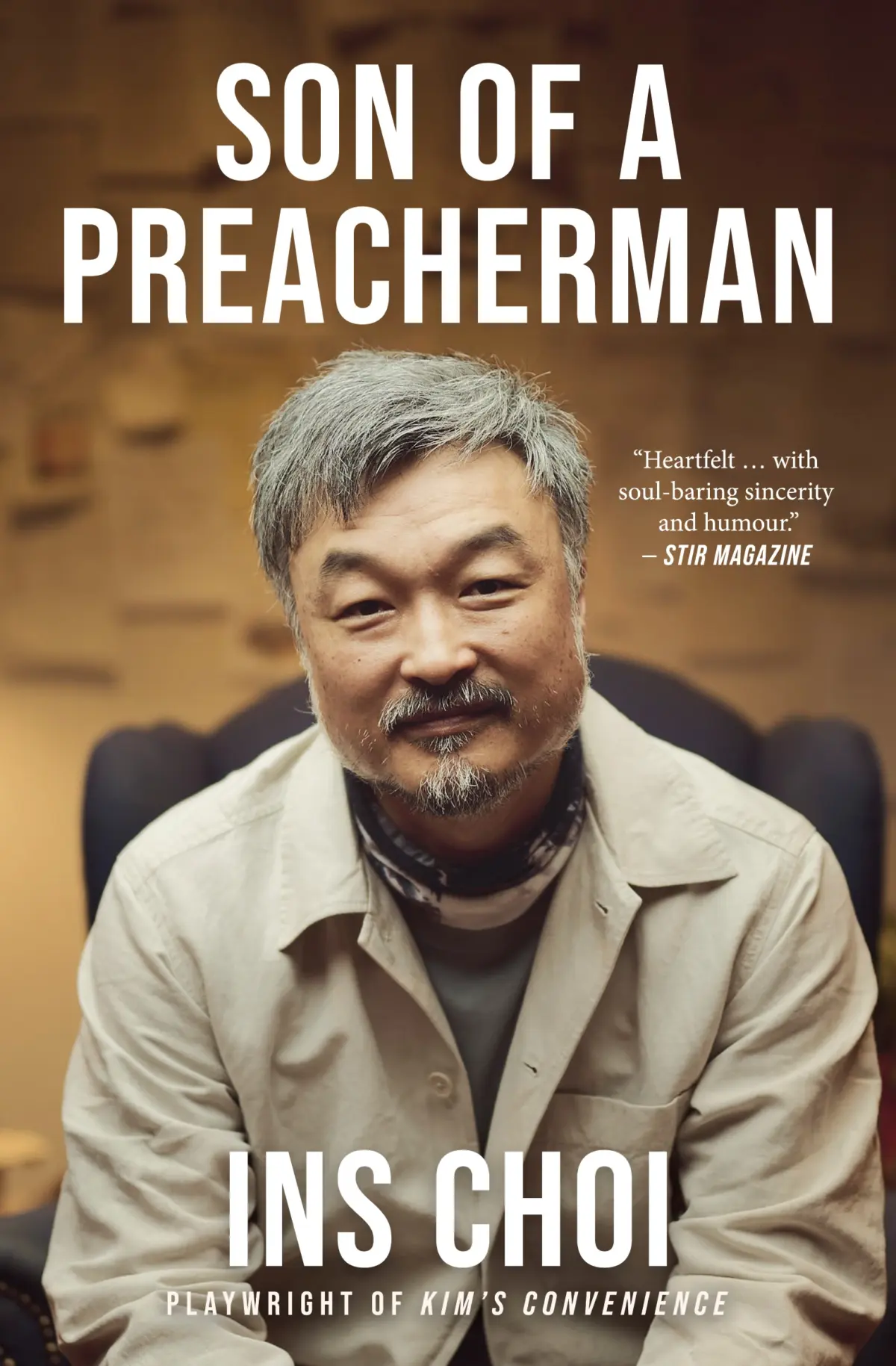
For playwright and creator Ins Choi, the cadence of preaching is a family inheritance. Growing up, Choi was surrounded by relatives for whom the pulpit was a natural home; his grandfather, father, uncle, aunt, and seven cousins all spent their lives delivering stories from sacred spaces. Yet, while the tradition of ministry ran deep in his bloodline, Choi ultimately gravitated toward a different kind of stage.
Though he initially studied theology in university and briefly explored the path of preaching, Choi branched out into acting, training for the stage before organically discovering his calling as a writer. That artistic pivot yielded a massive cultural milestone in 2011 with the debut of Kim’s Convenience, a hit play at the Toronto Fringe Festival centered on a Korean Canadian family running a corner store. The poignant and humorous stage production quickly captured the public imagination, eventually expanding into a critically acclaimed, globally recognized television series of the same name.
Even as Choi built a celebrated career in the secular arts, faith remained an indelible cornerstone of his personal identity and creative lens. That enduring spiritual foundation serves as the driving force behind his latest artistic endeavor, the play Son of a Preacherman. Following a warmly received run last year, Choi has adapted the stage production into a published book. The newly released volume encompasses the complete script, an original author’s introduction, and a collection of poems and songs that were written during the creative process but ultimately left out of the live theatrical presentation. Building on its literary release, Son of a Preacherman is embarking on a national tour this fall, with scheduled runs in Ottawa, Toronto, Vancouver, and Kamloops, British Columbia.
Ahead of the book’s publication, freelance writer and editor Sherlyn Assam sat down with Choi to discuss the deep-seated family myths, spiritual tensions, and transformative moments that shaped both his life and his latest work.
Unraveling an Epic Family Origin
At the heart of Son of a Preacherman is a dramatic family history that stretches back generations. In the play, Choi explores the story of how his grandfather made the profound choice to convert to Christianity as a young man, a pivotal moment undertaken in the fervent hope of breaking what was believed to be a generational family curse.
Reflecting on the lineage of preachers that stemmed from that turning point, Choi shared how deeply storytelling is embedded in his family’s DNA. Growing up, he recalls regularly gathering around his relatives, entirely captivated by their oral histories and dramatic accounts. The narrative surrounding the curse, however, was a distinct discovery pulled from the vault of family folklore.
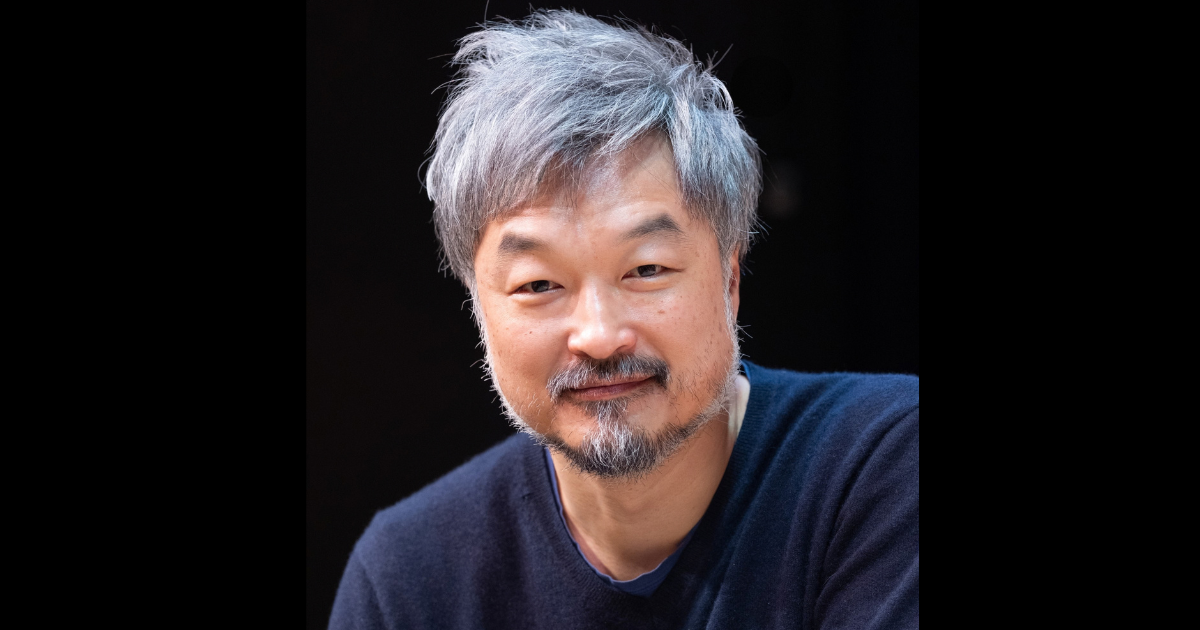
"I loved it. It had the allure of an origin story and even a biblical story. It’s very epic," Choi explained during the interview. He noted the striking details of the family tree—a lineage marked by single children across multiple generations, with three successive generations facing the tragic milestone of dying by the age of 50. With his grandfather also being an only child, Choi views the narrative—regardless of its literal truth—as a remarkably colorful and dramatic bedrock for his family’s history.
The Intersection of Faith and Creative Work
The tension between religious devotion and artistic expression is a common theme for creators from devout backgrounds, but Choi views the two domains as deeply intertwined rather than opposed. When asked if his faith has ever caused friction in his creative pursuits, Choi countered that writing and performance inherently demand a profound level of belief.
"I feel like you write what you know. I don’t know if you can do theatre as an actor or as a writer without faith," Choi said. He pointed out the daily acts of trust required in the arts, from starting a blank page with the conviction that it will eventually be completed, to sending a finished script out to directors and theatre companies in the optimistic hope that they will say yes. From his perspective, faith in a broader, universal sense is an active component of artistic creation, fueled by the hope that a piece of work will ultimately resonate with an audience.
That spiritual perspective has naturally woven its way into much of Choi’s portfolio. While Kim’s Convenience was loosely inspired by the biblical parable of the prodigal son and featured occasional references to church life, Choi notes that those elements simply reflect his cultural upbringing rather than an agenda. Son of a Preacherman, by contrast, deals more directly with matters of faith, tracing his personal trajectory of initially following his father’s footsteps toward becoming a pastor before ultimately pivoting to the arts. Rather than forcing religious themes into his narratives, Choi allows his writing to naturally borrow from, lend to, and reflect every facet of his lived experience.
In the introduction to his new book, Choi riffs on the familiar verses of Psalm 23, writing that "the Lord is still my shepherd." When questioned about whether he has ever experienced seasons of doubt severe enough to prompt a departure from his faith, Choi described a continuous, evolving journey rather than a static state.
Comparing the spiritual life to the rhythm of human existence, Choi described faith as a daily resurrection. Just as waking up each morning feels like a small rebirth and sleeping at night mirrors a small death, his emotional and spiritual journey follows a similar daily cadence. While some days bring an overwhelming sense of closeness to God, others present intense challenges where support feels distant. Approaching 52 years of age and having grown up immersed in the church, Choi reflects on familiar passages like Psalm 23 with a depth that only time and experience can forge.
The Power of Encouragement and the Road Ahead
Looking back on the pivotal milestones that steered him toward the stage, Choi credits a single moment of validation during his high school years. Raised in a church environment where he frequently sang in the choir, Choi readily admits that his vocal talents lay not in melodic precision, but in sheer volume—a quality that choir directors invariably appreciated.
When auditioning for his first school play at a new high school, Choi relied on what he knew best and simply sang loudly in an otherwise quiet room. The music director stopped, looked around, and asked, "Where have you been?" That immediate expression of being seen and valued was an affirmation he deeply craved, offering a profound sense of belonging.
The experience launched him into his first theatrical production, setting off a chain reaction that ultimately defined his professional life. Years later, Choi had the opportunity to reconnect with that music director, sharing the impact she had on his life and informing her that he had built a career as an actor and playwright. The encounter came full circle as the former teacher was moved to tears of joy, providing a meaningful way for Choi to honor the roots of his artistic journey.
As Son of a Preacherman prepares to bring its blend of drama, music, and memoir to audiences across Ottawa, Toronto, Vancouver, and Kamloops this autumn, Choi continues to bridge the worlds of storytelling, faith, and community, honoring the complex history and rich cultural narratives that brought him to the stage.