
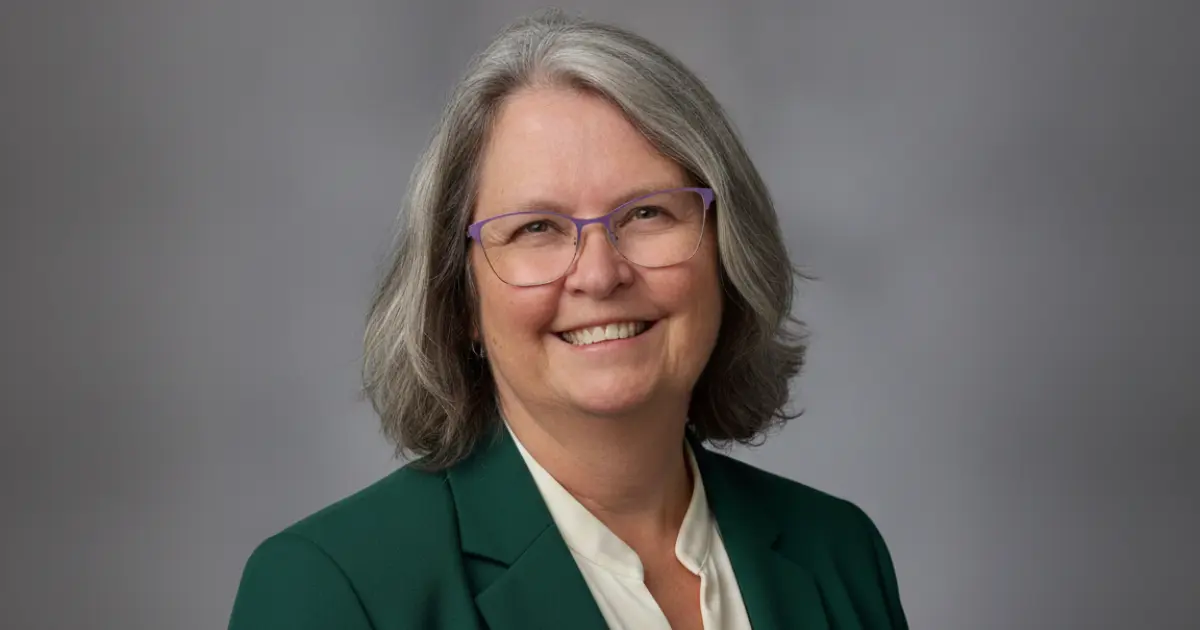
On September 1, the Canadian Council of Churches (CCC)—the nation’s largest ecumenical body, representing a vast majority of Canadian Christians—welcomed a new leader to its helm. Reverend Janet Anstead officially stepped into the role of general secretary, taking over the position from Peter Noteboom, a pastor within the Christian Reformed Church in North America who successfully guided the council for nine years.
Anstead brings a uniquely diverse professional and pastoral background to her new national leadership position. Currently serving as a minister for the Christian Church (Disciples of Christ), she is also trained in the legal profession, having practiced family law during the 1990s before dedicating her career fully to ministry and ecumenical service. Her appointment comes at a crucial historical juncture for organized religion in Canada, a period marked by shifting demographics, diminishing church attendance, and a profound transformation within the broader Canadian Christian landscape.
Shortly after settling into her demanding new position, Anstead sat down for an interview with James Adair, a recent intern at Broadview, to discuss her whirlwind first weeks on the job, her vision for the future of the Canadian Council of Churches, and her hopes for the ecumenical movement as a whole.
A Whirling Start and a Steep Learning Curve
Reflecting on her initial weeks in office, Anstead did not mince words about the intense pace of her transition. Describing the experience as "crazy," she noted that her calendar has been completely packed with high-profile engagements, travel, and strategic meetings.
"I was in Vancouver last weekend, and then I went to Project Ploughshares. They had their 50th anniversary gala on Monday night [September 21 in Waterloo, Ontario], and yesterday we had an executive meeting," Anstead shared during the interview. "It has been nonstop. I was meeting with representatives from many of the commissions of the World Council of Churches, focusing on reconciliation, justice, and unity. It’s been wonderful, but it’s been hectic. It’s been a very steep learning curve, and people have been very gracious with me."
This heavy schedule underscores the expansive, outward-facing nature of the general secretary role. The Canadian Council of Churches does not operate in an isolated bubble; rather, it acts as a central hub connecting numerous denominations, international ecumenical partners, and social justice initiatives across the country and around the globe.
The Role of the CCC Amid Diminished Canadian Christianity
As Canadian Christianity faces a well-documented decline in traditional attendance and institutional participation, the fundamental purpose and relevance of ecumenical organizations like the CCC are frequently brought into question. When asked about how the council envisions its role during this era of diminished numbers, Anstead emphasized the vital collaborative space the organization provides.
"With diminishing attendance, the CCC can do many things," Anstead explained. "It can help some of the smaller denominations by creating this space in which we are interacting and sharing resources, sharing ideas, sharing experiences."
Beyond administrative and inter-denominational support, Anstead believes the council has a critical communication role to play. She stressed that the organization must extend its reach beyond high-level church leadership and actively engage with everyday believers—what she refers to as "the people in the pews." To achieve this, the CCC must focus on creating resources that are tangible, practical, and easily accessible to local congregations, regardless of their size or location.
As an example of this accessibility in action, Anstead pointed to the recent Prayer Walk for Peace, held on September 21. This initiative provided a flexible and practical set of resources that could be easily utilized by communities of all sizes, whether operating within a large, bustling urban center or a small, quiet rural parish.
Looking Ahead: Reconciliation, Climate Change, and a New Vision for the Church
When the conversation turned toward long-term goals and what she hopes to accomplish by the eventual end of her tenure, Anstead offered a mix of idealistic vision and pragmatic commitment. In response to a playful question from Adair about whether aiming for world peace might be setting the bar too high, Anstead kept her sights firmly fixed on the ultimate mission of her faith.
"Well, would world peace be too much to ask for?" she asked with a smile. After Adair remarked that it is always good to know where one is heading, Anstead elaborated on the concrete areas where she wants to see meaningful progress.
"I would like to see some more action on our ongoing reconciliation focus," she said. "I would also like to see joint action on climate change. As somebody who has a granddaughter, I would like to think that we can leave this world better than it seems to be heading right now."
Furthermore, Anstead articulated a desire to reshape the public perception and cultural footprint of the church. She called for a renewed vision for Christianity—viewed in its largest, most inclusive sense—that actively provides a compelling alternative narrative to the dominant messages currently circulating in modern society.
"It’s the narrative we’ve always carried because it’s the narrative of the gospel," Anstead noted. "But it would mean being a coherent voice for justice, for peace."
Mobilizing Beyond Leadership for Lasting Transformation
Addressing the immense global and societal challenges of the present day, Adair asked how the ecumenical movement can realistically work toward lofty goals such as world peace. Anstead maintained that sustainable change cannot be manufactured solely from the top down; it requires the active participation of every member of the faith community.
"The only way we’re ever going to achieve world peace is by mobilizing everybody, not just the leadership," she asserted.
Acknowledging the widespread anxiety and sense of crisis that many people feel when observing current global events, Anstead offered a theological perspective rooted in resilience and hope. She noted that while contemporary circumstances can certainly appear dire, historical and spiritual precedents show that periods of profound societal transition are inherently difficult.
"We look around, and things seem to be pretty dire right now," Anstead said. "কিন্তু I think what we know from the gospel narrative that we’ve carried with us for centuries is that times of transformation can be painful, and we are in a time of transformation right now."
In closing, the new general secretary offered a message of encouragement to Canadian Christians navigating these uncertain times. Rather than succumbing to despair, she urged individuals to actively seek out and pay attention to the positive developments in their immediate surroundings.
"I would encourage people to look for the signs of hope that they find in their lives," Anstead concluded. "Listen to that narrative of hope, the narrative of transformation, and ultimately the narrative of love. That’s how we’re going to get out."