
For a fleeting moment during the previous NHL campaign, the Philadelphia Flyers genuinely appeared to be tracking toward the upper echelon of the Eastern Conference, building a sustainable foundation for a legitimate Stanley Cup contender. Following five consecutive seasons of missing out on the postseason dance, the organization engineered a breakthrough year. They secured a respectable third-place finish in the rugged Metropolitan Division and captured their first playoff series victory in several years, dispatching their arch-rivals, the Pittsburgh Penguins, in a hard-fought matchup. Though their playoff run ultimately halted in a second-round sweep at the hands of the eventual Cup-champion Carolina Hurricanes, the organization felt validated by the strides made on the ice.
Buoyed by that progress, Flyers general manager Daniel Briere adopted an aggressive stance during the summer months, seeking to fortify a roster he believed was on the cusp of sustained contention. In a notable offseason maneuver, Briere acquired netminder Joseph Woll to establish a formidable goaltending tandem alongside Dan Vladar, while simultaneously bringing in reliable depth pieces such as Noel Acciari and Simon Benoit to insulate the lineup. On paper, the future looked blindingly bright in Philadelphia, framed by a blend of emerging young talent and newly injected veteran grit.
Yet, the promise of the summer evaporated the moment the puck dropped on the current regular season. Instead of picking up where they left off, the Flyers burst out of the gate looking entirely listless, disjointed, and structurally lost. That dismal start manifested immediately in an abysmal 0-6-3 skid that set an alarming tone for the remainder of the autumn schedule.
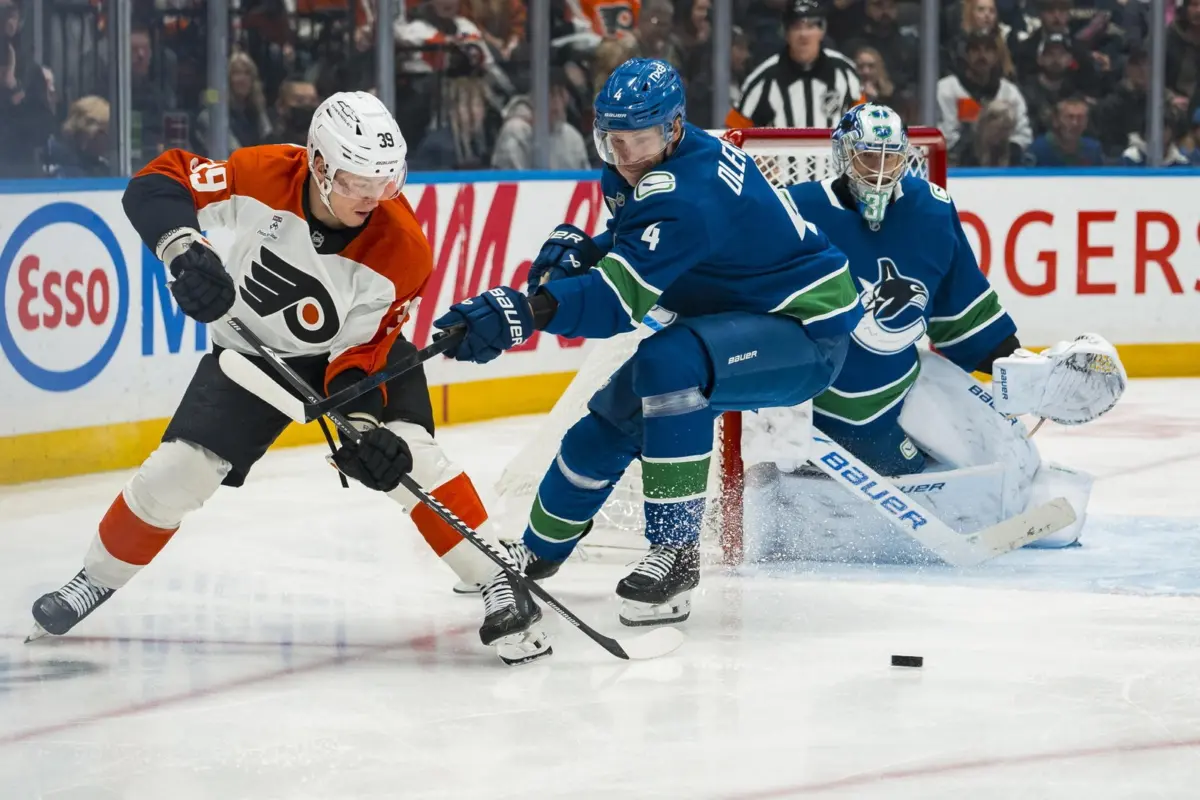
A brief reprieve arrived via a subsequent three-game winning streak that injected a temporary sense of relief into the locker room and front office. However, that momentum proved fleeting. Since snapping out of their initial rut, the Flyers have stumbled to an underwhelming 2-4-2 record, with one of those rare victories coming against a struggling Vancouver Canucks squad.
Twenty games into the schedule, the numbers paint a grim picture of Philadelphia’s standing in the league hierarchy. The Flyers currently shoulder the worst point percentage in the Eastern Conference at .373, and the third-worst mark across the entire National Hockey League, sitting ahead of only the rebuilding Vancouver Canucks and the similarly beleaguered Chicago Blackhawks. To characterize the team’s performance as a disappointment would be a severe understatement; it has developed into a full-scale crisis.

All that losing, predictably, has caused underlying tensions to boil over into public view. The deepening frustration reached a boiling point during a recent home game against Vancouver, captured vividly when young star Matvei Michkov and veteran defenseman Nick Seeler engaged in a heated, visible exchange directly on the Philadelphia bench. While analysts have offered various breakdown interpretations regarding the tactical miscommunications and emotional friction that sparked the run-in, the overarching takeaway is undeniable: the Flyers are beginning to turn on one another. Compounding the issue, head coach Rick Tocchet has thus far been unable to unearth definitive strategic solutions to arrest the slide and turn the season around.
The root of Philadelphia’s struggles is glaringly apparent when examining the team’s offensive output. Twenty games deep, the Flyers do not boast a single player operating at a point-per-game pace. The team’s co-leaders in scoring are Matvei Michkov and Trevor Zegras, both of whom have manufactured a modest 14 points, followed closely by veteran center Christian Dvorak with 10 points. Beyond that trio, the offensive well runs astonishingly dry, as Philadelphia does not feature a single other skater who has managed to cross the double-digit threshold in scoring.
Head coach Rick Tocchet has tirelessly attempted to implement a disciplined structure on the defensive side of the puck, an area where the team is not entirely incompetent. The Flyers currently rank 19th in the league with a respectable goals-against average of 3.25. However, Tocchet’s defensive systems can only accomplish so much when the roster lacks offensive dynamism. The coach cannot manually instill the elite, high-end offensive instincts that once defined his own storied career as one of the game’s premier power forwards, and that glaring lack of top-tier offensive firepower is precisely what continues to hold his team back night after night.
Recent trends indicate minor stylistic adjustments, but the bottom-line results remain stubbornly unchanged. Over their last eight contests, the Flyers have been outscored 29-25—a notable statistical improvement compared to the horrors of their initial nine-game losing skid, during which they were outscored by a lopsided 33-11 margin. Yet, the moral victories provided by closer scorelines offer little comfort to an organization accustomed to winning, as the final outcome continues to lean overwhelmingly toward defeat rather than victory.
While a generational franchise savior is not scheduled to arrive in Philadelphia anytime soon via the draft or trade market to instantly alter their trajectory, the unrelenting accumulation of losses could soon compel Daniel Briere and the Flyers’ upper management to take decisive action. If the current downward spiral persists, front-office personnel may be forced to initiate significant roster changes long before the season slips entirely beyond the point of redemption.