
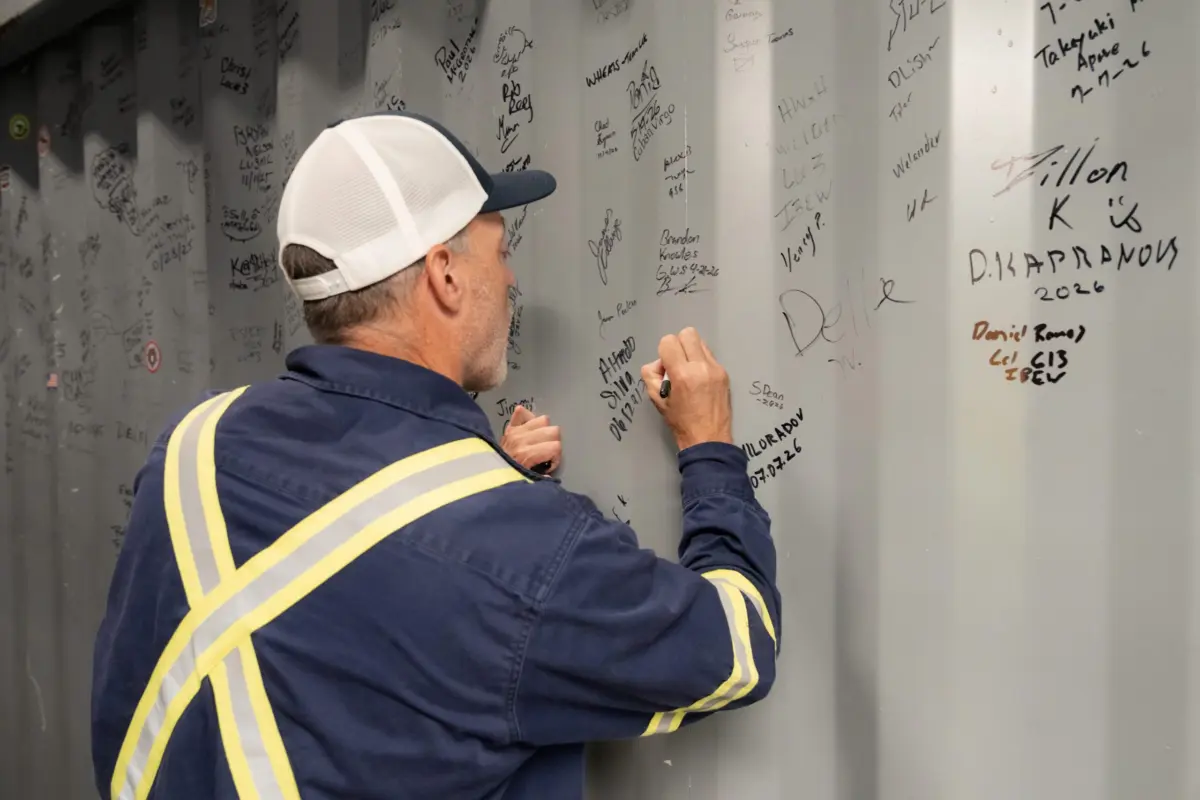
For William “Billy” Bishop, a former Navy sailor and union laborer from Local 1298 on Long Island, the opportunity to work on the water again felt like an ideal career evolution. When he learned about the surge in job openings tied to offshore wind construction projects two years ago, he jumped at the chance.
After earning a specialized safety certification from the National Offshore Wind Training Center (NOWTC)—a collaborative venture uniting Long Island’s Suffolk County Community College, the Long Island Federation of Labor, and multinational wind farm developer Orsted—Bishop secured work on a wind farm near Rhode Island. Today, he performs critical structural inspections and maintenance on Sunrise Wind, a massive clean energy project currently under construction off the coast of Long Island.
Yet, the federal landscape for renewable energy has shifted dramatically. Sweeping efforts by the Trump administration to stall offshore wind projects as part of a broader rollback of clean energy initiatives have introduced profound uncertainty for specialized workforce training programs like NOWTC and the thousands of laborers they were built to serve.
“I would definitely do this forever, and I’ve looked into it since getting the job. But I see contracts are falling through nonstop now in America,” Bishop said. “This might be the last one for a while.”
The Rapid Rise and Sudden Brake on Offshore Wind
The current turbulence stands in sharp contrast to the aggressive growth targets established just a few years prior. In 2021, the federal government set a national target to generate 30 gigawatts of offshore wind power by the end of the decade, starting from a baseline of nearly zero. That ambitious objective catalyzed a massive, coordinated effort to train a specialized workforce for jobs that did not yet exist domestically.
Projections from federal agencies estimated that this rapid industrial ramp-up would require roughly 77,000 workers. These personnel were needed across a wide spectrum of roles: building the massive wind farms, connecting complex turbine infrastructure to regional electrical grids, managing long-term facility operations and maintenance, and manufacturing rugged steel components designed to withstand harsh marine environments.
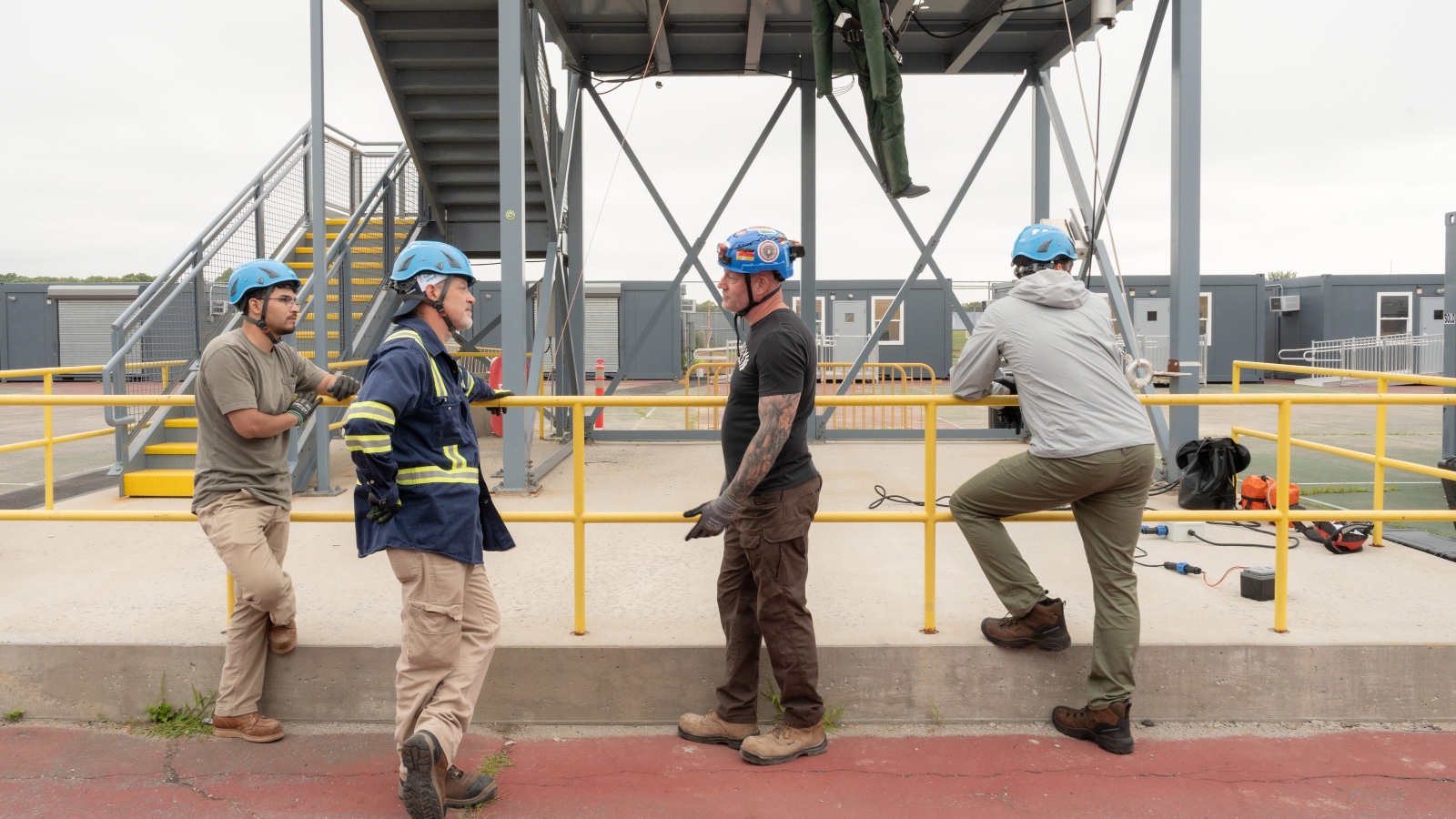
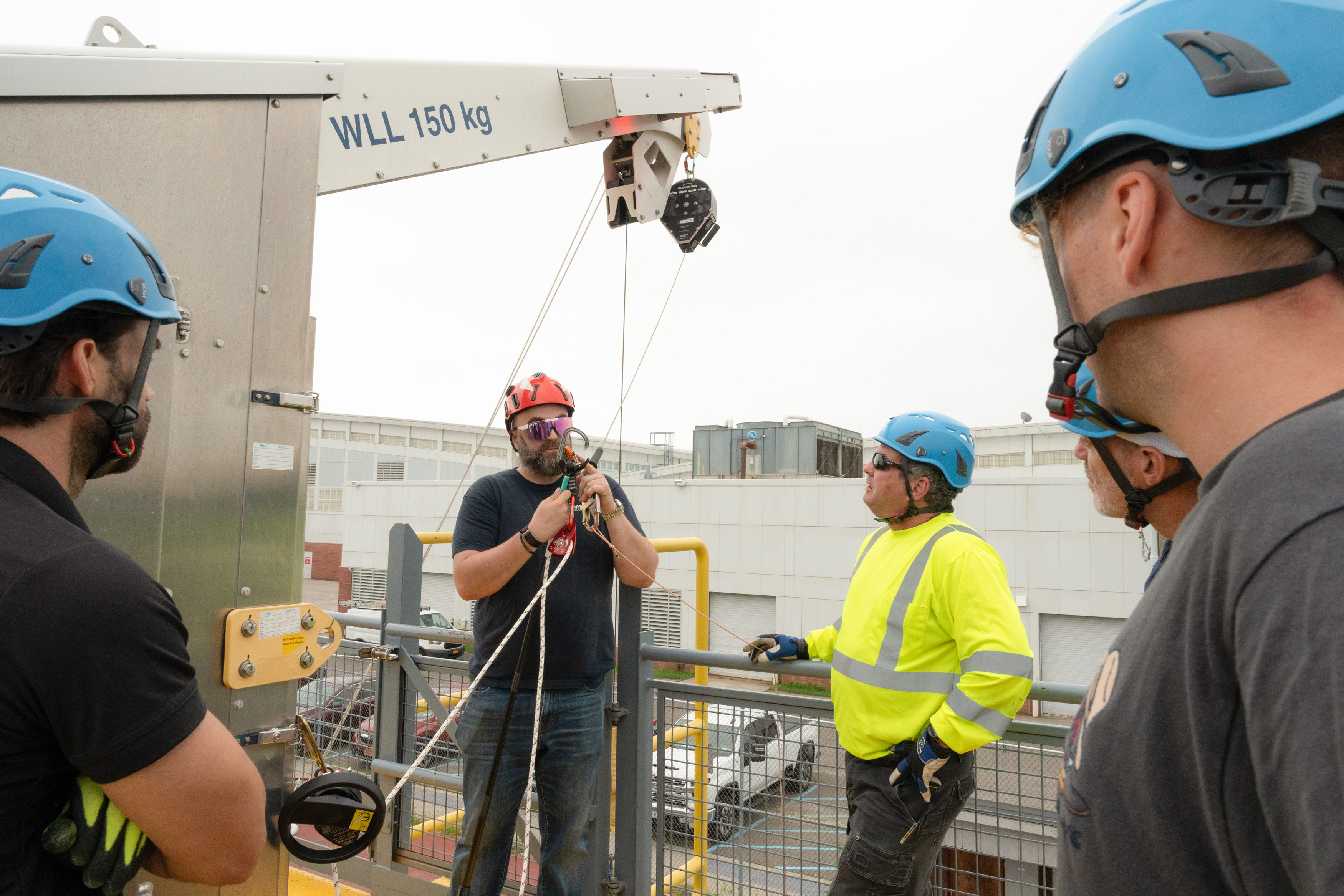
To meet this anticipated demand, several coastal states and major energy developers formed partnerships with universities, labor unions, and community workforce organizations. These groups rolled out an array of educational initiatives, ranging from safety certifications for skilled trade workers and specialized apprenticeships for turbine technicians to graduate-level programs focusing on offshore wind planning and policy.
However, since President Donald Trump took office for his second term, the domestic offshore wind industry—which had seemed poised for exponential growth—has been confronted by a compounding series of legal, administrative, and economic headwinds.
While the administration has broadly targeted solar power and onshore wind, its regulatory leverage is uniquely potent offshore, where the federal government acts as the direct landlord for the Outer Continental Shelf. By contrast, the onshore wind sector in the United States already dwarfed its offshore counterpart and continues to expand, at least for now, despite federal resistance. For offshore wind, the near-term outlook is notably bleak, raising concerns among economists and industry leaders that developers may permanently shy away from investing in a market now perceived as uniquely volatile.
“When it comes to energy policy, the pendulum always swings from one president to another,” said Timothy Fox, managing director of ClearView Energy Partners, an energy industry research firm based in Washington, D.C. “But now the swings are so dramatic that the pendulum’s going to fall off the clock.”
A Sudden Halt and Shifting Federal Priorities
The domestic offshore wind industry remains in its infancy. The nation’s first commercial-scale wind farm, located off the Long Island coast, only began delivering electricity to the grid in December 2023. At that time, the sector was riding a wave of momentum supported by billions of dollars in federal grants, tax credits, loans, and other financial incentives deployed under the Biden administration. Several significantly larger wind farms were already under active construction, and dozens more were winding their way through the federal permitting pipeline.
A Department of Energy report published in March 2024 warned that the nation faced a severe deficit of qualified wind workers heading toward 2030. “We anticipated not only expanding but that there would be multiple centers,” said Matthew Aracich, another NOWTC director and the president of the Building and Construction Trades Council of Nassau and Suffolk Counties in New York.
Instead, that anticipated industrial expansion came to an abrupt halt on January 20, 2025. One of the first executive actions taken by the administration during its second term was signing the “wind order,” which enacted an immediate pause on all new leases and permit approvals for both onshore and offshore wind developments. Later that year, the federal government issued emergency stop-work orders on the five commercial offshore wind projects actively under construction, citing unspecified national security concerns.
Although those stop-work orders and the initial wind order were eventually overturned in federal courts, the administration’s broader opposition to offshore wind persisted across multiple fronts.
The federal government moved to roll back renewable energy tax credits—characterizing them as market-distorting subsidies for unreliable, foreign-controlled energy sources—and rescinded hundreds of millions of dollars in federal grants previously earmarked for offshore wind infrastructure. Simultaneously, the administration initiated efforts to revoke existing operational permits, slow-walk environmental reviews for pending developments, and actively buy out wind energy developers to encourage them to abandon their offshore leases altogether.
These combined policy shifts have severely compressed the industry’s near-term trajectory. Today, approximately 6 gigawatts of offshore wind capacity are operational or under construction off U.S. coasts—less than a third of the volume previously approved for construction. Furthermore, no new offshore wind farms have broken ground since the transition in executive leadership, leaving institutions that prepare skilled laborers facing an impending vacuum once current projects reach completion.
“I think we’re going to be busy into 2027. How deep into 2027, we don’t know,” said Roger Clayman, a NOWTC director and retired executive director of the Long Island Federation of Labor, noting that Orsted’s Sunrise Wind project off Long Island is slated for completion around that time. Orsted and Equinor, another major wind farm developer that previously invested heavily in regional workforce development, declined to be interviewed for this report.
Similar operational questions loom for other labor organizations that upskilled their members for specialized marine construction. In Boston, Pile Drivers Local Union 56 trained workers to handle massive offshore foundation piles weighing up to 1,800 tons. That heavy-lift training program received support from international offshore energy firm Deme and grants from the Massachusetts Clean Energy Center. Those union members contributed to the construction of Vineyard Wind 1, completed this past March off Martha’s Vineyard, and Revolution Wind off the coast of Rhode Island.
“Right now, our projects are on the tail end,” said John Dunderdale, business manager for the pile drivers’ union, adding that while trained crews recently assisted with New York projects and explored opportunities abroad, domestic momentum has stalled.
While skilled pile drivers and trade workers can readily transition to conventional commercial construction and infrastructure projects, Dunderdale expressed frustration over halted initiatives like the New England Wind and SouthCoast Wind projects, which were poised to break ground before being placed on indefinite hold.
“We should have been on to the next one,” he said. “The jobs were there. The training was there. The money, you know, everything was there.”
Adapting Curriculums for a Broader Energy Landscape
In response to these shifting economic realities, training programs and academic institutions are actively redesigning their coursework to ensure graduates remain employable across the broader energy and infrastructure sectors.
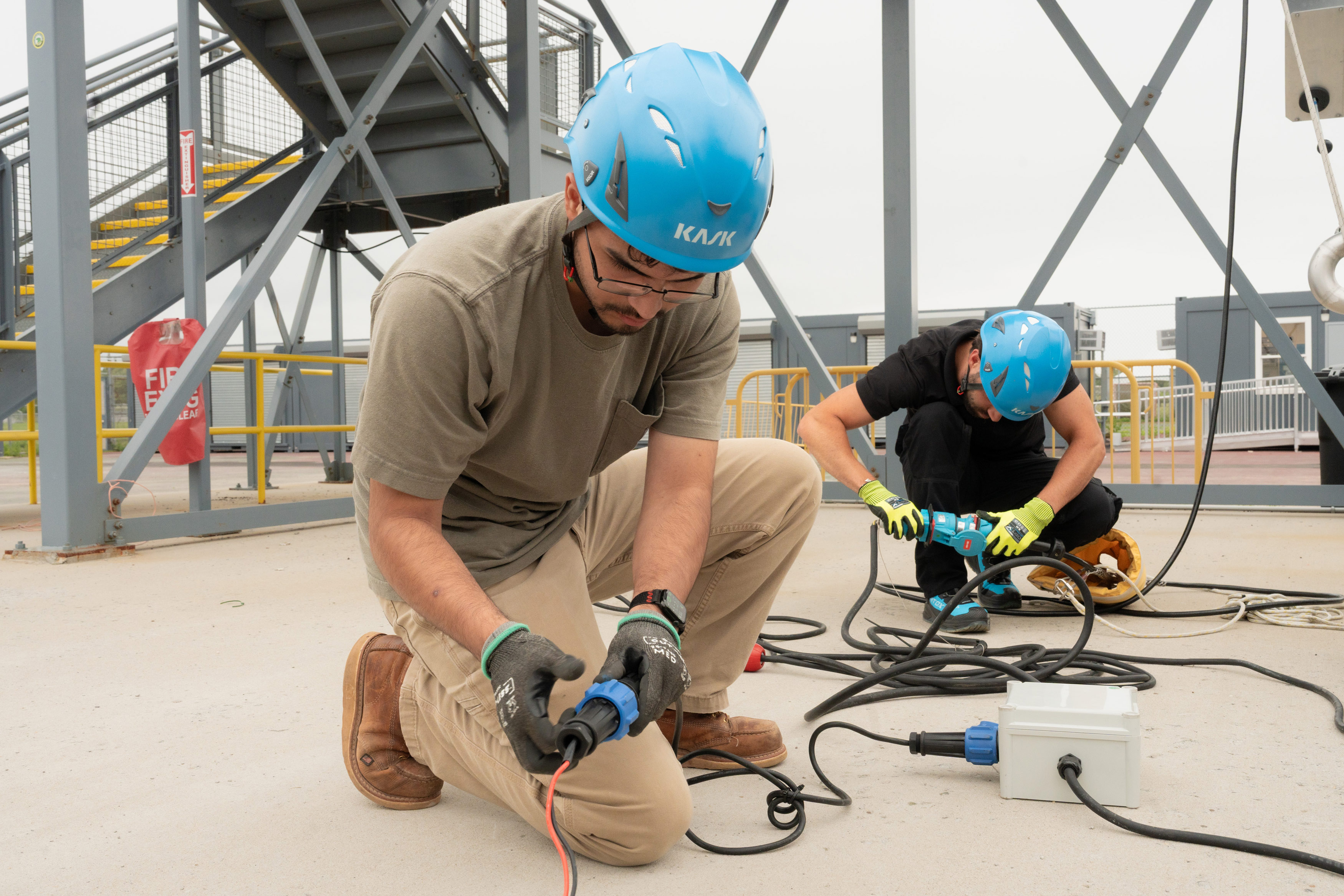
Located a half-hour drive from NOWTC on the campus of Stony Brook University, undergraduate students recently gathered in a laboratory setting to study the mechanics of wiring high-voltage direct current, or HVDC. Huddled around large testing stations, students practiced complex wiring configurations using simulated HVDC systems. Because HVDC technology transmits electricity efficiently over vast distances, it is frequently utilized to connect remote power generation sources, such as wind and solar installations, to densely populated urban centers.
The class is part of an initiative launched in 2024 across State University of New York campuses, backed by a $20 million investment from the state and the SUNY system through the Offshore Wind Training Institute. While initially created to supply technicians specifically for the offshore wind sector, the curriculum has recently pivoted to emphasize a broader range of HVDC applications, including connecting large-scale solar arrays to battery storage facilities and integrating regional electrical grids.
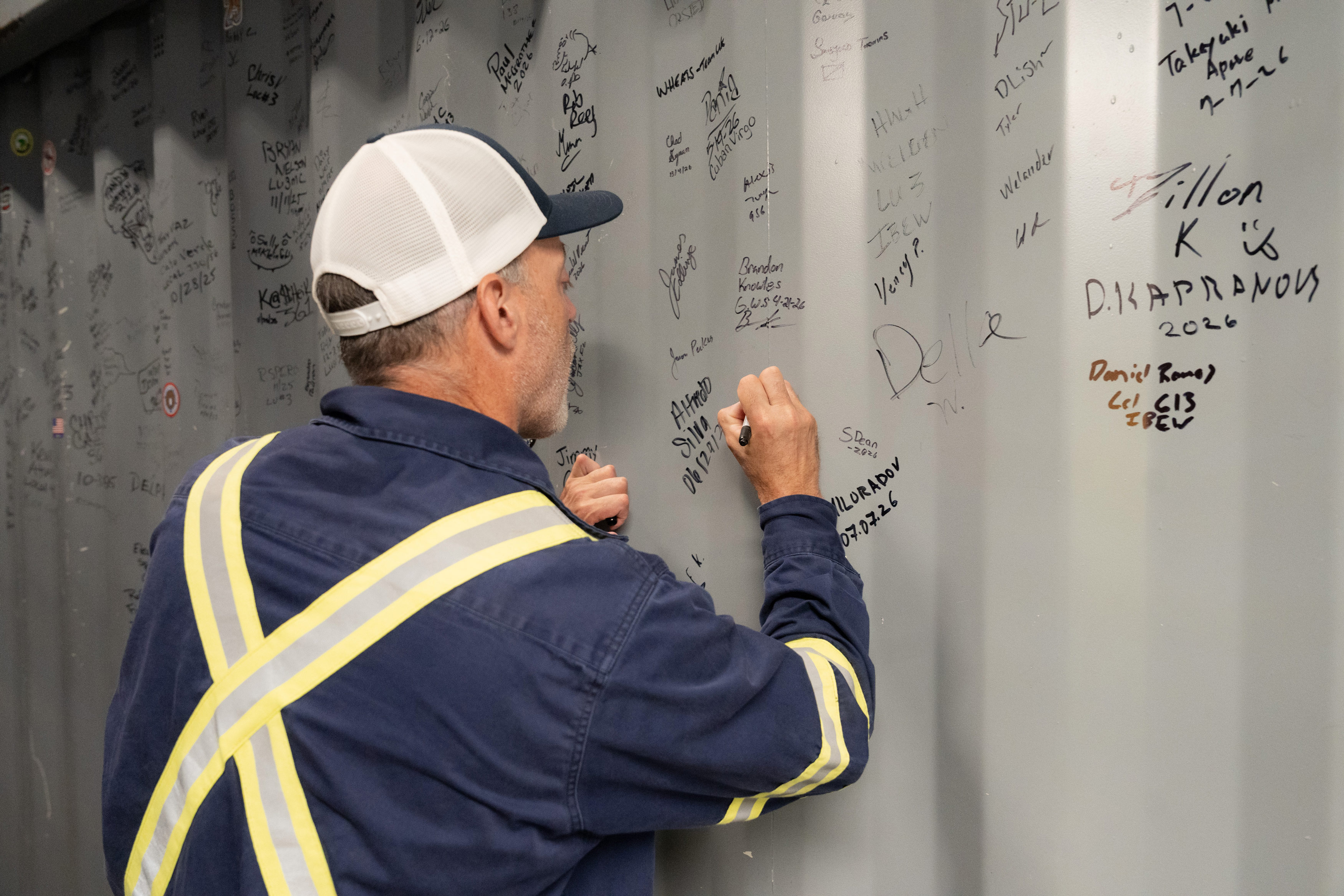
“Luckily, we have a skill and a discipline that we’re teaching these students that does not entirely rely on offshore wind,” said Derek O’Connor, senior workforce development manager in Stony Brook’s Office for Research and Innovation.
A comparable strategic pivot occurred within “A Taste of the Trades,” a paid summer training initiative for local high school students established collaboratively by Stony Brook, Suffolk County Community College, Brookhaven National Laboratory, and a private contractor tied to the Sunrise Wind project. The program offers hands-on experience in essential energy trades, including structural welding and microgrid development. While its inaugural summer focused heavily on introducing students to offshore wind careers through job site visits and networking events, recent iterations have broadened their exposure to general electric grid operations and regional infrastructure maintenance.
As O’Connor noted, examining the technical competencies required for offshore wind reveals extensive overlap with the skills demanded across the broader national energy sector. “We’ve been flexible and agile in responding to some of the changes, being less focused on the power generation source and more about grid stability and reliability,” he said.
Despite the political friction surrounding offshore wind and the contraction of marine projects, the wider clean energy economy continues to experience robust workforce shortages. Roles such as wind turbine technicians and solar installers rank among the fastest-growing occupations in the United States, according to data from the Bureau of Labor Statistics.
“The industry continues to grow, even with the uncertainty that we’re experiencing,” said Abby Huston, vice president of programs for the Clean Power Institute, the nonprofit workforce development arm of the American Clean Power Association. “What we’ve found is there’s a lot more adaptation in terms of how to build workforce programs rather than closing them down, because there’s still such a huge need.”
Other regional programs are executing similar transitions. The Massachusetts Clean Energy Center has redirected a portion of its funding away from offshore wind to support a broader portfolio termed “ocean tech,” which encompasses coastal resilience projects and marine ecosystem monitoring through environmental DNA analysis in coastal waters. Similarly, a Maryland state job training initiative launched in 2022 to support offshore wind has successfully placed thousands of workers into adjacent fields requiring comparable technical skills, such as advanced shipbuilding and aerospace manufacturing.
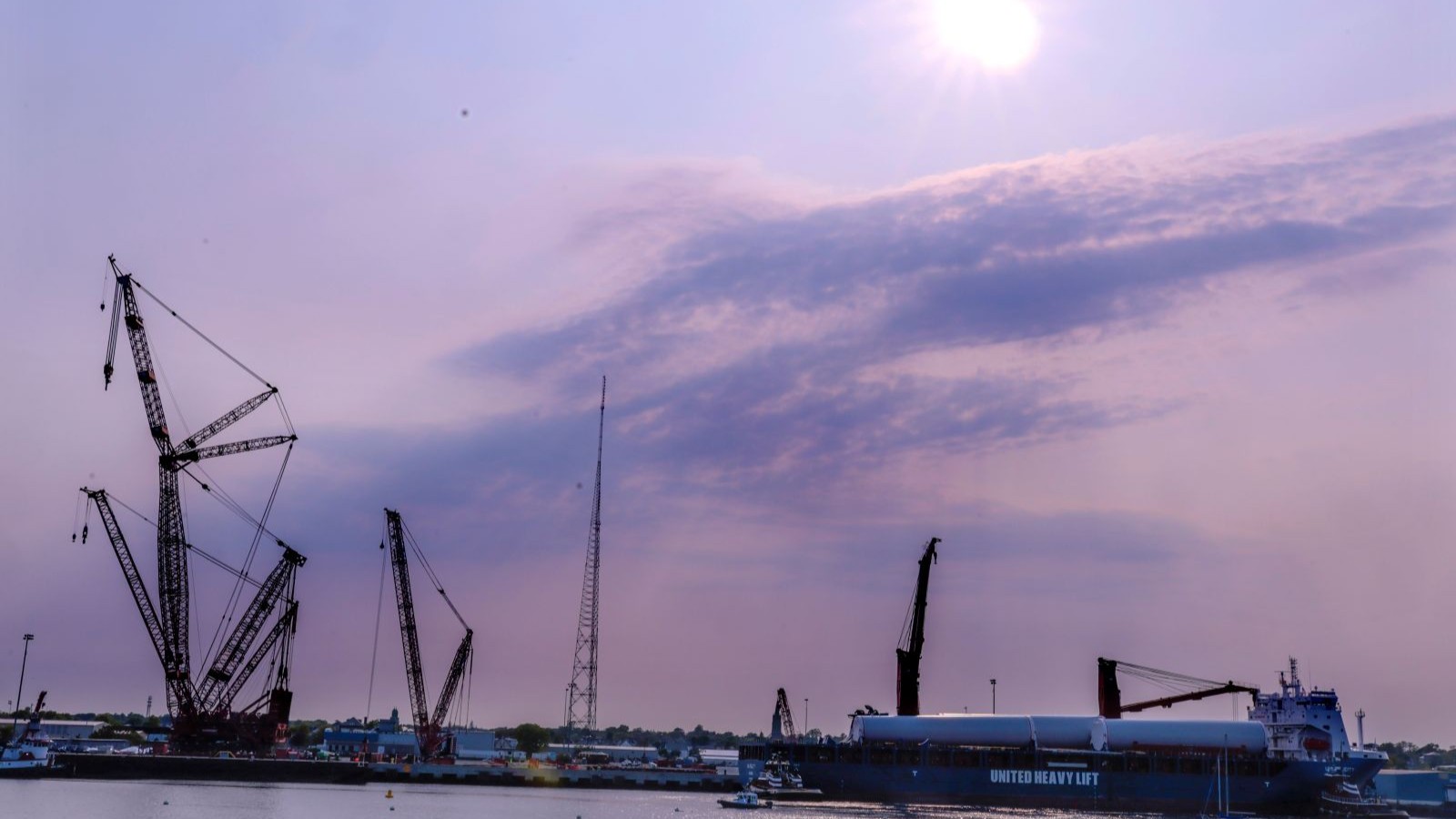
Meanwhile, industry analysts suggest that underlying economic pressures—specifically rising energy demand and fluctuating utility costs—will eventually force policymakers to reevaluate all available generation sources, potentially paving the way for an offshore wind resurgence in the future.
For now, training centers like NOWTC continue to see steady enrollment, though the demographic of attendees has shifted. According to Clayman, a growing proportion of those utilizing the facility are experienced workers returning to renew their mandatory safety certifications, which expire every two years, rather than brand-new entrants to the trade.
Over the summer, Billy Bishop was among those returning to renew his safety credentials. He estimates he has roughly another year of active work on the Sunrise Wind project before construction concludes. Once that assignment wraps up, he anticipates returning to standard onshore construction work—unless a dramatic reversal in the fortunes of offshore wind brings him back to the open water.