
The food chain taught in grade-school classrooms across the world presents a neat, linear narrative: the rat feeds on garden crops, the ermine snags the rat, and the bald eagle swoops down to pick off the ermine. While this tidy progression makes for an easy introduction to ecology, it fundamentally misses the sprawling, chaotic nuance of the natural world. In reality, ecosystems operate less like orderly ascending staircases and more like deeply interconnected webs. Parasites such as ticks and intestinal worms quietly feed on both the eagle and the ermine. When those apex predators eventually die, ants and various other scavengers descend to devour their carcasses. Furthermore, species like the brown rat are known to engage in infanticide, occasionally consuming their own offspring and effectively acting as predators of themselves.
Capturing this extraordinary complexity of species interactions has historically been a time-honored, painstaking process. For generations, field ecologists have spent countless hours spying on bird nests with binoculars to document what parents feed their developing young, or less romantically, carefully sifting through scat to identify the tiny, splintered bones of prey animals. It is field biology at its most granular, grueling, and physically demanding, yielding incredible insights but restricted by the sheer limits of human time and physical presence in the wild.
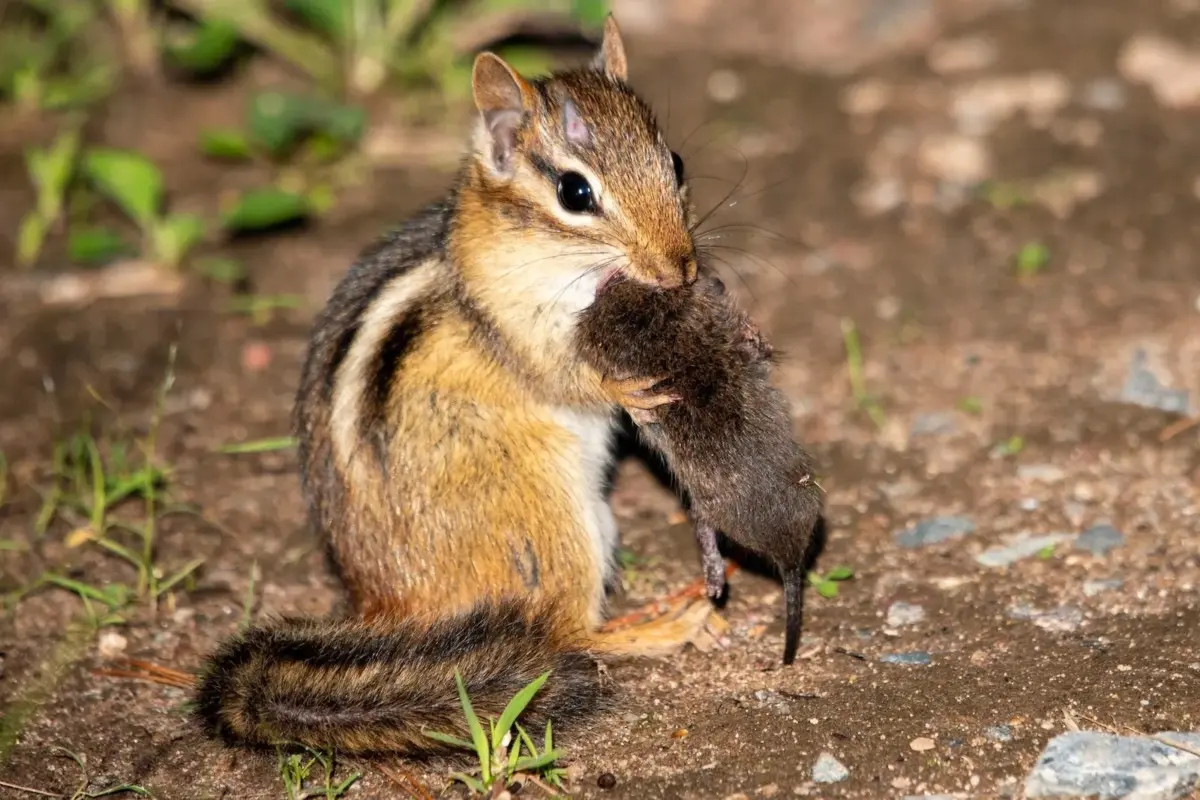
Now, researchers have gained access to a vastly more powerful—and significantly less malodorous—tool: a citizen science initiative known as Who Eats Whom. The platform taps directly into iNaturalist, the widely used, nonprofit social network where everyday nature enthusiasts and amateur photographers upload and geotag images of flora and fauna from around the globe. By leveraging this massive, crowdsourced digital repository, anyone can search for a specific animal, such as the "brown rat," and unearth startling photographic proof of an American ermine carting one away near a residential neighborhood in Ottawa, Canada. For those seeking even more dramatic encounters, a quick search for "red-tailed hawk" reveals raptors subduing snakes and squirrels across the United States.
Who Eats Whom is much more than a collection of fascinating wildlife photography; it represents a revolutionary dataset that could fundamentally inform conservation biology efforts on a rapidly warming planet. To date, the platform has successfully incorporated roughly 17,000 unique ecological interactions involving 5,700 distinct species across more than 100 countries. That is the sheer power of crowdsourcing at work, according to Bradley Allf, an ecologist who developed the platform while completing his work at North Carolina State University before transitioning to Colorado State University.
Allf notes that crowdsourcing generates an enormous volume of valuable ecological data in a manner that individual scientists simply cannot replicate on their own. Instead of hoping to spot a snake eating a meal during a brief window in the field, or waiting patiently for an animal to defecate so its scat can be analyzed, researchers can draw from thousands of observations captured simultaneously across the globe by smartphone-wielding citizens.
While the database offers vivid snapshots frozen in time, the broader scientific vision is to amass this continuous stream of data over coming years to reveal how ecosystems are actively transforming alongside a changing global climate. Aditi Mallavarapu, a computer scientist at North Carolina State University and co-author of a newly published paper describing the work in the journal PLOS Biology, emphasizes the long-term analytical value of the initiative. Even when looking back just a few years, researchers can detect shifting feeding patterns among various animal populations. This allows scientists to analyze not only what is actively being observed in the wild, but also what is conspicuously not being observed, pointing toward potential population declines or shifts in habitat use.
Who Eats Whom functions far beyond a static repository of captivating images. Users who click on the "Interactive Food Web" link located at the top right of the platform are greeted by a sprawling, dynamic map of ecological relationships. A search for the red-tailed hawk pulls up a complex web of small mammals that human observers have photographed the raptors hunting and consuming, with arrows clearly mapping the flow of energy into the predator. Looking even closer at the data reveals granular cascades; for example, one of the hawk’s frequent prey items, the American robin, feeds on common buckthorn and yaupon holly.
Plant-pollinator relationships and their subsequent predators are equally prominent within the platform. A search for the Western honey bee within the interactive food web demonstrates how the industrious insect—alongside numerous other pollinators—frequently ends up as a meal for the goldenrod crab spider, an arresting, ghostly white arachnid. At the same time, the interactive map highlights the vast array of plants that the bee feeds on, including honeysuckles, thistles, and buttercups, playing a vital role in plant reproduction by distributing pollen. There are all kinds of complicated ways that energy moves through real food webs, Allf points out, noting that the project aims to document that inherent messiness as thoroughly as possible.
The platform frequently captures rare and surprising interactions that elude standard scientific surveys. Contributors have photographed New World vultures dining on everything from wild boars and raccoons to groundhogs. In one striking instance along a beach in California’s San Luis Obispo County, a vulture was documented feeding on a baby white shark, which researchers suspect had been stillborn.
With millions of people roaming beaches, forests, deserts, and urban parks equipped with high-resolution smartphone cameras, ecologists have unexpectedly gained an invaluable, global army of allies. Peter Roopnarine, curator of invertebrate zoology and geology at the California Academy of Sciences, who was not involved in the research project, highlights that data acquisition has always been the single greatest challenge in studying complex ecological communities. There are simply staggering numbers of species and potential interactions unfolding constantly across the globe, Roopnarine notes. Many of these interactions are ephemeral, happening perhaps only once in the lifespan of a given organism, and they are geographically dispersed far beyond the reach of traditional research teams.
By systematically documenting who eats whom through the collective lens of the public, scientists and conservationists are better equipped to protect vulnerable species. As the planet’s climate rapidly warms, wild species are increasingly forced to migrate toward the relative coolness of higher latitudes and elevations. This large-scale geographical shift is aggressively reshuffling entire ecosystems and fundamentally altering long-standing predator-prey dynamics. Platforms like Who Eats Whom mean that ordinary citizens carrying smartphone cameras may well serve as the first line of defense, documenting the arrival of novel animal species in their local environments before traditional surveys catch up.
Rebecca Johnson, director of the Center for Biodiversity and Community Science at the California Academy of Sciences, who also did not participate in the development of the project, notes that the initiative is deeply engaging for the participants themselves. It fundamentally changes how people think about and contextualize the casual nature observations they capture and share online.
Simultaneously, invasive species—most notoriously exemplified by predators like the lionfish disrupting marine habitats—are violently shaking up ecosystems worldwide. Left unchecked, hungry biological invaders can decimate native species populations that may already be severely weakened by skyrocketing ambient temperatures and worsening droughts. Scientists emphasize an urgent need to track these disruptions. Roopnarine stresses that researchers must understand precisely what is being consumed by invasive species, and whether there are native species on those menus that require immediate conservation intervention.
Ultimately, to properly protect biodiversity in a rapidly changing and unpredictable world, conservationists can no longer rely solely on setting aside tracts of land or marine reserves and declaring victory. Protecting nature also requires ensuring that carnivores and omnivores have reliable access to the prey they naturally hunt, and that herbivores can find the specific plants they rely on for survival. Species do not simply need physical space or a generic habitat, Allf concludes; they fundamentally require the intricate ecological relationships that allow them to endure.