
For consumer packaged goods (CPG) companies entering a crowded marketplace, a well-worn playbook usually dictates the path forward. Founders will routinely film a handful of behind-the-scenes reels or TikTok videos, perhaps coordinate a couple of localized pop-up events, and—most critically—allocate thousands of dollars toward shipping free products to digital creators in hopes of securing viral word-of-mouth promotion.
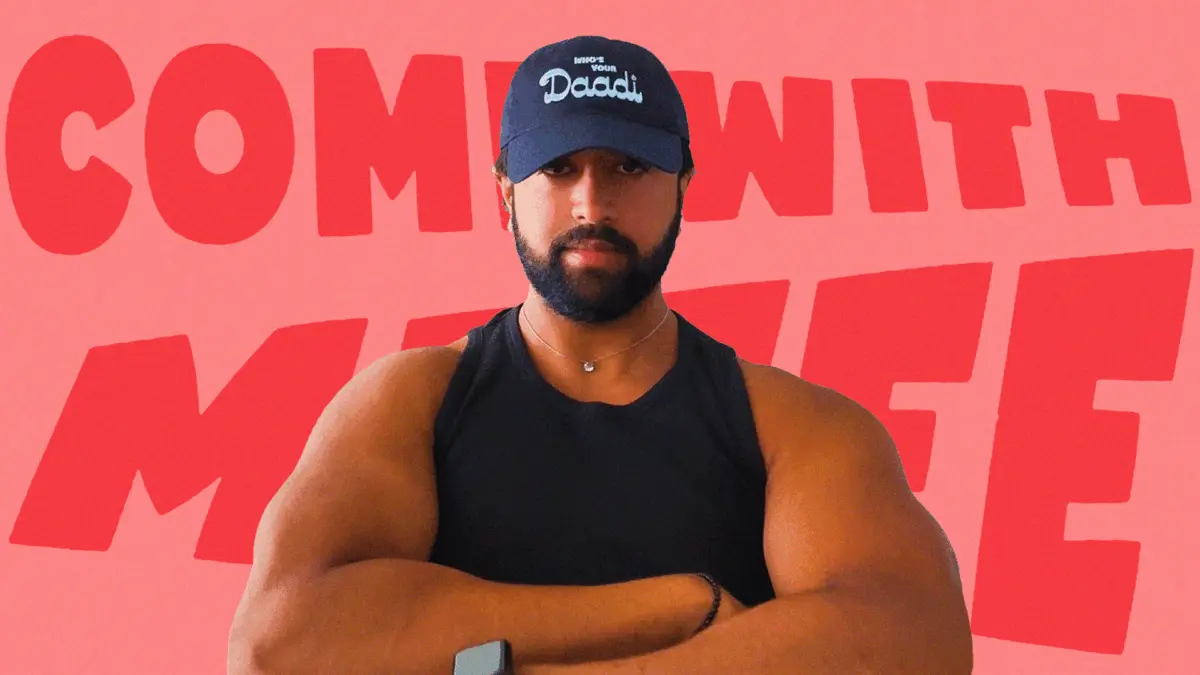
Jay, the thirty-something co-founder of the family-run popcorn brand Daadi Snacks who prefers to keep his last name off the internet, decided to completely dismantle that traditional playbook. Instead of currying favor with online personalities, he began publicly calling them out for their over-the-top, performative antics. He gleefully parodied their distinct mannerisms and breathless cadences, regularly opening his clips with a theatrical "OHMYGODYOUGUYS" or a nasally "Come with me…" before skewering his latest target. Among his frequent subjects are tourists complaining that European baristas refuse to replicate their overly complicated American coffee orders.
Through this counter-programming strategy, Daadi Snacks has steadily amassed 929,000 followers and counting. The organic traction has inadvertently transformed Jay into the exact archetype he spends his time mocking: an influencer, or perhaps a content creator, despite the fact that he did not even have an active Instagram account until 2022.
Unlike many of the internet personalities he lampoons, however, Jay attempts to leverage his digital footprint for community-oriented purposes, positioning himself as an approachable neighborhood advocate rather than a billboard for corporate brand deals. Ahead, we discuss how his family established Daadi Snacks, the unexpected fallout of his anti-influencer reels, and whether leaning into internet satire ultimately translates to selling bags of popcorn.
Roots in the Family Kitchen: How Daadi Snacks Came to Be
The origins of Daadi Snacks trace back decades, rooted deeply in family tradition rather than a corporate boardroom. Long before social media algorithms dictated snack trends, Jay’s grandmother prepared her signature popcorn recipe for the family. While the thought of commercializing the recipe had occasionally floated around in casual family conversations over the years, it remained little more than a distant idea.
The catalyst for change arrived with the COVID-19 pandemic. Working remotely while under lockdown, Jay and his extended family—including his grandparents, mother, and uncles—sought out creative ways to maintain connection during a period of isolation. During one of their virtual catch-ups, Jay broached the subject of finally turning the family recipe into a legitimate commercial enterprise.
With extra time spent indoors, the family agreed to dedicate their energy to refining the product. While his relatives worked meticulously on perfecting the recipe and flavor profiles, Jay turned his attention toward marketing, branding, and promotional strategy. By the time pandemic restrictions began to lift and society normalized through 2021 and 2022, the family had spent two intensive years iterating on their product to finalize their initial flavor offerings.
Rejecting the PR Machine and Finding a Local Voice
While social media is universally acknowledged as a critical engine for scaling modern CPG brands, Jay initially held a firm aversion to the platform. He did not even create an Instagram account until 2022, having never felt the need to participate in the ecosystem prior to launching the business.
The turning point came following a particularly frustrating interaction with a prominent food influencer—an encounter that would later inspire some of his most popular content. Rather than continuing to chase external validation or rely on the good graces of established internet personalities for shout-outs, Jay decided to take matters into his own hands and build his own distribution channel.
Living in New York City for over a decade and observing the rapid cultural transformations across neighborhoods, Jay developed a long-term vision for his platform. He realized that if he was going to build an audience to market his family’s snacks, he could simultaneously use that platform to highlight local institutions that traditionally miss out on digital attention. He envisioned a role akin to a community-focused tastemaker, spotlighting establishments that have operated quietly for thirty or forty years—locations that lack sleek storefronts, minimalist branding, or trendy Gen Z typography.

Despite his platform’s rapid expansion, Jay maintains a strict policy regarding collaboration requests. He has never reached out to an influencer for a partnership, nor does he respond to the influx of digital creators who regularly slide into his direct messages requesting free product samples or joint ventures. Instead, the momentum has flowed in reverse, driven entirely by organic curiosity and the viral reach of his commentary.
The Inflection Point of Viral Satire
Before Jay began posting his satirical skits, sales for Daadi Snacks were modest, though showing steady, incremental growth largely propelled by local pop-up events. That trajectory shifted dramatically in the spring, when he published a video explicitly naming the specific influencer whose behavior initially drove him to critique internet culture. When followers heard the background story behind his frustration, the post struck a nerve. Within a single week, the brand’s follower count surged from roughly 70,000 to more than 130,000.
Shortly thereafter, in June, the brand experienced an unprecedented commercial wave, receiving hundreds of online orders within a 48-hour window.
Jay attributes this overwhelming public responsiveness to a broader cultural fatigue. Particularly within dense urban environments like New York City, residents have grown increasingly weary of the endless proliferation of hyper-curated local influencers boasting millions of followers while drowning in sponsored brand partnerships. For many consumers, Jay’s content represents a much-needed counterculture pushback against an oversaturated digital landscape.
Deconstructing the Aspirational New York Aesthetic
When asked why restaurant influencers continue to command massive audiences despite widespread mockery, Jay points to a distinct psychological divide. He suggests that while hyper-stylized NYC food content rarely resonates with locals who actually live and work in the city, it exerts a powerful pull on audiences elsewhere who harbor aspirations of relocating there.
This dynamic mirrors established media tropes of packaging and selling a manicured, highly romanticized fantasy of urban life—a modern, algorithmically driven repurposing of the classic Carrie Bradshaw archetype. In reality, Jay notes, vibrant neighborhoods and exceptional food do not require the mediation of digital influencers to be discovered.
Distinguishing Content Creation from Commercial Influence
As his follower count approaches one million, Jay finds himself inhabiting the very digital space he frequently satirizes. However, he draws a sharp distinction between a traditional influencer and a content creator.
In his view, an influencer’s entire operational model revolves around a perpetual, self-sustaining loop of securing brand deals, marketing those products to an audience, and leveraging that exposure to attract even more corporate sponsorships. He notes that the post-pandemic economic climate—bolstered by venture capital-heavy beauty brands and rapidly scaling CPG companies—has allowed many creators to build followings without facing traditional operational hurdles or putting in foundational effort.
For his part, Jay maintains strict boundaries regarding monetized promotion. He routinely declines invitations from brands sliding into his inbox to review products, and he proudly refuses to accept public relations packages or complimentary merchandise.
When inspiration strikes for a new video, the process is entirely organic. Rather than engineering content around strategic posting schedules or optimal engagement times, Jay relies purely on his own opinions and frustrations. When something genuinely annoys him, he simply sets down whatever he is working on, grabs his phone, and records a concise, thirty-second response from his office chair under standard, unglamorous apartment lighting—proving that authenticity, even when delivered with a heavy dose of sarcasm, can still cut through the digital noise.