
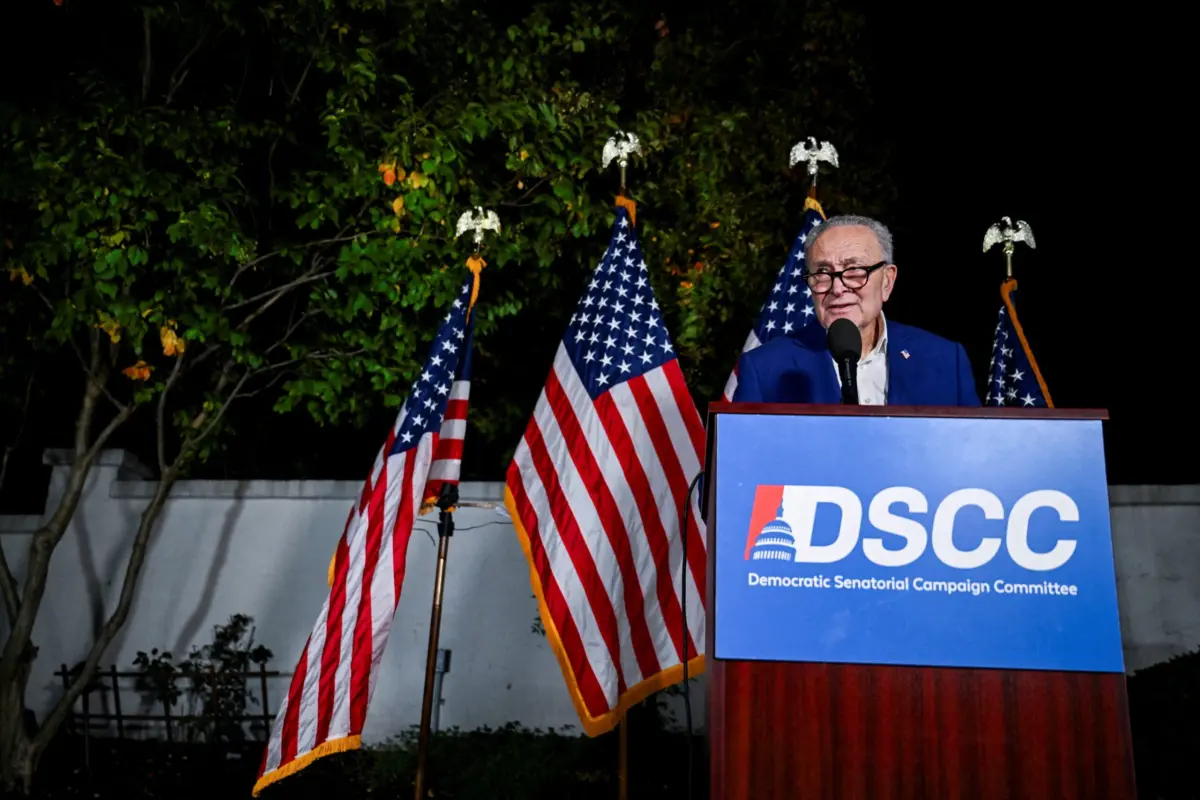
In the wake of the recent U.S. midterm elections, political analysts across the country have widely characterized the decisive "blue tsunami" as a broad rejection of former President Donald Trump and his political agenda. However, seasoned political observers and strategists warn that the results reflect a repudiation of the opposition rather than an unconditional embrace of the Democratic Party. The outcome carries a stark warning for party leadership: if Democrats fail to deliver tangible material improvements for working-class voters, they risk encountering the same wave of anti-incumbent anger in future election cycles.
For years, critics within political science and grassroots movements have argued that the Democratic Party establishment’s long-standing adherence to neoliberal economic policies contributed directly to the conditions that fueled Donald Trump’s original rise to power. By prioritizing market-based solutions and fiscal moderation, the party’s old guard left significant portions of the electorate feeling abandoned, severely undermining its ability to counter conservative populist appeals over the past decade.
Yet the 2026 midterm election cycle marked a noticeable and historic departure from previous strategies. Across numerous races, Democratic candidates moved away from defensive messaging and elite-focused strategies, adopting a more aggressive economic stance. This shift was largely driven by a growing contingent of progressive economic populists who explicitly targeted corporate power and framed themselves as direct defenders of working-class communities. The steady expansion of this economic populist movement within the Democratic Party gained unprecedented traction, reshaping the party’s campaign dynamics.
To understand why this internal transformation took a full decade to reach critical mass, analysts point to the substantial head start achieved by the conservative movement. Following the 2008 global financial crisis, anti-establishment energy on the right coalesced around the Tea Party movement. Supported by national conservative organizations such as FreedomWorks, right-wing activists quickly directed their momentum into Republican primary contests. By 2014, Tea Party insurgents demonstrated their electoral power by unseating GOP House Majority Leader Eric Cantor, effectively setting the structural foundation for Trump’s eventual takeover of the Republican base.
In contrast, the left’s initial populist surge took a very different trajectory. Occupy Wall Street emerged in 2011 as the progressive movement’s primary response to the financial crisis. By framing the central economic conflict as the 99 percent against the 1 percent and singling out Wall Street institutions and major banks as key drivers of inequality, Occupy succeeded in shifting public discourse surrounding wealth disparity. However, the movement remained deeply skeptical of electoral politics, choosing to focus on protest tactics rather than primary challenges or party recruitment.
The political framing established by Occupy Wall Street did not transition into formal electoral campaigns until Senator Bernie Sanders launched his 2016 presidential primary bid. Sanders brought issues of systemic economic inequality to the forefront of national debate. Nevertheless, it was not until the 2018 midterm elections—highlighted by the victories of Representative Alexandria Ocasio-Cortez and her allies, often referred to as "the Squad"—that the electoral infrastructure of the left began to mirror the primary challenge strategies developed by conservative activists nearly a decade earlier.
In the years following those early victories, an ecosystem of independent progressive organizations expanded across the country. Groups such as Justice Democrats, the Working Families Party, the Democratic Socialists of America, and the Sunrise Movement worked alongside local and statewide organizations, including PA Stands Up and PA United in Pennsylvania, to build long-term candidate recruitment networks. These efforts gradually broke the traditional Democratic establishment’s virtual monopoly on candidate selection by systematically preparing working-class champions for local, state, and federal office.
By the 2026 midterm cycle, these institutional investments converged with a broader organic shift in candidate strategy. A wider array of candidates, operating independently of national progressive organizations, recognized that economic populist messaging resonated powerfully with an electorate burdened by rising living costs. The shift reflected a changing consensus within political campaigns regarding what constitutes a winning strategy in modern U.S. politics. Core proposals previously championed primarily by the progressive wing—such as Medicare for All, expanding affordable housing, lowering childcare costs, regulating artificial intelligence, and increasing taxes on wealthy corporations and high earners—became central components of campaign platforms across numerous districts.
This shift within the mainstream Democratic Party was accelerated by major political events over the preceding two years. A significant turning point occurred following Donald Trump’s victory in the 2024 presidential election. Trump securing a second term eroded the faith of median Democratic voters in the established leadership’s political strategy. The loss exposed the limitations of the strategy championed by figures like Senate Leader Chuck Schumer, which prioritized courting affluent suburban swing voters over retaining traditional working-class support. The continued erosion of support among working-class voters, alongside shifts within Black and Latino demographics during the 2024 contest, underscored the need for a comprehensive strategic reassessment.
A second major catalyst emerged in 2025 during the New York City mayoral election. In a challenging national environment for progressives, Democratic Socialist Zohran Mamdani launched a highly disciplined campaign focused squarely on economic relief and municipal affordability. Mamdani secured the Democratic nomination and subsequently won the general election, demonstrating that a message centered directly on the cost of living could energize voters across diverse demographics. Simultaneously, Bernie Sanders and Alexandria Ocasio-Cortez conducted high-profile "Fighting Oligarchy" tours across the nation, filling arenas and maintaining public pressure on economic issues.
By the start of the 2026 midterm primaries, economic populism had established itself as the most viable strategy for candidates seeking to re-engage disillusioned voters. Rather than actively opposing this emerging populist momentum, national party leadership—including Schumer and House Minority Leader Hakeem Jeffries—largely allowed rank-and-file candidates to pursue economic platforms tailored to their districts. Consequently, even as top party figures faced low approval ratings, local and congressional candidates managed to project a unified focus on economic security.
Political sociologists often note that while corporate campaign funding creates strong incentives for politicians to avoid challenging powerful interests, political operatives are also heavily influenced by elite consensus within political consulting circles. For years, conventional wisdom within the consultant class dictated that bold economic reform was electorally risky. It took a decade of shifting public opinion and primary challenges for economic populism to penetrate that professional consensus, convincing campaign strategists that addressing material precarity directly is essential for winning back working-class support.
The outcome of the 2026 midterms indicates that the political analysis offered by progressive reformers in earlier election cycles reflected enduring voter priorities regarding economic security. By adopting a platform centered on economic relief, corporate accountability, and support for working families, the Democratic Party positioned itself to capture broad anti-incumbent sentiment.
However, political analysts stress that the 2026 victory does not signify permanent voter loyalty to the Democratic Party. Instead, the election has granted the party a window of opportunity to implement its legislative goals and address systemic cost-of-living challenges. Whether the party can maintain its momentum will depend on its capacity to convert its campaign promises into concrete policy outcomes before the next major election cycle.