
With more than 99% of preliminary votes counted in New Zealand’s general election, the nation faces a prolonged period of political uncertainty as the two major parties find themselves locked in a tight race while support for traditional political heavyweights drops to historical lows. Preliminary results reveal that the center-right National Party and the center-left Labour Party are running neck-and-neck in their share of the vote, but neither has secured a clear mandate to govern independently. Instead, a dramatic fragmentation of the vote has handed unprecedented influence to minor parties, most notably the centrist Opportunity Party, which has officially crossed the critical threshold to enter parliament and now holds the key to forming the next government.
The electoral commission is not scheduled to announce the final, official election results until November 27. The three-week window between the preliminary tally and the final declaration will be critical, as election officials process special votes cast across the country and overseas. In the meantime, political leaders from across the spectrum are preparing for complex, multi-party coalition negotiations that will dictate the shape and direction of the country’s next administration.
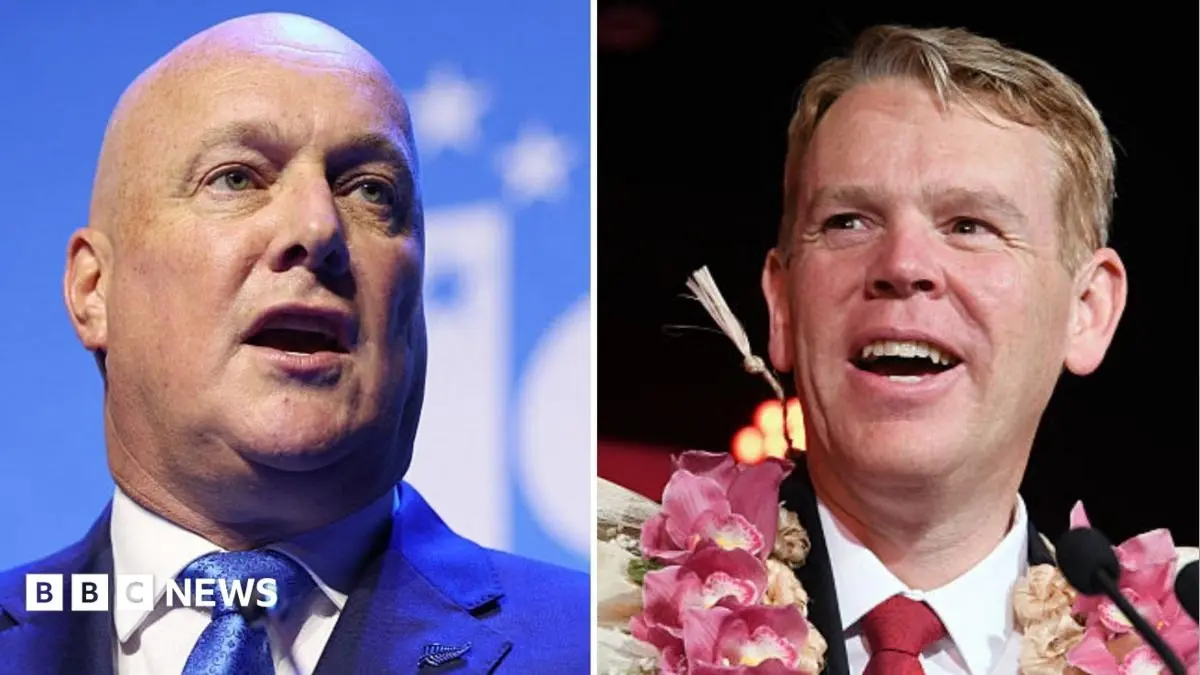
Addressing supporters at his party’s election night gathering, Labour leader Chris Hipkins acknowledged the ambiguous outcome delivered by the electorate. In a candid assessment of the tight results, Hipkins reflected on the uncertain landscape ahead. "The people have spoken," Hipkins told the crowd, adding with a touch of humor and pragmatically managing expectations, "It may take a bit longer to work out what they’ve said."
Hipkins emphasized that the narrow margins and the surge in support for minor parties signaled a clear message from voters regarding how the country must be governed moving forward. He noted that the election results made it abundantly clear that the next parliament would look vastly different from previous administrations, requiring a collaborative approach to policy and governance. Hipkins said the results made clear the "next parliament is going to require all of us to compromise, to work together and to find a common ground."
On the other side of the political aisle, National leader Christopher Luxon maintained an optimistic tone while acknowledging the fiercely contested nature of the campaign. Luxon took time to personally congratulate his rival, Hipkins, on what he described as a "very hard-fought race." Moving on to address his own party colleagues and campaign staff, Luxon expressed deep gratitude for the work put into the election effort, regardless of the precise final numbers that emerge from the counting centers. Luxon urged his supporters to remain proud of their campaign, telling party colleagues, "whatever the final count, we are incredibly proud of each and everyone for you."
The preliminary figures highlight a profound structural shift in New Zealand’s political landscape. Historically, the National Party and the Labour Party have dominated the country’s political arena, often absorbing the vast majority of the public vote even under the proportional representation system. However, the initial results from this election point to historically low combined support for the two main political forces. Together, National and Labour managed to capture only around 60% of the total vote share—a remarkably low joint figure that reflects growing voter dissatisfaction with the traditional two-party dynamic and a willingness among the electorate to seek alternatives across the political spectrum.
This historic dip in major party dominance allowed a diverse range of minor parties to capture significant portions of the vote. Trailing National and Labour in the preliminary count are the Greens, ACT, New Zealand First, the centrist Opportunity Party, and Te Pāti Māori, which advocates specifically for Māori interests and rights. Each of these smaller parties played a distinct role in capturing dissatisfied voters, but it is the performance of the Opportunity Party that has created the most immediate shockwaves in the post-election landscape.
For the first time in its history, the Opportunity Party successfully crossed the 5% electoral threshold required for a party to secure seats in parliament without winning an individual electorate seat. The achievement represents a major political breakthrough for the party, positioning it directly at the center of upcoming power-sharing talks. Speaking to enthusiastic supporters at Opportunity’s watch party, party leader Qiulae Wong framed the victory as a mandate for a fresh, future-focused approach to governance.
Wong highlighted the party’s platform of political reform and cross-party cooperation, emphasizing that their presence in parliament would serve to bridge ideological divides. "We believe that we can change the way we do politics to focus on the future, on the next generation, and on finding common ground," Wong told the crowd during her victory speech.
Because neither National nor Labour can reach a parliamentary majority on their own based on preliminary numbers, the Opportunity Party has quickly been described as this election’s ultimate kingmaker. Wong confirmed that the party remains open to working with either major political bloc, refusing to immediately align with either the left or the right. However, Opportunity leaders outlined a clear procedural framework for their upcoming negotiations, stating that they would initiate formal coalition talks first with whichever major party ultimately secures the highest number of parliamentary seats once all votes are finalized.
Legal and political experts emphasize that the final composition of the government remains entirely fluid until the complete vote count, including special votes, is certified. Professor Andrew Geddis, an expert in election law from the University of Otago, pointed out that the emergence of the Opportunity Party has transformed standard coalition math into an unpredictable multi-variable puzzle.
According to Professor Geddis, the unexpected strength of minor parties means that traditional assumptions about bloc politics may no longer apply. Geddis highlighted "the Opportunity Party as a wildcard player" that could ultimately "determine which bloc of parties is able to govern." He explained that the tight preliminary numbers mean small shifts in vote totals could dramatically alter parliament’s seat distribution.
"It will come down to some very fine vote margins not just between the parties, but in individual electorates," Professor Geddis said, noting the delicate balance of the current count. "We are going to have to wait for the special votes to be processed and counted over the next three weeks."
Special votes are a crucial component of New Zealand’s electoral process that can frequently alter election night outcomes. These consist of ballots cast outside a voter’s designated home electorate, including votes cast by citizens living or traveling overseas, as well as electors who enrolled on election day or required special voting provisions. Because special votes take longer to collect, verify, and count, they are not included in the initial election night tally. In past elections, special votes have tended to subtly shift seat allocations, sometimes depriving parties of narrow electorate wins or adjusting party vote percentages by vital fractions of a percent.
As the wait for the special votes begins, other minor parties are also assessing their positions and policy priorities in the context of a highly fragmented parliament. The Green Party saw its vote share rise by a couple of percentage points compared to previous elections, consolidating its position as a substantial force in parliament. Throughout the campaign, the Greens advanced bold economic and social proposals, including a headline policy aimed at tackling the cost of living by restructuring the domestic grocery market. Under their proposal, the country’s two dominant supermarket chains would be forced to divest retail stores, allowing for the creation of publicly-owned grocery stores designed to increase competition and lower food prices for consumers.
Meanwhile, parties such as ACT, New Zealand First, and Te Pāti Māori will also be closely monitoring the final counts to evaluate their leverage in prospective legislative alliances or opposition strategies. Te Pāti Māori’s continued presence underscores the ongoing importance of dedicated representation for Māori interests, adding further diversity to a parliament that will require intricate maneuvering to pass legislation.
With official results not expected until November 27, New Zealand enters a period of heightened political strategy and anticipation. Both Christopher Luxon and Chris Hipkins face the complex task of maintaining party unity while preparing for high-stakes discussions with Qiulae Wong and other minor party leaders. As leaders prepare for weeks of intense dialogue, the overarching reality remains clear: the next government of New Zealand will depend entirely on the ability of rival political factions to compromise, align policies, and construct a workable coalition out of one of the closest and most fragmented elections in the nation’s recent history.