
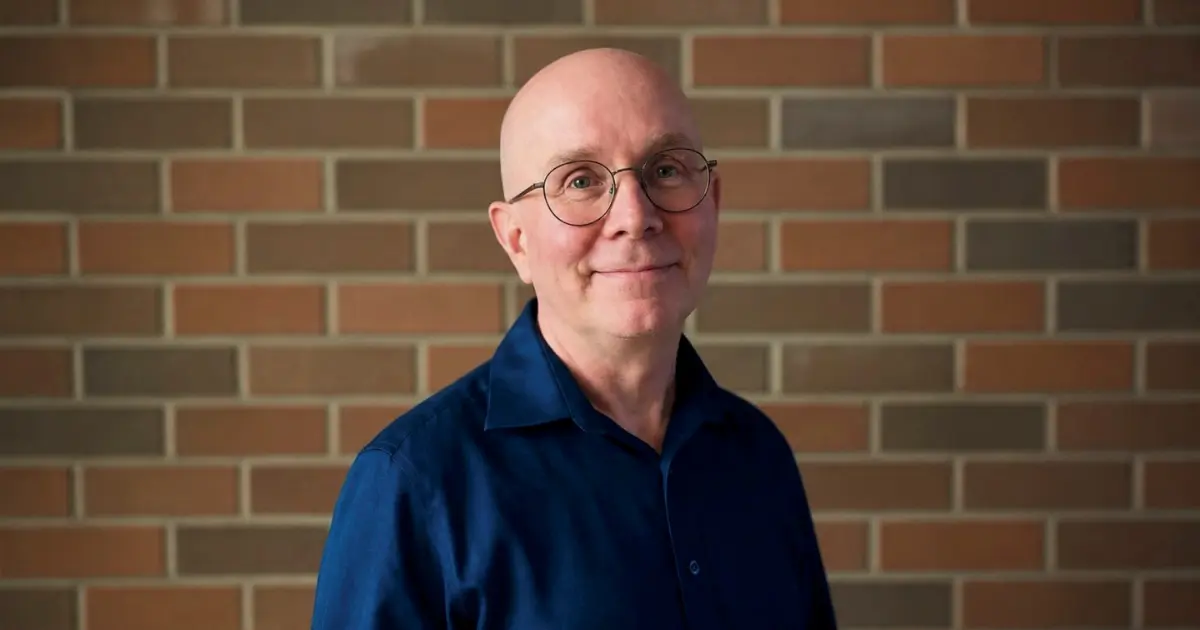
Although he does not officially take office until January 1, the Reverend Éric Hébert-Daly is already deeply immersed in preparations for his new leadership role as the general secretary of the United Church of Canada. Confirmed for the position at a General Council Executive meeting held in September following a rigorous seven-month search, Hébert-Daly steps into the role to succeed the retiring Rev. Michael Blair. Amidst a whirlwind of transitional duties, Broadview editor Janice Young caught up with Hébert-Daly over a Zoom call while he was stationed at a bustling Montreal train station between scheduled meetings, discussing his background, his leadership philosophy, and his expansive vision for the future of the denomination.
A Vision for a Smaller, More Deeply Connected Church
When asked about his motivations for pursuing the demanding national leadership role, Hébert-Daly expressed a profound enthusiasm for helping the church break free from well-worn paths and rigid institutional habits. Reflecting on how to spark optimism and energy across the denomination on a national scale, he emphasized that his drive stems from a natural discernment of where he believes the divine is calling the community of faith.
Addressing his overarching vision for the future of the institution, Hébert-Daly pointed to contemporary social realities, noting that consistent polling data reveals a profound spiritual hunger and a widespread public appetite for connecting to something larger than human existence. Pointing out the irony that the church occupies a unique cultural space dedicated to deep questions and community yet frequently struggles to meet that prevailing hunger, he shared an ambitious aspiration for the denomination’s cultural footprint. Rather than striving solely for massive institutional scale, he envisions a church that may be physically smaller in membership numbers yet is widely recognized nationally—even by those who do not regularly attend Sunday services—as the primary destination for authentic spiritual experiences, profound conversations, and genuine community engagement.
Lessons from Political and Non-Profit Leadership
Before answering the call to ministry, Hébert-Daly built a diverse professional background spanning political advocacy and non-profit leadership, including serving as the national director of the New Democratic Party (NDP) under the late Jack Layton. Reflecting on how those formative experiences might inform his tenure as general secretary, he recalled a pivotal era when the NDP was widely written off by political analysts as a spent force.
Drawing a parallel to the current cultural narrative surrounding institutional religion, Hébert-Daly invoked Layton’s forward-looking philosophy. He recalled how Layton urged his team to avoid getting hung up on past failures or what used to be, encouraging them instead to focus entirely on the path forward. Comparing political endurance to distance running, where athletes look ahead rather than behind them, Hébert-Daly rejected the fatalistic notion that the decline of the church is a prewritten determination. Having witnessed marginalized organizations and individuals written off before, he firmly maintains that the church possesses the resilience to chart a dynamic new trajectory.
Fostering Inclusion Across Francophone, Indigenous, and Intercultural Communities
As the first francophone general secretary in the denomination’s history, Hébert-Daly was asked whether his leadership might help francophone communities of faith feel more deeply integrated into the broader national church. He noted that such cultural bridges are not built by a single individual alone. Given that the majority of Canada’s francophone population has historically been rooted in the Roman Catholic tradition, he acknowledged that it has naturally taken time for the United Church to fully weave francophone communities into its broader institutional fabric.
Expanding on the inclusion of francophone, Indigenous, migrant, and diasporic groups, Hébert-Daly stressed that ministry must prioritize meeting the genuine needs of diverse people rather than retreating inward to serve institutional self-preservation. He emphasized that intercultural encounters—including the ongoing relationship with the Indigenous church—must be genuinely transformational. Moving away from paternalistic, colonial paradigms, he argued that while independent pathways must be respected, communities must also regularly come together to share meals, build relationships, and experience mutual transformation rather than existing in isolated silos.
Navigating Evolving Challenges and Embracing Evangelism
Looking toward the operational and spiritual challenges facing the general secretary’s office, Hébert-Daly highlighted the evolving relationship with the Indigenous church. Following the National Indigenous Spiritual Gathering held over the summer, he views this dynamic not as a burdensome administrative hurdle, but as a vital opportunity for mutual support and collaborative discernment.
Another pressing concern, he noted, is how local congregations perceive their own ministries. He expressed concern that Sunday worship services can sometimes mirror administrative meetings governed by rigid agendas and procedural orders, leaving insufficient space for the movement of the Spirit. This introspective look naturally extends to the topic of growth and community engagement, bringing up what he playfully termed the "e-word": evangelism.
Acknowledging that the United Church has historically felt uncomfortable with evangelism—an unease he fully understands given how the concept has been historically distorted—Hébert-Daly argued that the faithful should not shy away from sharing transformative spiritual experiences. He advocates for a uniquely United Church approach to sharing the faith, one rooted in compassion, community impact, and a willingness to speak openly about divine connection.
Empowering Lay Leadership and Supporting Ministry Personnel
To foster sustainable growth, Hébert-Daly emphasized the critical importance of recognizing and supporting the ministry of all church members, elevating the role of lay leadership within the denomination. At the same time, he underscored the necessity of ensuring that professional ministry personnel feel genuinely supported, inspired, and resilient during what remains a challenging era for Christian leadership in Canada.
Promoting a culture of "failing forward," he encourages congregations to embrace trial and learning, noting a promising cultural shift away from isolated independence and toward a collaborative willingness to work across regional boundaries. Having witnessed this grassroots openness firsthand during his four years as a regional executive minister, he believes the church stands at a pivotal turning point that unlocks unprecedented possibilities. Drawing inspiration from small rural congregations, which often maintain beautifully porous boundaries between their internal memberships and the surrounding neighborhoods, he noted that vibrant ministry does not require massive urban megachurches to make a profound impact.
A Journey from Roman Catholicism to a Church Without Preconditions
Reflecting on his personal spiritual journey, Hébert-Daly shared a background that may surprise many within the denomination. Born into a francophone Roman Catholic family, his parents were children of Quebec’s Quiet Revolution who viewed the institutional church with skepticism and actively discouraged his participation. However, his grandparents sustained his early connection to faith by taking him to church.
As he matured, Hébert-Daly encountered personal struggles with Catholic policies regarding gender roles, the treatment of divorced individuals, and the queer community. Discovering the United Church provided him with a spiritual home where he could bring his authentic self while sitting in pews alongside people holding diverse perspectives. In an increasingly polarized society characterized by mutual hostility rather than listening, he believes the church has a vital calling to serve as a sacred school of love, teaching people how to navigate differences and truly love one another as a lasting societal legacy of the Christian call.