
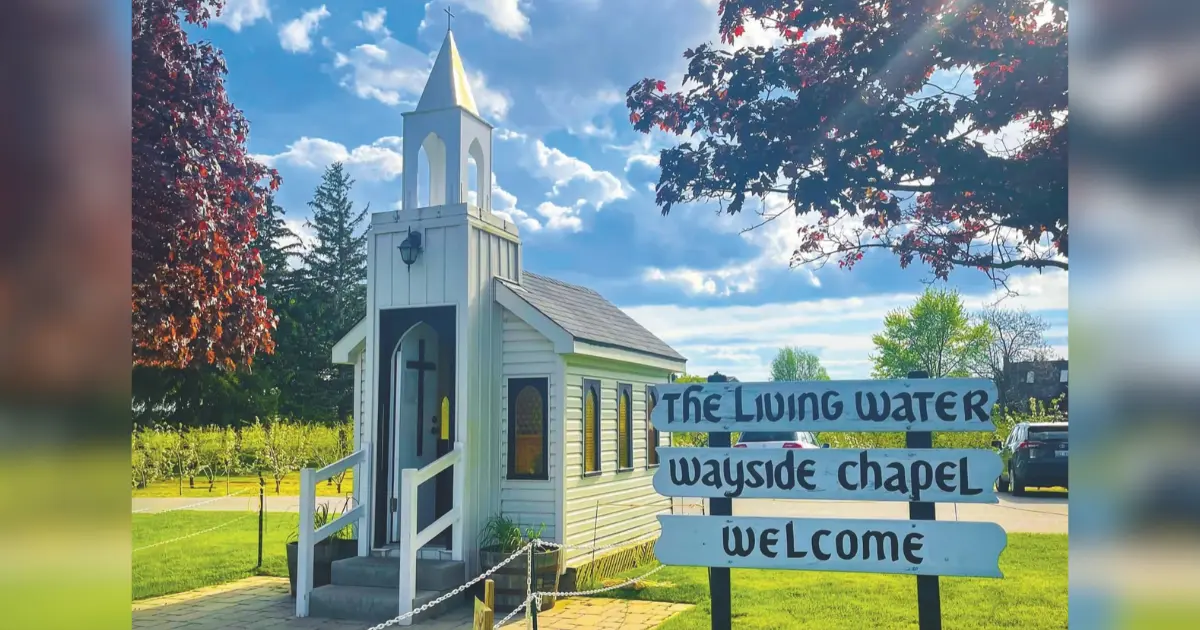
For some travelers and curious motorists journeying along Ontario’s winding, picturesque Niagara River Parkway, the quaint white structure is nothing more than an unusual roadside attraction—a rare, eccentric opportunity to step inside what is widely recognized as the smallest church in Canada.
For others, however, it serves as a profound place of reverence, quiet reflection, and spiritual grounding. It is a destination where visitors can offer a quiet prayer, express personal thanks, or simply take a moment away from the rush of daily life to appreciate the surrounding creation.
Each year, an estimated 10,000 people make a deliberate pilgrimage to the Living Water Wayside Chapel in Niagara-on-the-Lake. Situated in a region renowned for its natural beauty, the chapel welcomes visitors through its open doors between the months of April and December, shutting them only when winter weather makes the grounds too difficult to navigate.
Measuring a mere 72 square feet, the tiny micro-church is compact enough to fit barely a half-dozen people at any given time. Despite its diminutive footprint, the chapel carries a rich history that stretches back over half a century. It was originally constructed by three separate Niagara-area Christian Reformed churches as a testament to faith and community outreach. Surrounded by rolling vineyards, sprawling farm fields, and the gentle, ever-flowing current of the nearby Niagara River—the very "living waters" that inspired its name—the tiny sanctuary officially began welcoming travelers in 1965.
Over the decades, the chapel has evolved from a simple local project into a beloved regional institution. It has served as the picturesque home for Easter Sunday sunrise services for more than 50 years, drawing worshippers early in the morning to celebrate the holiday against the backdrop of the awakening river valley. More recently, the traditions have expanded; beginning in 2022, the chapel grounds began hosting a festive Christmas carol singalong, proving that the miniature house of worship remains vibrant and active year-round, even when its interior doors are closed for the deep winter months.
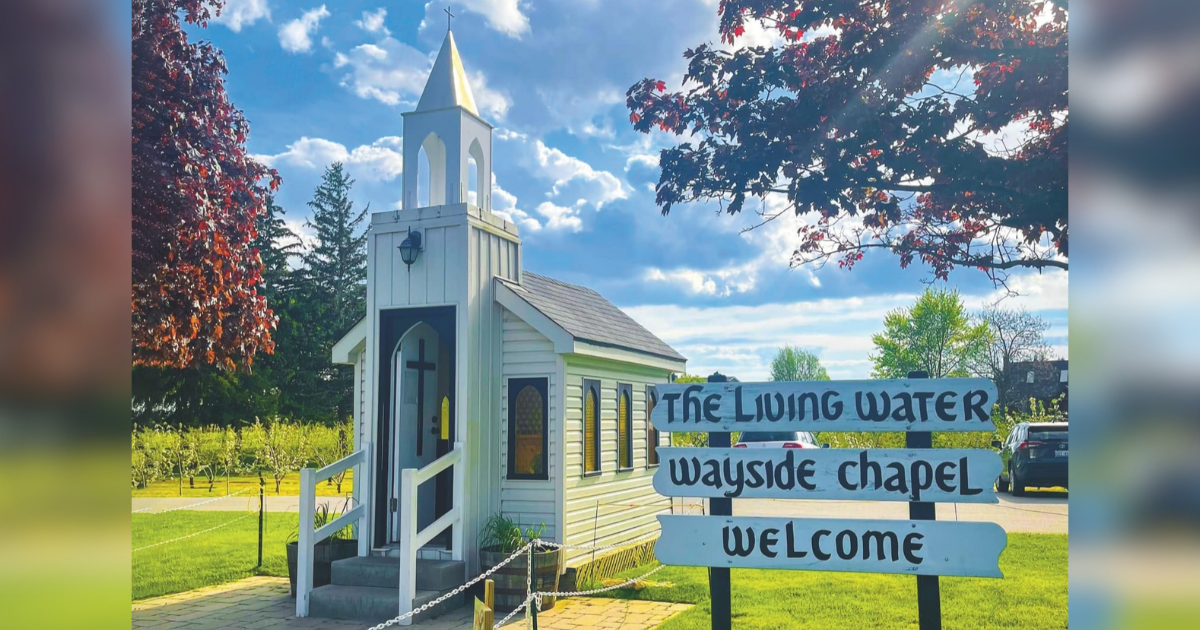
Rick Meloen, a dedicated community volunteer who has spent years helping to maintain the structure and leading services there, points out that the miniature church has experienced its share of physical journeys. Over the decades, the building has had to be moved a couple of times due to changing land use and development along the parkway. However, for nearly 20 years now, it has found a stable, permanent home very close to its original site. The chapel currently rests on land generously owned and cared for by the Walkers, a prominent local farming family who operate a popular fruit market nearby.
The longevity of the chapel is a testament to the quiet, unassuming way it integrates into the landscape and the lives of those who encounter it.
"The chapel passively, quietly, surprisingly has touched the lives of thousands of people," Meloen says, reflecting on the profound connection visitors feel to the space. "For many, it is much more than a landmark. It is a sacred place of personal memories, devotional life and even journeys into faith."
While the physical presence of the chapel is undeniably subtle—easily missed by a fast-driving motorist who isn’t paying close attention—its spiritual and emotional impact can be immense. Every single day, dozens of travelers pull their vehicles off the parkway, step out into the fresh country air, and pause to pay their respects, finding solace within the miniature walls or on the surrounding verdant grounds.
Written by Kevin MacLean, a journalist based in Niagara-on-the-Lake, Ontario, this chronicle of the Living Water Wayside Chapel highlights how places of deep meaning do not always require grand cathedrals or towering steeples to leave an enduring mark on a community and its visitors.