
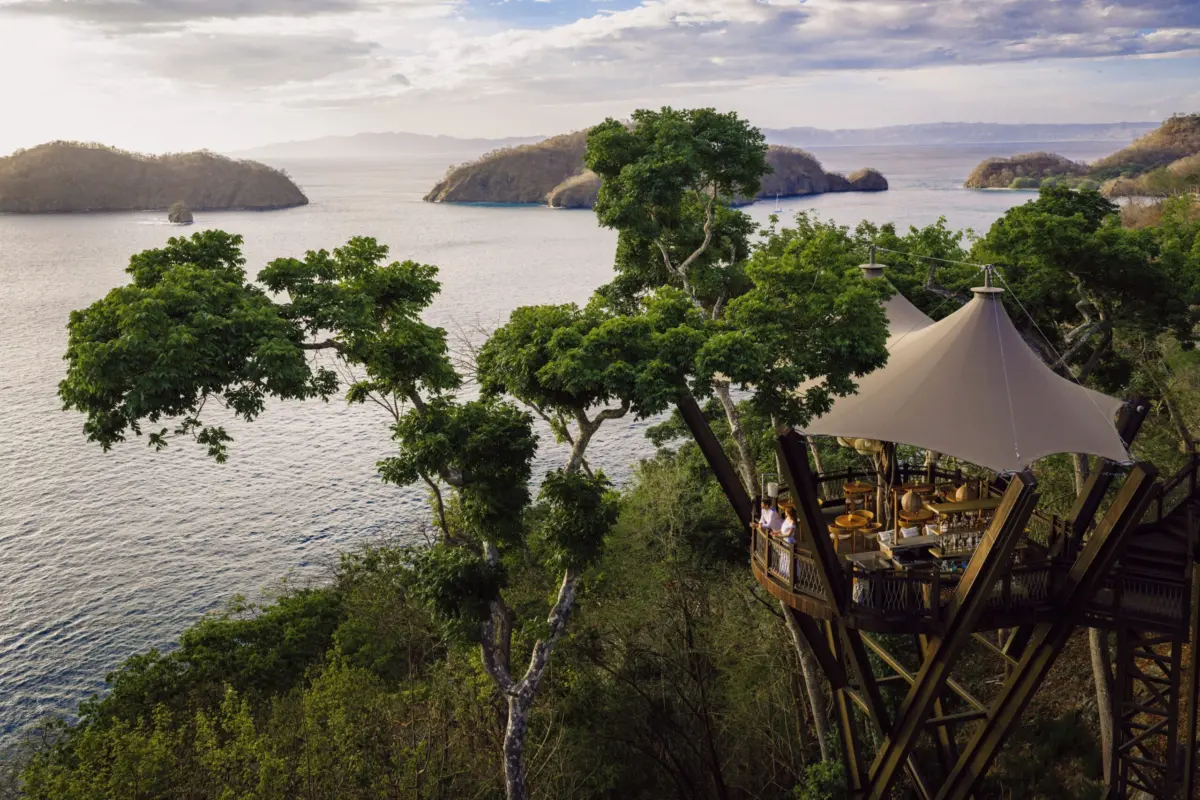
As part of an ongoing exploration into the meticulous culinary landscapes that define world-class hospitality, travelers are increasingly looking past standard room amenities to discover the "special sauce" properties use to craft deeply meaningful guest experiences. Few recent openings embody this philosophy quite like Nekajui, a Ritz-Carlton Reserve that has officially opened its doors on the verdant Papagayo Peninsula of Costa Rica. As Ritz-Carlton’s very first Reserve resort in Central or South America, Nekajui joins an exclusive tier of ultra-luxury retreats known for offering complete escapes in remote corners of the globe, stretching from the Chinese Himalayas to the sweeping sands of the Saudi Arabian desert.
The journey into this secluded coastal sanctuary begins immediately upon arrival. Guests check in within a modestly appointed bungalow that the staff affectionately refers to as La Casita. However, stepping across the drive—passing a massive ceiba tree heavy with traditional lanterns—immediately reveals the full, unbridled scale of the property. An endless expanse of manicured green lawn rolls out toward a series of swimming pools cascading down two distinct levels, ultimately giving way to the serenely sparkling waters of the bay beyond.
Sprawling over an impressive 1,400 acres, Nekajui establishes itself as an immersive jungle beach resort where nature and high-end hospitality seamlessly intertwine. Guests sharing the remote landscape with a rich local ecosystem—frequently spotting playful capuchins, curious coatis, and sun-basking iguanas—will also discover a deeply rooted local coffee and dining program that rivals the sophistication of the world’s most renowned metropolitan culinary destinations.

The property and rooms
Opened in February 2025 on the secluded Papagayo Peninsula, Nekajui features 107 meticulously designed rooms and suites. Each accommodation is oriented to offer sweeping, uninterrupted views of the surrounding jungle treetops and the brilliant colors of the ocean sunset. The interior design ethos balances modern luxury with regional authenticity, incorporating outdoor living access and intricate carved wood motifs that pay homage to Costa Rica’s vibrant Guanacaste region.
Many of the rooms feature private patios expansive enough to accommodate morning yoga sessions alongside private plunge pools. Guests lounging on lower levels should note an organic quirk of the architecture: water from an upper-level plunge pool may occasionally splash down toward the terrace below, serving as a subtle reminder of the integrated open-air design. For larger traveling parties or those seeking an even more immersive wilderness experience, the property also offers secluded treetop tents and expansive private villas that amplify the sense of space and seclusion.
While the main campus acts as the centralized hub for guest rooms, dining venues, and a tranquil spa, the resort’s vast grounds extend far beyond a single building. A dramatic funicular—operating much like a tiny cable car—transports guests down the steep cliffs. Along the descent, riders glide past the calls of howler monkeys before arriving at a secluded beach featuring water as warm as a pleasant bath and a private coastal cave waiting to be explored.

The restaurants and dining experience
The culinary vision at Nekajui’s primary dining venues is spearheaded by celebrated Peruvian chef Diego Muñoz. With an illustrious career that includes formative stints at world-renowned Spanish culinary institutions such as El Bulli and Mugaritz, Muñoz brings a high level of technical mastery and artistic composition to the resort. He leads the charge at the main restaurant, Puna, as well as Paruro, an intimate, six-seat chef’s counter discreetly tucked away inside.
At both Puna and Paruro, Muñoz presents menus defined by the layered flavors and sophisticated plating that helped propel Peruvian cuisine onto the global gastronomic stage. Puna leans into a vibrant fusion identity, subtly weaving international spices and techniques gathered from Muñoz’s extensive global travels into Peruvian classics, including a robust sudado and a zippy, perfectly balanced ceviche. Meanwhile, Paruro focuses on an East Asian-inspired experience, offering striking bites such as a nori-cured tenderloin and a fragrant seabass curry. One of Muñoz’s signature creations—a masterfully deboned, prawn-stuffed chicken wing—makes an appearance across both menus.
For Muñoz, sourcing local ingredients that rarely find their way onto standard Costa Rican menus remains a core priority. Interestingly, despite the overwhelming majority of Costa Rican territory encompassing marine environments, reliably sourcing fresh, high-end seafood can present a notable logistical challenge, making the kitchen’s commitment to local provenance all the more deliberate.

The beverage program matches the ambition of the kitchens. Cooper’s functions as a moody, mysterious cocktail lounge featuring a drink menu rooted in unexpected Guanacaste ingredients. Operating under a speakeasy-style concept, access to Cooper’s is strictly invite-only. However, guests eager to secure a seat need not be intimidated; a friendly conversation with a knowledgeable server or a request to a personal concierge can easily unlock an invitation.
Inside, the cocktail menu is remarkably ambitious, utilizing adventurous local distillates infused with ingredients such as goat cheese, cascara, and mango leaf. These experimental elements find their way into thrilling, unconventional riffs on classic libations, such as the martini-inspired Turrialba, which pairs fino sherry with the aforementioned goat cheese distillate. Elsewhere across the expansive property, guests can dine at the Niri Beach Club, which serves an Iberian-focused menu, or stop by the all-day Café Rincón for artisanal sandwiches, healthy bowls, and fresh pastries.
The inside scoop
Nekajui’s dedication to hyper-local ingredients finds its most passionate expression within the property’s dedicated coffee program at Café Rincón. Managed by Fabi Rojas, the resort’s micro-roastery features a continuously rotating selection of beans harvested from each of Costa Rica’s seven distinct coffee-growing regions.

Despite being a country roughly the size of West Virginia, Costa Rica produces an astonishing diversity of coffee profiles. These range from easy-drinking, crowd-pleasing beans cultivated in the lower elevations of the coastal west, to the bright, acidic pops originating from the Valle Occidental in the north, all the way to the fruity, highly coveted Geisha varietals—one of which famously fetched over $300 per pound at a public auction—sourced from the mountainous Los Santos region in the south-central territory. To secure access to this spectrum of exceptional beans, Rojas has carefully cultivated personal relationships with independent farmers across the country.
While guests can order their coffee prepared in any traditional style, the definitive experience at Café Rincón involves brewing through a vandola. Resembling a single-piece clay carafe and pour-over cone that might easily be mistaken for an artifact dating back hundreds of years, the vandola is actually a modern design created by Costa Rican coffee roaster and barista Minor Alfaro in 2015.
According to Alfaro, brewing within a clay vessel helps maintain aromatic compounds for a significantly longer duration. Furthermore, a specialized valve integrated into the base of the dripper allows for a controlled, gentle oxygenation process. While oxygen is traditionally viewed as the primary enemy of stale coffee, permitting a tightly regulated micro-dose of air through the valve serves to naturally sweeten the flavor profile of the brew. Beyond outperforming standard home brewing equipment, every vandola used at the resort is a completely handmade work of ceramic art—serving as a fitting vessel to showcase coffees that have been grown, roasted, and brewed with meticulous care in the heart of Costa Rica.