
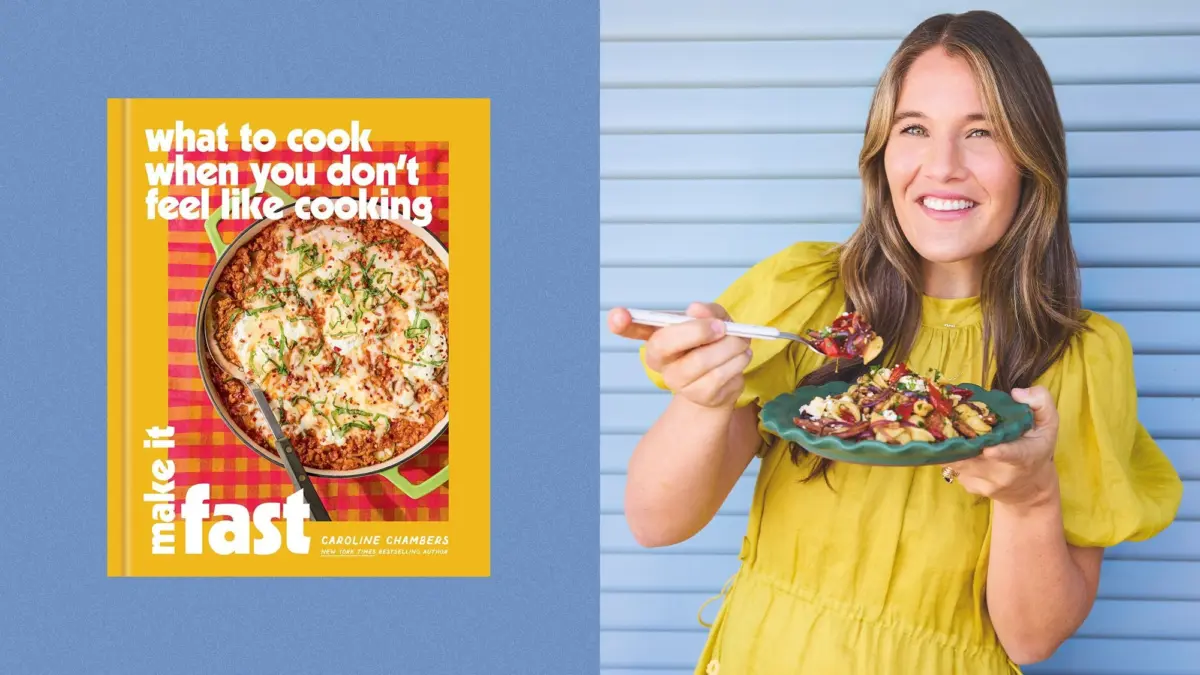
What does Caroline Chambers cook when she truly does not feel like cooking? That is the central question posed by food writer and editor Chris Morocco in a recent interview following Chambers’s brutally honest and heartwarming essay in Bon Appétit’s postpartum meal series, The Fourth Trimester. In her writing, Chambers reflected on finding her footing as a home cook after the birth of her first son. Years later, with three more children added to the mix, she now navigates a hectic blend of family life, professional writing, and everyday chaos—all while maintaining her trademark authenticity and sharp humor.
Chambers has built a massive following through her popular Substack newsletter, What To Cook When You Don’t Feel Like Cooking. Her first cookbook was named one of the best of 2024 by culinary critics, and anticipation has been high for her next title, Make It Fast. In their wide-ranging conversation, Morocco and Chambers discussed the realities of modern mealtime, the psychological barriers that keep people out of the kitchen, and the surprising shortcuts that make feeding a family of six manageable.
Why Time is the Ultimate Culinary Currency
When Morocco asked Chambers how she decided on time as the guiding theme for her upcoming cookbook, Chambers pointed directly to the root cause of dinner-time dread. She explained that a massive part of why cooking can feel like an absolute hellscape is simply a lack of time. Modern parents are overbooked, overworked, and constantly trying to balance being good parents, partners, and friends, while squeezing in a few minutes of exercise. At the end of a long day, preparing a meal often feels like the absolute last thing anyone wants to do.
By structuring her new book around time constraints, Chambers aims to remove the guesswork. When home cooks can flip through a chapter dedicated entirely to 15-minute meals, they can immediately tell themselves that it is achievable. Alternatively, the book’s "walk away" chapter offers recipes requiring under 30 minutes of active prep time before items can be left to simmer in a pot or slow-roast in the oven while the cook goes about their day.
Fixing the Prep Step Dilemma
One of the boldest choices Chambers made in Make It Fast was incorporating all ingredient preparation directly into the recipe instructions. Rather than listing prep steps separately or assuming ingredients are magically chopped before cooking, Chambers’s active times account for every onion diced and every carrot shredded—a practice rarely seen in mainstream recipe writing.
Drawing from years of direct feedback via her Substack community, Chambers learned that readers do not like being misled by hidden prep times. When a recipe takes longer to chop than expected, her readers let her know. This dynamic has allowed her to refine her approach and address common pain points. Furthermore, spelling out exact moments for prep maximizes efficiency in the kitchen. Minced garlic happens while the chicken sears, and herbs are chopped while the pasta boils. Without this guidance, novice cooks often resort to a formal mise-en-place at the very beginning, needlessly adding time to an already rushed process.
The Staples and Shortcuts That Save the Day
Despite being a professional recipe developer, Chambers relies heavily on practical, store-bought shortcuts to keep her household fed. She readily professes her love for bagged salads, naming Taylor Farms Caesar a household staple that she pairs with steak a couple of times a month. Other essential time-savers in her pantry and freezer include lemons, bulk-cooked and frozen rice, frozen garlic and ginger cubes, and Better Than Bouillon—favoring low-sodium chicken while occasionally dabbling in fun varieties like sofrito and sautéed onion. She also keeps a steady supply of Trader Joe’s salsa verde for poaching and shredding chicken thighs, alongside various chili crisps, crowning Red Clay’s southern chili crisp with peanuts and shallots as the ultimate flavor booster.

Overcoming the Fear of the Kitchen
Reflecting on broader culinary trends, Morocco noted that popular recipes across the food media landscape have steadily grown simpler and easier over the years. This led to a discussion on whether classic techniques, such as roasting a whole chicken, still hold a place in modern homes, or if the convenience of supermarket rotisserie chickens has rendered them obsolete.
Chambers offered a deeper psychological theory about why cooking feels so daunting for many people today. Beyond a simple lack of time, she suggested that many adults were never actually taught how to cook. As the children of the first generation where dual-income households became widespread, many individuals missed out on the traditional kitchen apprenticeship from their working parents. Consequently, fundamental skills like dicing an onion remain unfamiliar. When a beginner encounters a recipe instruction to cut an onion without knowing how, immediate frustration sets in, fostering a false belief that they are bad at cooking and that the process takes too long.
Despite the tongue-in-cheek title of her brand, Chambers noted the underlying irony: her readers actually do want to cook. Instead of turning exclusively to delivery apps, they willingly try her newsletter and cookbooks because they want to reclaim the kitchen. When home cooks successfully execute simple recipes, their confidence grows, eventually encouraging them to tackle more intimidating techniques like roasting a whole bird.
Managing Picky Eaters and End-of-Day Fatigue
Feeding a household of four young boys—ages 7, 6, 4, and 14 months—presents its own daily battles. Chambers joked about the shifting preferences of her children, who might declare ribs their favorite food one week only to complain that the exact same recipe is too spicy the next. Recognizing food preferences as a common tool for children to assert independence, she recently instituted a strict two-bite rule. Children must try at least two bites of the family meal; if they genuinely dislike it, they are offered an alternative like hummus and vegetables or a peanut butter and jelly sandwich.
That fallback sandwich is prepared with specific ingredients: Dave’s Killer Bread 21 Whole Grains, Ground Up Honey Sea Salt peanut butter, and Bonne Maman Strawberry Jam. Chambers admitted she cannot entirely fault her six-year-old for preferring it, given how delicious the combination is.
After a full day spent knee-deep in pasta development and dishwashing since early morning, Chambers experiences the classic culinary paradox where the food professional’s own household suffers from lack of a proper plan. Living in a rural area with subpar takeout options, her ultimate fallback dinner involves steaming frozen dumplings and broccoli florets simultaneously in a steamer basket while quickly whisking together a homemade peanut sauce. While her children devour the meal—barring the holdout six-year-old—it proves that even professional cookbook authors rely on straightforward, low-effort solutions when the energy simply runs out.