
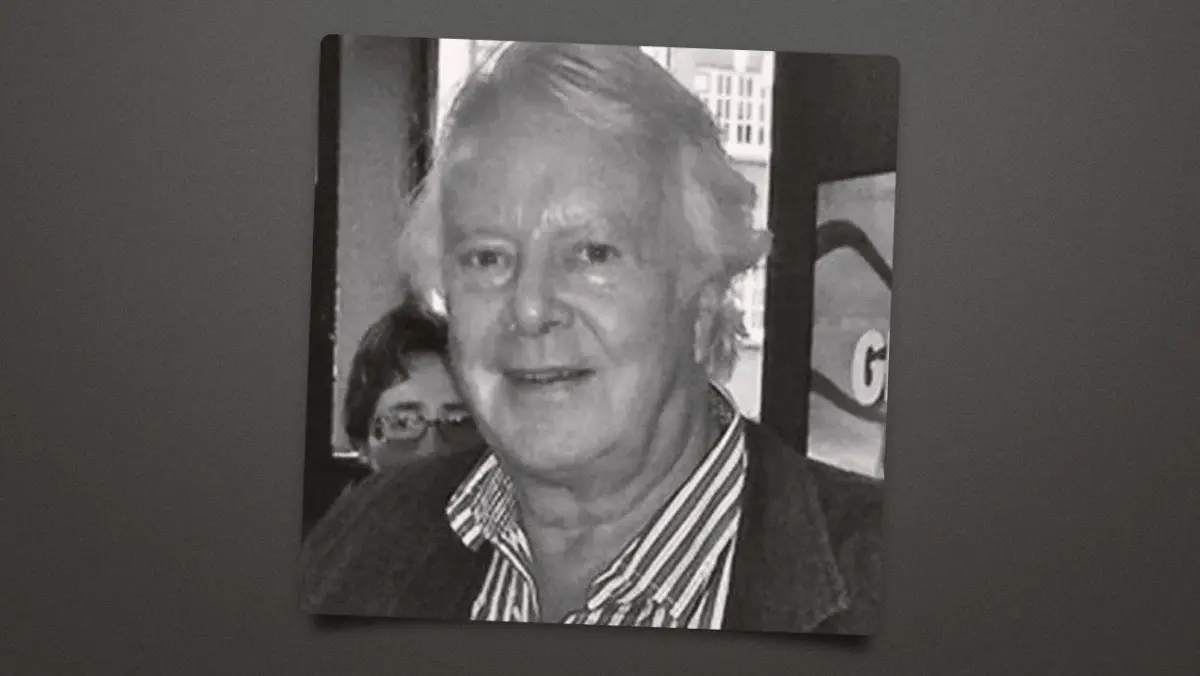
John Grover, the celebrated British film editor who helped shape half a dozen James Bond blockbusters and famously spent six grueling months performing heavy-breathing exercises at the behest of Stanley Kubrick for 2001: A Space Odyssey, has died at the age of 87.
His death was announced by the British Film Editors organization. Grover was a dedicated and longtime vice chairman of the professional guild, which honored his extensive contributions to cinema by presenting him with its prestigious Lifetime Achievement Award in April.
Over a prolific career that spanned decades, Grover earned a reputation as one of the industry’s most reliable and talented craftsmen. He served as the primary film editor on several iconic 007 films starring Roger Moore, including For Your Eyes Only (1981), The Living Daylights (1987), and Licence to Kill (1989). He also played an integral role in assembling The Spy Who Loved Me (1977), Moonraker (1979), and Octopussy (1983).
In total, Grover worked on six films starring Roger Moore, extending beyond the spy franchise to include the action-adventure films The Wild Geese (1978) and The Sea Wolves (1980). His diverse resume also featured credits on The Final Option (1982), Tobe Hooper’s science fiction horror film Lifeforce (1985), Jim Henson’s fantasy classic Labyrinth (1986)—which Grover frequently cited as his personal favorite project—and the 1984 NBC historical miniseries The First Olympics.
Long before he was cutting major features on his own, Grover built his foundational skills early in his career as an uncredited assistant editor. In that capacity, he collaborated with some of the most legendary directors in cinematic history. He worked alongside Robert Wise on the psychological horror masterpiece The Haunting (1963), David Lean on the sweeping epic Doctor Zhivago (1965), John Frankenheimer on the high-octane racing drama Grand Prix (1966), Stanley Kubrick on the groundbreaking sci-fi milestone 2001: A Space Odyssey (1968), and Herbert Ross on the musical drama Goodbye, Mr. Chips (1969).
Of all his early experiences, his time working under Kubrick left some of the most vivid and colorful memories. During a 2016 editing conference, Grover spoke candidly and bluntly about his tumultuous time dealing with Kubrick, a filmmaker famously known for his uncompromising, manically perfectionist approach to directing.
“I spent six months of my life with that idiot,” Grover recalled during the panel. “Although he was a supposedly good filmmaker, he was mad. He’d kill the artist by [saying] keep going again and again and again.”
Grover added his unvarnished thoughts on the resulting masterpiece, stating, “I think [2001] is a load of rubbish, it’s the most boring, long, stretched out [film]. I mean, OK, it was very clever [with its] use of original music, which we had to get back from Germany, ‘The Blue Danube’ and all that. It’s very ahead of its time; what actually we were doing in imagination actually happened, and the space stations are now up there.”
The chaotic production lore surrounding 2001 is legendary among film historians. In his 2018 book, Space Odyssey: Stanley Kubrick, Arthur C. Clarke, and the Making of a Masterpiece, author Michael Benson detailed how Grover accompanied editorial assistant David de Wilde to record Kubrick—who was battling a stubborn head cold at the time—breathing heavily. The resulting audio was utilized to heighten the intense, claustrophobic atmosphere during critical scenes featuring astronauts Dave Bowman, played by Keir Dullea, and Frank Poole, played by Gary Lockwood.
“With Grover’s help, they ran a microphone from the soundboard in the theater and positioned it next to Kubrick’s face, after which he lowered the helmet onto his shoulders,” Benson explained in his book.
However, Grover maintained a different version of events, adamantly claiming that it was he, not the director, who provided the laborious inhaling and exhaling heard in the final theatrical release.
“All I did was breathing for six months,” Grover said. “[Kubrick] wanted it done with the helmet… He’d sit right at the front… with a notebook, and you’d run the sequence and he’d be writing and he’d come back and say, ‘OK, John, very good, do it again.’ You had to watch [the film] pretending you were doing exercises and straining and moving things.”
A spokesperson for the British editors guild later weighed in on the Hollywood folklore, noting that “both Stanley K. and John Grover were recorded for the ‘heavy breathing’—and it is thought that the recording of John was the one used for the film.” What remains historically certain is that the breaths were captured simultaneously on two separate rolls of 35mm film in grueling 10-minute takes, allowing Grover to easily cut between them to eliminate unwanted ambient noise.
A decade after his turbulent voyage into space with Kubrick, Grover returned to the cosmos as an assembly editor on another cosmic adventure, Lewis Gilbert’s Moonraker. Working alongside fellow editor John Glen, Grover helped cobble together the final cut of the space-faring Bond film from a staggering 800,000 feet of raw film. The demanding post-production process stretched across 10 intense months, culminating just a single day before the film’s high-profile world premiere.
During his work on The Spy Who Loved Me, Grover was handed the responsibility of editing the now-legendary pre-credit sequence that famously culminates with Roger Moore’s James Bond skiing off a towering cliff before deploying a Union Jack parachute. While Glen was stationed on location with the second-unit production team first in Switzerland and later on Baffin Island in Canada, Grover waited back at the studio for the incoming footage.
“I was in the cutting room preparing, waiting for film and it didn’t come in, because they couldn’t shoot it,” he recalled. After an agonizing 10-day wait brought on by atrocious, uncooperative weather, the resilient crew was finally able to capture the spectacular stunt during a fleeting 15-minute break in the harsh conditions.
True to his clever nature as an editor, Grover managed to sneak a personal touch into the final cut of The Spy Who Loved Me. He used a small music box given to him years earlier on the set of Doctor Zhivago—one that played Maurice Jarre’s haunting "Lara’s Theme"—and integrated it as a prop used by Soviet agent Anya Amasova, played by Barbara Bach. Composer Maurice Jarre ultimately received formal royalties for the brief, nostalgic use of his classic leitmotif within the spy thriller.
Born on October 24, 1938, in Barnet, Middlesex, England, Grover enlisted in National Service as a teenager. Upon fulfilling his military obligations, he entered the film industry from the ground up, starting as a numbering boy at MGM Studios, where his uncle served as a supervising editor. For his entry-level labor, he earned six pounds and ten shillings a week.
Reflecting on his early mentors, Grover spoke fondly of his time working with David Lean, whom he described as opinionated yet remarkably open to genuine collaboration. “He’d say, ‘Get everybody in here, let’s have a look at this, what do you think?’” Grover noted. “He’d listen to you, provided you had an answer.”
Grover also retained vivid memories of the unpredictable nature of film exhibition during that era. He recalled that the high-profile 70mm Los Angeles premiere of Doctor Zhivago was abruptly interrupted by a loud explosion from the projection booth during the very first reel changeover. A vital gear box had blown out, plunging the massive theater screen into total darkness for eight tense minutes.
An entirely different kind of disaster unfolded years later during the post-production phase of The Living Daylights. A confidential work print containing sensitive dialogue sequences was somehow leaked and began circulating widely on VHS tapes. Grover, who co-edited Timothy Dalton’s explosive 007 debut alongside Peter Davies, was immediately summoned to the executive offices of producer Albert Broccoli and associate producer Tom Pevsner to face serious questions.
“That was really frightening,” Grover remembered in a 2018 interview. “Of course we were the No. 1 suspects; we were in the cutting rooms, we were the only one who had access to it.”
Demonstrating the meticulous nature that made him a master of his craft, Grover revealed that whenever portions of the film were sent outside the editing suite, he would mark a single frame with a unique, identifiable symbol and carefully document the recipient. “We found out it had been copied and duplicated in New York by the trailer company, which immediately went bust,” he explained.
After stepping away from active editing into a well-earned retirement, Grover frequently reflected on the specific creative formula that Bond producers and directors consistently utilized to transform the franchise into an enduring global success.
“Bad language was unacceptable, but some violence and sexual innuendo was OK,” he observed. “Family entertainment was their motto. Grandparents could always take their grandchildren to see the films to enjoy them together.”
Roger Moore remained his absolute favorite actor to portray the suave secret agent, and his favorite 007 action sequence was the intricate car and circus-train chase set directly on railway tracks in Octopussy.
Looking back on the immense physical and emotional toll required to assemble some of cinema’s biggest blockbusters, Grover offered a frank appraisal of the profession. “For God’s sake, we got on those pictures, and for nine months I basically would never go home,” he added. “So you had to have a good family behind you.”