
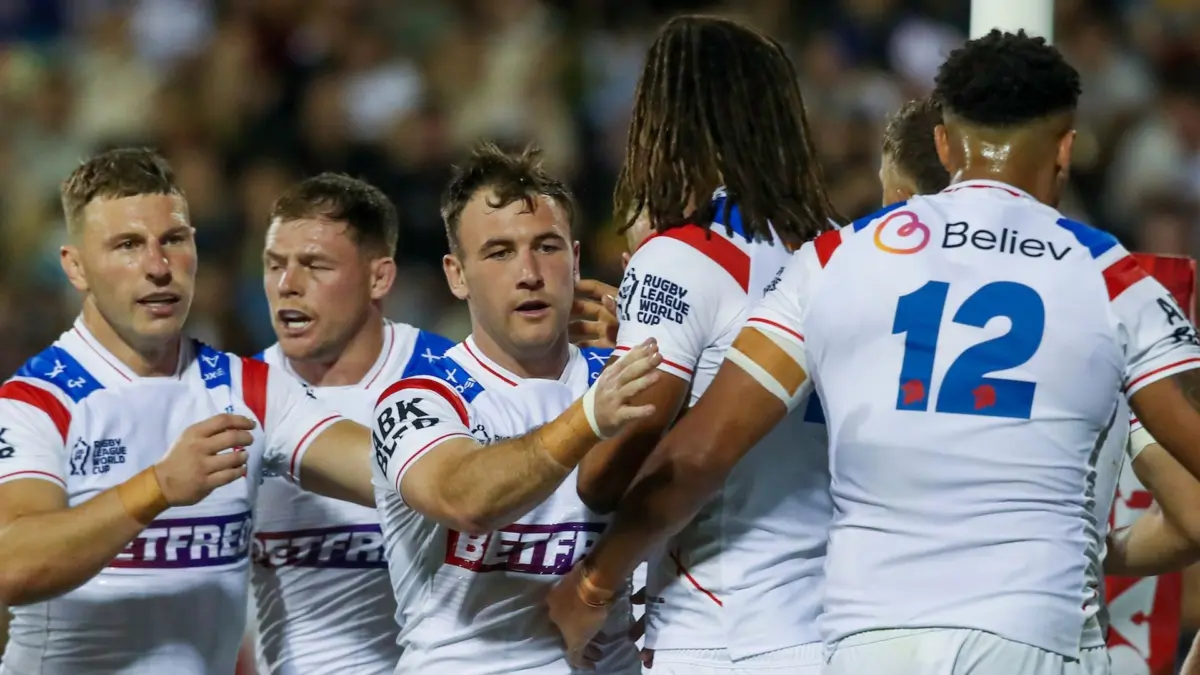
Sky Sports analyst Jon Wilkin has launched a stinging critique of the Rugby League World Cup format, declaring the tournament structure "fundamentally flawed" as England stand on the brink of an unprecedented group-stage elimination.
Brian McDermott’s side secured a 34-12 victory against Papua New Guinea, but the win fell significantly short of the mammoth 68-point margin they required to leapfrog Samoa in Pool B and C. Consequently, England’s fate is entirely out of their hands, leaving their tournament survival resting on Sunday’s fixture between Tonga and Samoa. For England to sneak into the knockout stages now, they require Tonga to secure a resounding victory over Samoa by a margin of greater than 46 points.
The precarious position in which England find themselves highlights the brutal arithmetic of a tournament structure that has undergone a drastic downscaling. The current iteration of the World Cup was reduced from 16 teams down to 10 after Australia stepped in at short notice to rescue the tournament as hosts following France’s withdrawal in 2023 due to severe financial constraints.
While the emergency rescue effort by Australia has been widely praised for ensuring the tournament took place at all, the compressed format has drastically heightened the jeopardy of every single fixture. In Pool B and C, where teams are fighting tooth and nail for survival, a single off-day or a slightly narrow margin of victory carries catastrophic consequences.
Reflecting on the design of the competition, Wilkin did not hold back in his assessment of the tournament’s operational framework.
"Australia have done a great job to organise a tournament in such a short space of time, but it was fundamentally flawed, unfair in the extreme to the start," Wilkin said. "The actual competition structure is just diabolical. England were dealt an incredibly difficult task, because they essentially played their quarter-final in week one."
The tournament’s design features two distinct pools. One group consists of four powerhouse nations—Australia, New Zealand, the Cook Islands, and Fiji—while the second group brings together a larger contingent of six teams. England found themselves drawn into the second group alongside formidable opposition in Tonga, Samoa, Papua New Guinea, Lebanon, and France.
Under the qualification rules, the top two teams from each group advance directly to the knockout rounds. In the event of a tie on points, qualification is decided first by head-to-head records before resorting to overall points difference.
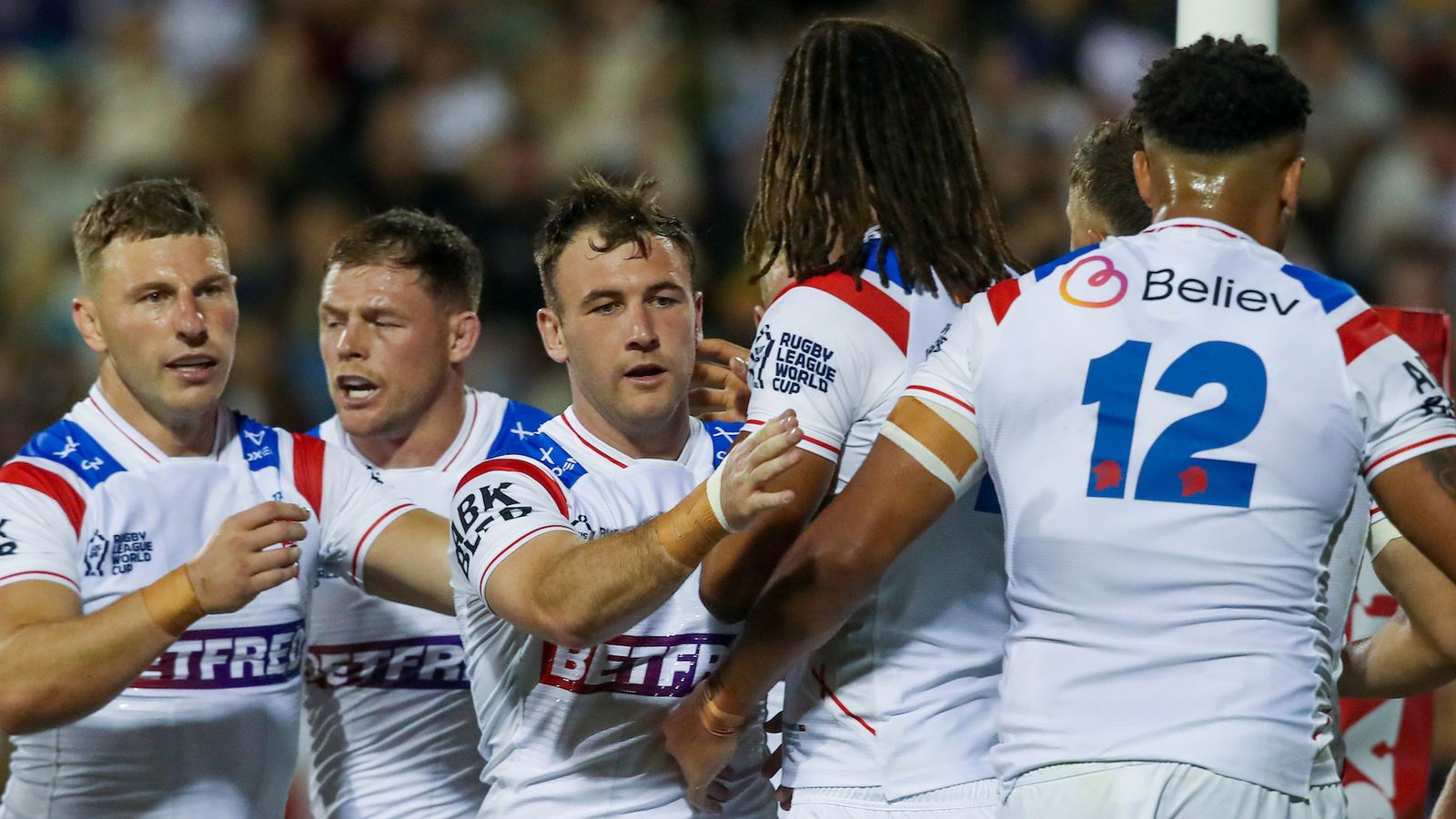
England’s current predicament stems directly from their opening-round encounter against Tonga, where McDermott’s men suffered a damaging 30-12 defeat. Although they bounced back in emphatic style during round two by thrashing France by an astonishing 82 points, that initial stumble proved fatal to their straightforward qualification ambitions. Even Friday’s 34-12 win over Papua New Guinea could not salvage the required mathematical cushion.
"England knew after their loss against Tonga that it was all going to be about points difference, and [qualifying] was going to be incredibly difficult," Wilkin added, addressing the compounding effect of the opening result. "I think the structure and the setup of the competition was done in short notice. I think the International Rugby League, who set up this tournament, have done an incredible job to get it on and actually get in a position where we can have the tournament. So, I commend them for that, but I just think the tournament structure is laughable. Like, no quarter-finals? There’s a number of ways you could have manufactured or engineered a quarter-finals situation. England should be in the quarter-finals of the World Cup. They had a disappointing 30-40 minutes against Tonga, and they’re out."
Wilkin Questions England’s Preparations But Backs McDermott
While the tournament structure has drawn intense scrutiny, Wilkin also turned his attention inward, questioning England’s off-field preparations and logistical arrangements. Despite the bitter disappointment of a potential early exit, Wilkin firmly backed Brian McDermott to remain in his post as England head coach, though he stressed the urgent need for a more professional operational structure to support him.
Wilkin specifically highlighted the controversial decision regarding the team’s travel itinerary, which saw the squad arrive in Australia just over a week before the tournament got underway. Earlier in October, McDermott revealed the complex and draining travel route the team had undertaken to reach their base in Perth. Rather than taking a direct or optimized path, the squad flew from the north of England to Singapore, connected to Sydney, and subsequently caught another flight across the continent to Western Australia.
"England knew they were playing in the World Cup," Wilkin said. "England knew the structure. England knew they needed to win the first game. How it is possible to fly your athletes out, economy class, to Singapore, to Sydney, then back to Perth, jet-lagged, and then expect to play against the NRL-standard Tongan team week one and produce a performance is laughable."
For Wilkin, these logistical hurdles represent a failure to meet elite sporting standards, pointing to a stark contrast between the meticulous preparation required at the highest level of international competition and the reality of England’s build-up.
"It’s a laughable logistical mess that again isn’t elite. Nothing elite about it. In any other elite sport it’s like, ‘no stone unturned’, and I just don’t think England had that going into this World Cup," Wilkin continued.
Despite laying bare the structural and preparatory flaws that have hampered the national side, Wilkin reiterated his confidence in the coaching capabilities of McDermott, provided the surrounding management framework undergoes a significant overhaul.
"I think McDermott is an exceptional coach. I’d give him more time, but there needs to be some management and structure behind him to get those things right," Wilkin said. "You know, those things really matter, and a jet-lagged team going into play a Tongan team who are rife with stars was fundamentally where it went wrong."