
Main Israeli opposition leader Gadi Eisenkot and prominent Arab-led party leaders have fiercely denounced Prime Minister Benjamin Netanyahu after he alleged foreign interference in the country’s national election. The allegations followed a pivotal vote in which Netanyahu’s governing coalition lost its parliamentary majority, leaving Israel in a state of political uncertainty and fierce public debate over the legitimacy of the results.
The sharp exchange unfolded after Netanyahu’s party, Likud, openly accused Israel’s Arab-led parties of "stealing" the election. The claims coincided with confirmation that Israel’s internal security agency, the Shin Bet, had launched an investigation into whether Arab party lists had received illegal funding from Qatar and Turkey to artificially boost voter turnout in Arab communities.
The allegations drew immediate international pushback. Qatar’s Foreign Ministry categorically denied the claims, describing them as "ridiculous and dangerous." Qatari officials accused Israeli politicians of conducting a deliberate disinformation campaign against Doha, rejecting assertions that the Gulf nation had provided financial backing to influence Arab voter participation in the election.
Domestically, security and election officials moved to clarify the scope of the probe, pushing back against the sweeping narrative put forward by the ruling party. Acting Central Elections Committee (CEC) Director General Dean Livne publicly stated that there was "no basis for allegations of systematic violations of election integrity," directly undercutting claims that the overall election process was flawed or compromised.
At the same time, the Shin Bet clarified that while its officers were investigating specific allegations following a request from the head of the Central Elections Committee regarding "serious suspicions" of foreign interference, the probe did not implicate an entire community of citizens who had voted legally.
Despite these assurances from security and election authorities, Netanyahu and his Likud party framed the allegations as a "political earthquake" and an "attack on democracy." Likud claimed that the alleged foreign funding was part of an intentional campaign aimed at removing their right-wing government from power, further alleging on Thursday that voters in Arab communities had been "bribed" to cast ballots for Arab parties.
Opposition leader Gadi Eisenkot, who was formally briefed on the details of the Shin Bet investigation, strongly rejected Netanyahu’s framing of the situation. Eisenkot remarked that "it is too early to determine what happened, or if anything happened at all," and instead directed criticism back at the Prime Minister. Eisenkot publicly accused Netanyahu of running "an orchestrated and organized campaign to delegitimize the election results" after failing to secure a majority at the ballot box.
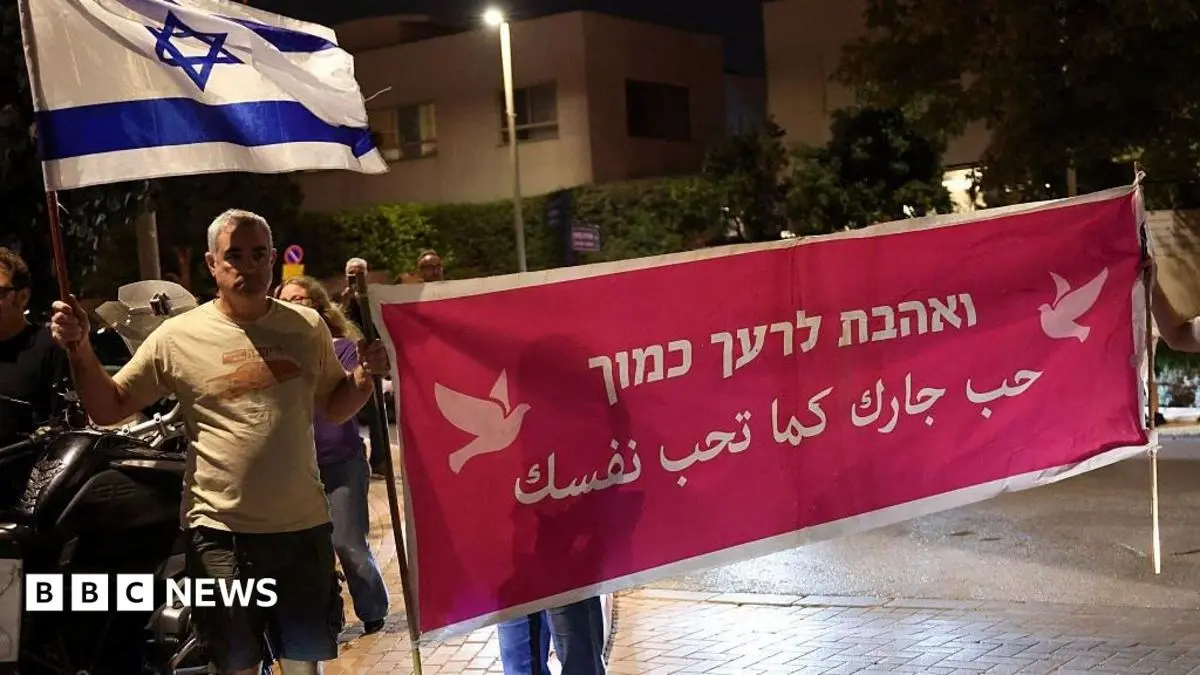
Arab political leaders expressed similar outrage over the allegations, viewing them as a dangerous effort to disenfranchise Arab voters and undermine democratic norms. Sami Abu Shehadeh, chairman of the Balad party, which forms part of the Joint List alliance, forcefully rejected Likud’s accusations. He stated that the losing side was constructing a "racist blood libel" and accused right-wing politicians of calling on security agencies to use force in order to overturn the democratic outcome of the election.
The Joint List alliance similarly dismissed the foreign funding allegations as entirely baseless, describing the move as a desperate attempt by Netanyahu to deflect from his coalition’s parliamentary defeat.
Political analysts and critics view Likud’s offensive against the Arab parties as a strategic effort to delegitimize Arab political representation in the Knesset. By painting the Arab parties as beneficiaries of unlawful foreign interference, critics argue that Netanyahu is attempting to make it politically impossible for Eisenkot’s opposition bloc to partner with them. Because the opposition bloc lacks a majority on its own, cooperating with or relying on the support of Arab parties currently represents Eisenkot’s only viable route to forming a government.
The final election results confirmed a deep parliamentary divide, with neither Netanyahu’s right-wing bloc nor the Jewish opposition factions securing an outright majority in the 120-seat Knesset. Netanyahu’s bloc secured 53 seats, while Eisenkot’s rival opposition bloc won 48 seats.
The deciding factor in the post-election landscape has been the unprecedented performance of the two Arab party lists, The Joint List and Ra’am. Defying pre-election expectations, the two lists won a combined record of 19 seats in the Knesset, driven by a dramatic surge in turnout among Arab voters. This electoral breakthrough has positioned the Arab parties as potential kingmakers in deciding the composition of the next Israeli government.
Arab Israelis, many of whom identify as Palestinian citizens of Israel, make up approximately one fifth of the country’s population. Historically, many Arab citizens chose to boycott Israeli parliamentary elections, expressing frustration with a political system they felt treated them as second-class citizens and arguing that participation only served to legitimize that system.
However, turnout among Arab voters rose significantly in this election. Analysts attribute the high participation rate to a widespread desire within Arab communities to remove Netanyahu’s governing coalition, which has been widely characterized as the most right-wing government in Israel’s history.
Netanyahu made Arab voter turnout a central focus of his campaign in the final hours of voting. Throughout election day, the Prime Minister repeatedly posted messages on social media warning his supporters that high turnout among Arab voters constituted an "emergency" and a "matter of life or death" for the Israeli right wing. As part of this mobilization drive, Netanyahu’s campaign shared AI-generated images depicting Arab voters at polling stations in an explicit effort to motivate right-wing voters to go out and vote.
With the election results finalized, the process now turns to the official protocols governing the formation of an Israeli government. Under standard procedure, the President of Israel will hold consultations with elected political parties before appointing a party leader who is deemed to have the best political chance of assembling a viable majority coalition.
Once appointed, that designated party leader is given a period of up to 42 days to negotiate with potential partners and form a government. If the first nominee is unable to secure a majority within that timeframe, the President turns to a second nominee, who is granted 28 days to complete the task.
If the second nominee also fails, the mandate enters a final 14-day window during which any member of the Knesset may attempt to assemble a 61-seat majority. Should that 14-day period expire without a government being successfully formed, the Knesset is automatically dissolved, and new national elections are called.
Based on the parliamentary breakdown, political observers identify only three theoretical scenarios through which a government could realistically be formed. The first option is a broad national unity government bringing together Netanyahu and Eisenkot. The second option is a right-wing government led by Netanyahu that relies on persuading defectors from Eisenkot’s bloc to join his ranks. The third option is an Eisenkot-led government supported by the Arab parties.
While Eisenkot and almost every member of his political bloc have previously maintained a strict policy against entering a governing coalition with Arab parties, intense debate has surfaced in recent days regarding whether those positions might shift given the political reality.
Public opinion among opposition voters appears open to alternative political arrangements. According to a snap poll conducted by Hebrew University, the most popular option among voters supporting parties in the opposition bloc was for Eisenkot to form a minority government in coalition with Ra’am, while receiving outside parliamentary support from the Joint List.
As the President prepares to consult with party representatives, the political dispute surrounding allegations of foreign interference underscores the intense friction defining Israel’s post-election landscape, with no immediate resolution yet in sight for forming a stable governing coalition.