
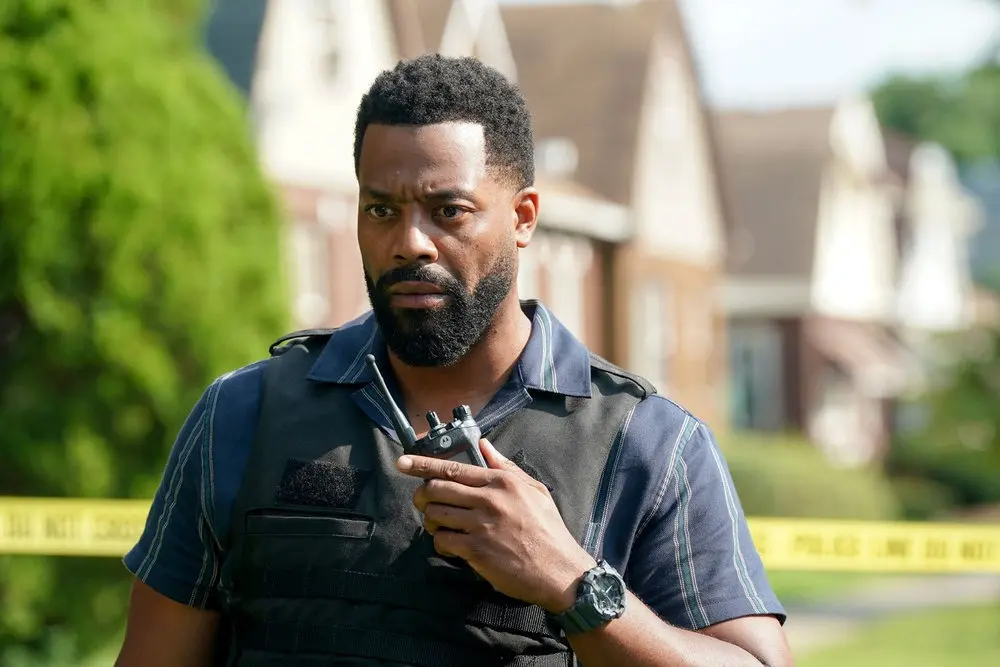
There was no immediate indication that LaRoyce Hawkins, better known to millions of fans as Officer Kevin Atwater, would be leaving NBC’s hit procedural Chicago P.D. when its thirteenth season concluded back in May. Then, over the Fourth of July holiday weekend, news broke that the actor would be departing the series he has starred on since its inception. Now, after more than a decade on the beat, that final episode has officially aired, bringing a definitive end to one of the show’s longest-running and most defining tenures.
As a fan-favorite and original series star ever since the show premiered with “Stepping Stone” on January 8, 2014, news of Hawkins’ departure quickly sparked widespread online discussion. With no official explanation initially offered by Hawkins or NBC, industry speculation briefly turned toward budgets and broader cost-cutting measures across the television landscape. Fans were kept in the dark about the exact nature of his exit until a preview aired for the October 14 episode, titled “Don’t Blink,” revealing it would be Atwater’s final appearance on the drama.
The narrative groundwork for Atwater’s departure had been quietly laid during previous seasons. The idea of Atwater leaving Chicago was first floated—and temporarily pushed aside—when Karen Obilom’s character, Tasha Fox, a fellow officer who attended the police academy alongside Atwater, announced her intention to leave Chicago to join the police force in Miami during an episode last October. Fox and Atwater subsequently shared a romantic connection that resulted in a pregnancy reveal in the January episode “On the Way,” followed by an agreement to work on building a real relationship in “The Wicked River” just prior to that season’s finale. By the start of the subsequent season premiere, “Demolition,” the primary focus was the impending arrival of their child.
“Don’t Blink” opens at the hospital with the newborn baby boy alongside Atwater and Tasha. As Atwater returns to work to manage a violent robbery case, he balances being an attentive father—checking in during breaks and rushing back to the hospital when the baby falls ill—with the daily pressures of police work. However, he becomes deeply affected by a suspect in the case: an absentee father struggling with the reality of being disconnected from his son’s life.
That encounter forces Atwater to reevaluate what he wants not just for himself, but for the future of his own child. Years of standing against the Blue Wall and systemic corruption within the department—particularly highlighted in season eight—had previously blocked his opportunities for professional advancement and pay raises. Ultimately, Atwater decides to relocate with Tasha and their son from Chicago to Atlanta. The emotional arc concludes with a farewell gathering at a local bar, where colleagues and friends sing “He’s a Jolly Good Fellow,” officially bringing Atwater’s run on Chicago P.D. to a close.
The emotional farewell was widely praised by viewers, offering a rare, tender send-off for a veteran character in the gritty Dick Wolf television universe.
Last year, the Chicago-area native, who grew up in Harvey, spoke with The Press and The Hollywood Reporter about Atwater’s evolution, expressing deep gratitude for the role and discussing the profound responsibility of representing his hometown on a national stage. He also reflected on the honor of being a pillar within the broader Dick Wolf franchise.
Speaking again ahead of his final episode, Hawkins revealed that he planned to watch the broadcast in real time, surrounded by his family. He took time to ponder Atwater’s cultural significance and long-term impact on television.
“Because I grew up watching reruns from shows that were over way before I was born, I wasn’t unaware of the impact that you can still have for generations that you’re not necessarily a part of,” Hawkins said. “So now I’m very interested in how we will rediscover and explore Atwater.”

Hawkins also highlighted how the show’s handling of the COVID-19 pandemic remains a critical chapter in television history. “By the time we remind ourselves about the pandemic period and we unpack how Atwater had to be on the front line as a cop for television, and the way that the Black man and his life seem not to matter as much, and to play a character that had to hold the weight of both of those, at the time, I was just ready,” he shared. “I was locked in, and I don’t think I even understood then that this is going to be a capsule of a time period that is going to represent a significant shift in TV. It was a significant shift in the nation.”
“I’ll never forget how intentional the Dick Wolf team and the powers that be in that universe were about how we told stories after the pandemic, and I was grateful to be instrumental in how we were able to tell those stories,” he added.
Following the broadcast of his final episode, Hawkins reflected further on the production process, sharing behind-the-scenes memories ranging from the babies who portrayed his onscreen son to sharing the screen with co-star Jason Beghe one last time, managing intense fan reactions, and filling the show’s final bar scene with close friends and family.
Reflecting on the unique tone of the episode, Hawkins noted the distinct portrayal of fatherhood and law enforcement. “I think that is something that is good to see, especially in today’s world. And when you consider all the characters that have left this show at a high level, nobody really goes out like that,” he said.
He also addressed the brief panic on social media when early promotional materials made it look as though Atwater might be killed in the line of duty. “They had to throw that in there just to throw people off. That was crazy. Yeah, my mama was tweaking. My big sister was mad. I was like, Nah, everything is going to work out.”
Discussing the emotional core of the script, Hawkins pointed to the thematic resonance of the suspect who served as a cautionary tale of absentee fatherhood. “That was the part that got me. I remember when I made notes for the episode before we really got into it. After I read the script a few times, one of the things I said was that what I see is this father was absent in his son’s life, and how that affected his son. I see how it’s affecting him. I said, We don’t really need the bullet. I understand the bullet because you want to be dramatic, but I don’t want it to be the bullet that connects the dots for Atwater. I want the case to have an impact on me, and for my opinion to reflect, Oh I can have it all. I think I trust Tasha Fox. I think I feel like my son’s going to be amazing.”
Filming the emotional farewell required intense focus, particularly given the magnitude of the milestone. Hawkins admitted that he had to isolate himself from the cast and crew during initial shooting days to stay grounded in the character’s mindset.
“To be honest, there were moments, especially at the beginning of filming, where I had to isolate myself because everybody knew it was my last episode. Imagine the crew and the cast trying to throw in their last conversations or create that last impression. That was throwing me off, because I’m trying to cook on what we got going,” Hawkins explained. “I learned that after the first day of shooting. When I noticed people were going to try to take those windows, I was off to the side. I’m pretty social on set, because there’s an energy I like to try to maintain. I like to hop around and engage with people, and I couldn’t really do that because I couldn’t afford to.”
The episode was directed by former co-star Jesse Lee Soffer, who departed the series as Detective Jay Halstead during the tenth season. Hawkins credited Soffer with providing a pivotal acting note that helped guide his performance through the emotional homestretch.

“He was like, Bro, are you hyper-aware of yourself? I was like, Yeah, low-key, I am. And he was like, You got to stop that. You can’t be so aware of yourself because sometimes I can see you editing your performance within the performance. You have to block out LaRoyce Hawkins’ thoughts and focus on Atwater’s thoughts,” Hawkins recalled. “It felt great shooting with Jesse directing, because every day was like a masterclass on being specific in the character thoughts.”
The final scene Hawkins filmed was an intimate, emotional exchange between Atwater and Sergeant Hank Voight, played by Jason Beghe, inside the precinct office.
“It was emotional sometimes, to be honest with you. I didn’t even realize until I looked at the episode that it looks like I might cry. But that’s how I felt in the moment,” Hawkins said. “To be honest, it was like, Damn, dude. It was my last scene with Sarge. I love Sarge. So the conversation paralleled what was going on with the character and with myself, which was cool.”
When production on that scene wrapped, Hawkins was surprised by a large group of personal friends and family members who gathered on the set to celebrate his milestone exit.
For the final bar sequence, Hawkins ensured the room was filled with familiar faces rather than traditional background extras. “I made sure I filled that scene with homies. That’s what helped it feel so real. I had a big homie fly into Chicago from New York just to be in the background for that scene. I had one of my big homies, Raekwon Neighbors, back there. I just filled it with friends. I had my niece in the scene because I wanted real energy, camaraderie, togetherness and family to come through.”
Looking back on Atwater’s complex journey throughout his eleven seasons on the force, Hawkins acknowledged that playing a television police officer occasionally presented moral challenges that tested his own personal perspectives.
“Atwater’s a cop, so you know his opinion would probably disagree with the average Black person based on his intentions to protect and serve,” Hawkins noted. “Sometimes the hard part for me was wrapping my mind around how a cop would think and what a cop’s opinions would be. And that didn’t always align with what LaRoyce would do. But that’s why LaRoyce isn’t Atwater. I would infuse and texturize Atwater with what made sense for LaRoyce. Whether it was empathy or some humor here, or I would drop in moments that made sense.”
Ultimately, Atwater’s choice to leave Chicago and prioritize his growing family brought his narrative arc full circle, allowing him to finally put his personal well-being first.
“He put himself first obviously because of his family,” Hawkins concluded. “And you gotta understand Atwater lost his family once upon a time because of the job, and he wasn’t willing to do that this time.”