
With less than three weeks to go before British Columbians head to the polls, a major policy debate has erupted over the future of the province’s public auto insurance system. A leaked letter from the interim leader of the British Columbia Conservatives has revealed a key party proposal to repeal the province’s controversial no-fault insurance system and replace it with a hybrid model. The revelation has immediately transformed into a high-stakes campaign battleground between the Conservatives and the governing New Democratic Party, highlighting contrasting philosophies on legal rights, public administration, and the cost of living.
The proposal was detailed in a letter written by Lorne Doerkson, the interim leader of the B.C. Conservatives, which was subsequently leaked to the public. The correspondence, dated September 29, was addressed to several prominent figures within the legal and insurance sectors, including the vice-president of the Insurance Bureau of Canada, the president of the Law Society of B.C., the president of the Trial Lawyers Association of B.C., and the president of the Canadian Bar Association. In the letter, Doerkson outlines a commitment to dismantle the current insurance structure within twelve months of taking office, should the Conservatives win the provincial election scheduled for October 24, 2026.
According to the leaked document, a Conservative government would introduce new legislation designed to restore the rights of motor vehicle accident victims to pursue legal action in court. Doerkson framed the proposed policy as a necessary correction to a system that he argues has stripped citizens of their fundamental legal rights and failed to adequately support those who suffer the most severe consequences on B.C. roads. He wrote that under the new plan, accident victims would recover their right to seek damages for serious injuries, while asserting that the provincial government would effectively step back from interfering in the operations of the legal profession.
The leak of the letter, which was distributed by the labor union representing workers at the Insurance Corporation of British Columbia, drew swift and sharp criticism from the governing New Democratic Party. NDP Leader David Eby wasted no time in attacking the opposition’s proposal, characterizing the letter as evidence of a secret deal negotiated behind closed doors between the B.C. Conservatives and powerful trial lawyers. Eby suggested that the Conservatives were prioritizing the financial interests of personal injury lawyers over the financial well-being of ordinary British Columbia drivers, who have benefited from stabilized rates under the current model.

The current no-fault insurance system was introduced by the NDP government in 2021 as a direct response to severe financial instability at ICBC. At the time, the public insurer was facing massive deficits, which Eby famously described as a financial dumpster fire. The crown corporation had accumulated billions of dollars in losses, largely driven by escalating legal fees, litigation costs, and adversarial court battles over injury claims. By transitioning to a no-fault model, the government largely eliminated the ability of accident victims to sue for damages, instead directing funds toward a standardized system of care and recovery benefits administered directly through ICBC.
While the NDP credits the 2021 transition with restoring financial health to ICBC and lowering average premium costs for drivers across the province, critics have consistently argued that the system is unfair to those who suffer catastrophic, life-altering injuries. Doerkson addressed these concerns directly, defending the Conservative proposal during a press conference held in downtown Vancouver. He argued that the human cost of the current system has been far too high, leaving severely injured individuals without the comprehensive compensation and support they need to manage their lives after a major accident.
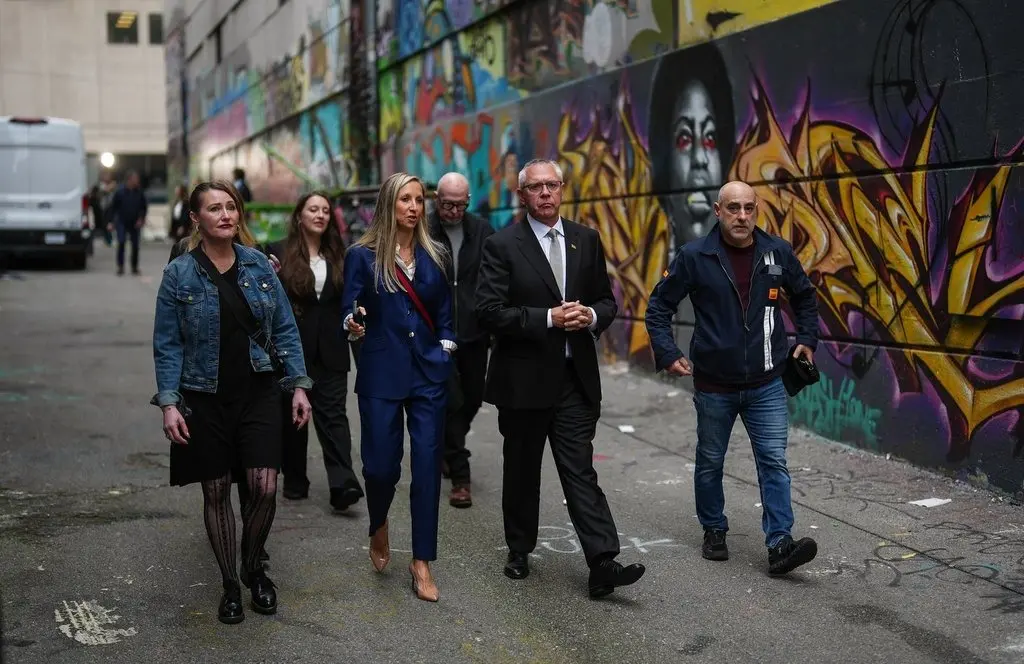
Speaking to reporters in an alleyway in downtown Vancouver following a campaign announcement, Doerkson acknowledged that while maintaining affordable insurance rates is a vital responsibility of the government, the province must also ensure that its most vulnerable accident victims are not left behind. He stated that the no-fault program has been very challenging for residents for multiple reasons, particularly for those who have experienced catastrophic and potentially life-altering injuries. Doerkson argued that the current program has simply not supported these individuals well, and that the province must contemplate a different insurance model to address these systemic shortcomings.
Although the letter to insurance and legal stakeholders outlined a specific timeline for legislative action, Doerkson emphasized to reporters that he had made no formal promises regarding the policy. However, the language in the September 29 letter suggests a firm commitment to a major legislative overhaul. In the letter, Doerkson stated that a Conservative administration would pass new legislation within a year of being elected, promising that accident victims would regain their right to recover for their serious injuries, and that the government would get out of the legal profession’s business.
To achieve this balance between protecting accident victims and keeping insurance rates manageable, the Conservatives are proposing a transition to a hybrid insurance system. Doerkson pointed to several other Canadian provinces as models for this approach, noting that Ontario, Alberta, Nova Scotia, New Brunswick, Prince Edward Island, and Newfoundland and Labrador all operate under hybrid insurance frameworks. He suggested that British Columbia does not need to choose between astronomical premiums and the total elimination of legal rights, arguing that the province can look to these jurisdictions, learn from their experiences, and build a superior model.

The NDP, however, remains highly skeptical of the hybrid proposal, framing it as a regressive step that would undo years of financial progress. The governing party maintains that the no-fault system has successfully protected drivers’ wallets by lowering car insurance rates and keeping them frozen for seven consecutive years. According to the NDP, the push to dismantle this system is being driven by trial lawyers who have actively lobbied to return to the previous litigation-based model. The NDP has repeatedly described the Trial Lawyers Association of B.C. as an organization representing personal injury lawyers who previously earned significant revenues working on ICBC cases before the 2021 reforms.
The debate highlights a fundamental disagreement between the two major parties over the role of the public insurer and the legal system in resolving motor vehicle claims. The NDP’s defense of the no-fault system relies on a collective affordability argument, emphasizing that the elimination of costly lawsuits has allowed ICBC to pass savings directly to B.C. motorists in the form of lower, stable premiums. Under this view, returning to a system that permits lawsuits would inevitably reintroduce the high legal expenses that previously pushed the crown corporation to the brink of financial ruin.
Conversely, the Conservative platform focuses on individual rights and the adequacy of care, arguing that a public monopoly should not have the authority to block citizens from seeking justice in the court system when they are harmed by reckless drivers. By proposing a hybrid system, the Conservatives are attempting to appeal to voters who feel the current system is overly bureaucratic and unsympathetic to those with severe injuries, while also trying to reassure the wider public that rates will remain affordable by adopting proven models from other provinces.
As the October 24 election approaches, the leaked letter has successfully forced auto insurance back to the forefront of the provincial political debate. With both parties offering starkly different visions for the future of ICBC and accident compensation, B.C. voters will face a clear choice between the NDP’s established no-fault model and the Conservatives’ proposed hybrid system.