
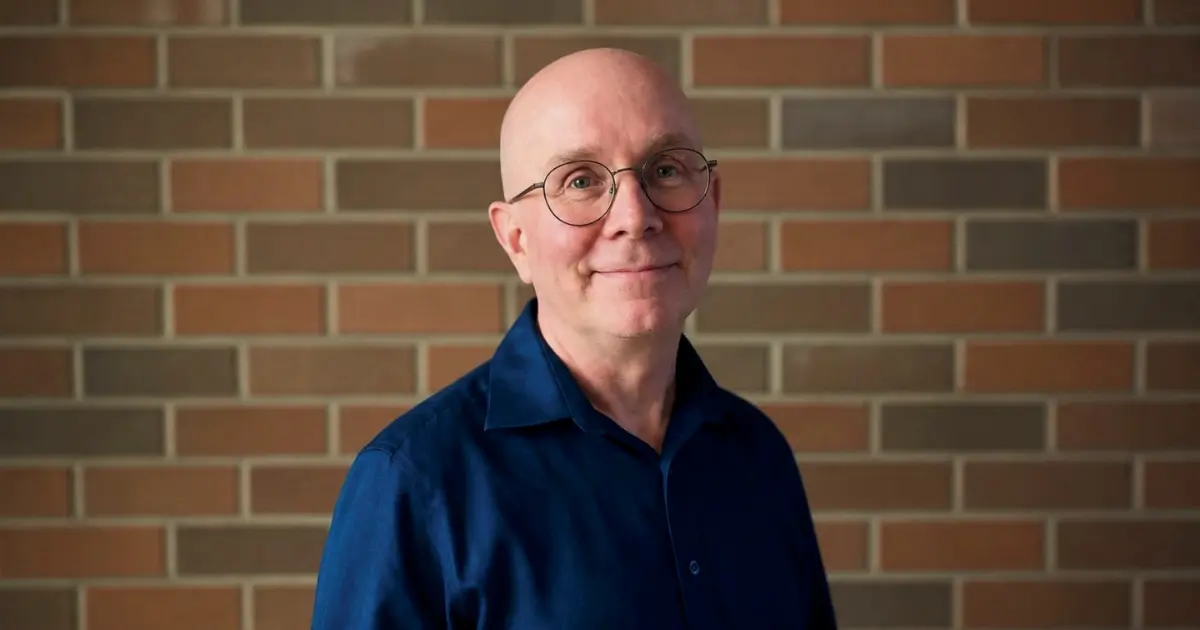
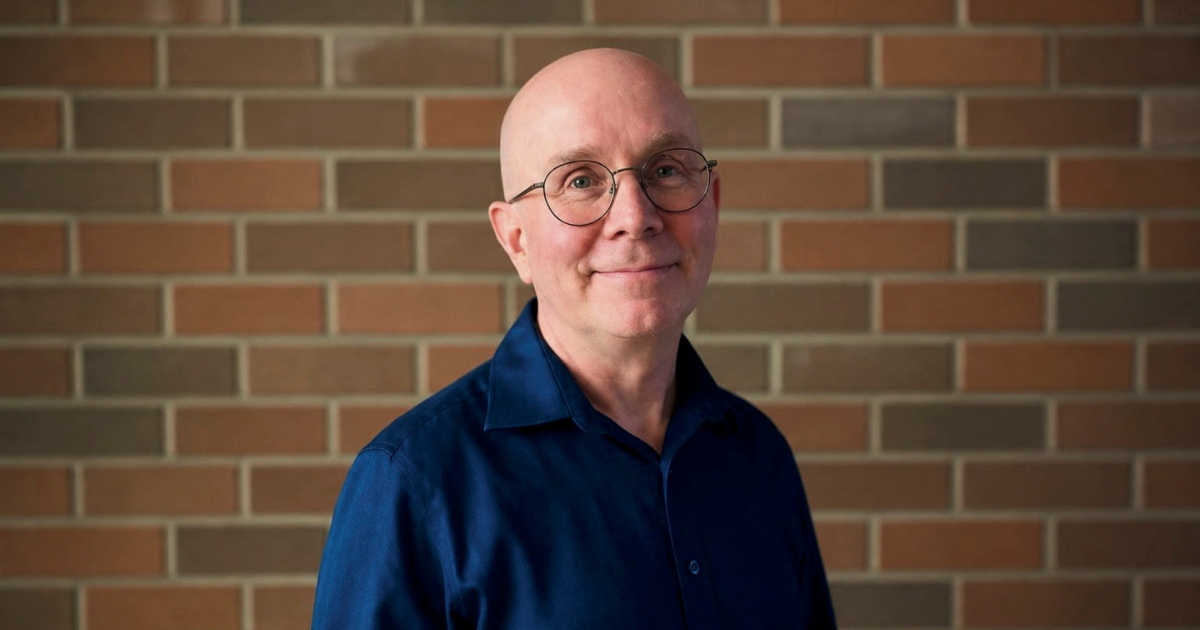
As he prepares to officially step into his new role on January 1, the Reverend Éric Hébert-Daly is wasting no time getting up to speed. Confirmed at a General Council Executive meeting in September following a rigorous seven-month search, Hébert-Daly is set to succeed the retiring Reverend Michael Blair as the general secretary of the United Church of Canada. Between strategy sessions and travel, Broadview editor Janice Young caught up with Hébert-Daly over Zoom while he waited at a Montreal train station, discussing his vision for the denomination, his unconventional background, and the lessons he is bringing from a diverse career in nonprofit and political leadership.
A Vision Rooted in Optimism and Spiritual Hunger
Stepping into national leadership at a time of institutional change across the religious landscape, Hébert-Daly approaches the challenge with a distinct sense of enthusiasm. When asked what drew him to the position, he points to a desire to break out of established patterns and inject a renewed sense of hope into the church.
"I’m really enthusiastic about the different ways we can break out of our well-worn paths," Hébert-Daly said. "I started to imagine what that could look like on a national scale and how I could hopefully bring a little bit of optimism and enthusiasm to the church over the next little while. For me, it comes from that natural place of where I think God is calling us."
That sense of calling informs his overarching vision for the denomination. Pointing to consistent polling data and societal trends, Hébert-Daly notes that contemporary society exhibits a deep spiritual hunger and a widespread appetite for connecting to something larger than individual existence. In his view, the church occupies a unique position to address these profound questions and foster genuine community, yet it often struggles to meet that prevailing cultural need.
"I’d love to see a church that’s maybe a little smaller, but is known nationally—even by those who don’t come to church—as the place you go for deep spiritual experience, deeper conversation and community," he explained. "Wouldn’t it be great if that were our reputation?"
Lessons from Political Leadership
Before answering the call to ministry, Hébert-Daly built a robust career in political and nonprofit leadership. Notably, he served as the national director of the New Democratic Party (NDP) under the late Jack Layton during a pivotal era for the federal party. Reflecting on those years, Hébert-Daly sees direct parallels between political revitalization and the renewal of church communities.
When Layton first assumed leadership, the NDP was widely dismissed by commentators and political analysts as a spent political force. Rather than lamenting past fortunes, Layton charted a forward-looking path. Drawing on Layton’s background as an avid runner, Hébert-Daly recalls a frequent guiding philosophy: "When you’re in a race, you don’t look back; you look forward. You look to where you’re going."
Carrying those lessons forward into his new ecclesiastical role, Hébert-Daly rejects the narrative that the decline of organized religion is a prewritten, unalterable fate. Having witnessed political movements written off and subsequently revitalized, he believes the church possesses similar resilience.
Embracing Intercultural Communities and Transforming Relationships
As the first francophone general secretary in the denomination’s history, Hébert-Daly is uniquely positioned to consider how linguistic and cultural communities engage with the broader national church. Historically, the majority of the francophone population in Canada has been rooted in the Roman Catholic tradition, meaning the United Church has had to navigate deliberate pathways to integrate francophone members fully.
However, Hébert-Daly emphasizes that authentic inclusion extends far beyond linguistic representation, encompassing Indigenous, migrant, and diasporic communities as well. He stresses that true ministry must focus on meeting people’s needs rather than inward-facing institutional preservation.
Addressing intercultural relationships, including the ongoing evolution of the relationship with the Indigenous church, Hébert-Daly highlights the necessity of transformational encounters. Reflecting on the concept of independent communities, he noted that while colonial mindsets must be dismantled and distinct paths respected, genuine connection remains vital.
"We’ve talked a lot about the two canoes that need to be independent, and we have to stop approaching it with a colonial mindset, absolutely," Hébert-Daly said. "Pero we also occasionally need to tie our boats together, have lunch, and then continue, because those encounters and relationships will be transformative for both of us. We need to find ways where the church is being transformed as a whole, not ‘you stay over there, and I stay over here and we’ll do our thing.’"
Navigating Challenges: From Spiritual Space to Evangelism
Among the primary challenges facing the general secretary’s office, Hébert-Daly points to the ongoing evolution of the relationship with the Indigenous church, underscored by the National Indigenous Spiritual Gathering held over the summer. He views this dynamic not as a burdensome challenge, but as a mutual opportunity to forge a collaborative path forward.
Another pressing concern involves how local congregations view their own services and ministries. Hébert-Daly observes that Sunday services can sometimes resemble administrative meetings structured entirely around an agenda and order of service, inadvertently leaving little room for spontaneous spiritual movement.
Furthermore, the topic of evangelism presents a complex hurdle for the denomination. The United Church has historically felt uncomfortable with the term, given how aggressive or exclusionary forms of evangelism have manifested across generations. Yet, Hébert-Daly argues that sharing the transformative impact of faith and community is an essential expression of spiritual life.
"If we are in a relationship with God and we’ve had an impact through our communities of faith or through prayer or through our connection with the divine, it’s unfortunate that we’re not sharing that," he said. "It’s unfortunate that we’re not screaming that from the rooftops. I think there is a way of doing evangelism in a uniquely United Church way, and I really want to get us going in that direction."
Empowering Lay Leadership and Celebrating Grassroots Inspiration
To foster sustainability and resilience, Hébert-Daly emphasizes the importance of supporting ministry personnel and expanding the understanding of lay leadership. Acknowledging that the contemporary landscape is exceptionally demanding for Christian leaders across Canada, he advocates for mutual support and a cultural shift toward "failing forward"—trying new initiatives, learning from missteps, and trying again.
Drawing from his four years of experience as a regional executive minister working closely with smaller communities of faith, Hébert-Daly finds daily inspiration in grassroots congregations. He notes that rural and smaller churches often possess a distinct strength: porous, welcoming boundaries where the distinction between the external community and the internal congregation is fluid and collaborative.
"You don’t have to be a rocking megachurch to be an inspiration," he noted.
A Journey to the United Church
Hébert-Daly’s path to leadership in the United Church is shaped by his personal background. Born into a francophone Roman Catholic family during the post-Quiet Revolution era, his parents actively discouraged church participation. However, his grandparents maintained his connection to faith by bringing him to church services.
As he matured, Hébert-Daly encountered difficulties with traditional Catholic policies, particularly regarding the role of women, the treatment of divorced individuals, and stances toward the queer community. Discovering the United Church provided a spiritual home where he could reconcile his identity while engaging in dialogue with diverse perspectives.
"The United Church was this beautiful place where I could be fully who I was, while still sitting in pews next to people who might disagree with me," he reflected. "We’re in a world where people don’t listen to each other anymore, and we just yell at each other, and we tell other people they’re wrong. I think the church has the opportunity to be a sacred place of encounter."
Looking toward the future, Hébert-Daly envisions a church recognized not merely for its programs or properties, but as an enduring institution dedicated to teaching people how to love one another across divides, fulfilling what he describes as the ultimate call of Christ.