
The stock market has once again proved its capacity to surprise, leaving investors and retirees grappling with a familiar mix of exhilaration and dread. As equities climb to record-shattering valuations fueled largely by the frenzied artificial intelligence boom, a persistent anxiety grips the financial world. Many market observers worry that this unprecedented boom is merely a precursor to a catastrophic crash, evoking unsettling memories of the dot-com bubble of the early 2000s.

For those who have tuned out the financial drama to focus on everyday life, the current landscape centers on a familiar narrative: massive technological disruption, skyrocketing valuations, and inevitable doomsday predictions from financial media. Yet, veteran early retirees and financial commentators argue that the pervasive fear surrounding the AI market bubble is largely misplaced. By examining historical precedents, understanding the mechanics of economic prosperity, and confronting the psychology of fear itself, experts suggest that long-term investors have far less to fear than the headlines would suggest.
This perspective was recently explored in depth by financial commentators addressing audiences at events like Camp FI Midwest, with further presentations planned for upcoming industry gatherings. Drawing on personal experiences spanning more than two decades of early retirement—a journey that began amidst the dot-com boom and survived the subsequent crash—long-term investors are increasingly pushing back against modern financial panic.

To understand why the current AI mania does not necessarily spell disaster for retirement portfolios, it is helpful to look back twenty years. In 2006, investors faced a similarly daunting list of existential worries. Society was gripped by anxieties over geopolitical conflict, soaring national debt, persistent inflation, and a dangerously overvalued stock market driven not by artificial intelligence, but by a runaway housing bubble. Observers warned of impending doom fueled by outsourcing trends and peak oil theories that predicted catastrophic fossil fuel shortages.
What followed was the Great Financial Crisis of 2008, a severe economic downturn triggered by irrational exuberance in real estate and excessive financial leverage. Yet, viewed through the lens of a twenty-year horizon, even that historic crash appears as a temporary dip in a remarkably resilient upward trajectory. A diversified investment weathering both the financial crisis and the 2020 pandemic volatility still yielded substantial long-term growth.

Simultaneously, the broader world experienced remarkable progress rather than collapse. Global extreme poverty rates dropped significantly, infant mortality rates were halved, and clean energy innovation transformed the global power grid. Solar energy generation expanded exponentially as panel costs plummeted, while electric vehicle adoption surged across global markets. These developments highlight a fundamental disconnect between pessimistic market narratives and tangible human progress.
At the core of this disconnect lies a misunderstanding of what drives genuine wealth and stability. Prosperity does not originate from abstract numbers on a computer screen within the financial system or the stock market; it stems from productivity. Capitalism is inherently volatile, and financial systems are ultimately human constructs. If market mechanisms falter due to inflated valuations, economic systems have historically adapted by resetting parameters and returning to foundational work. Human ingenuity, technological tools, and the drive to improve standard of living remain intact regardless of market corrections.

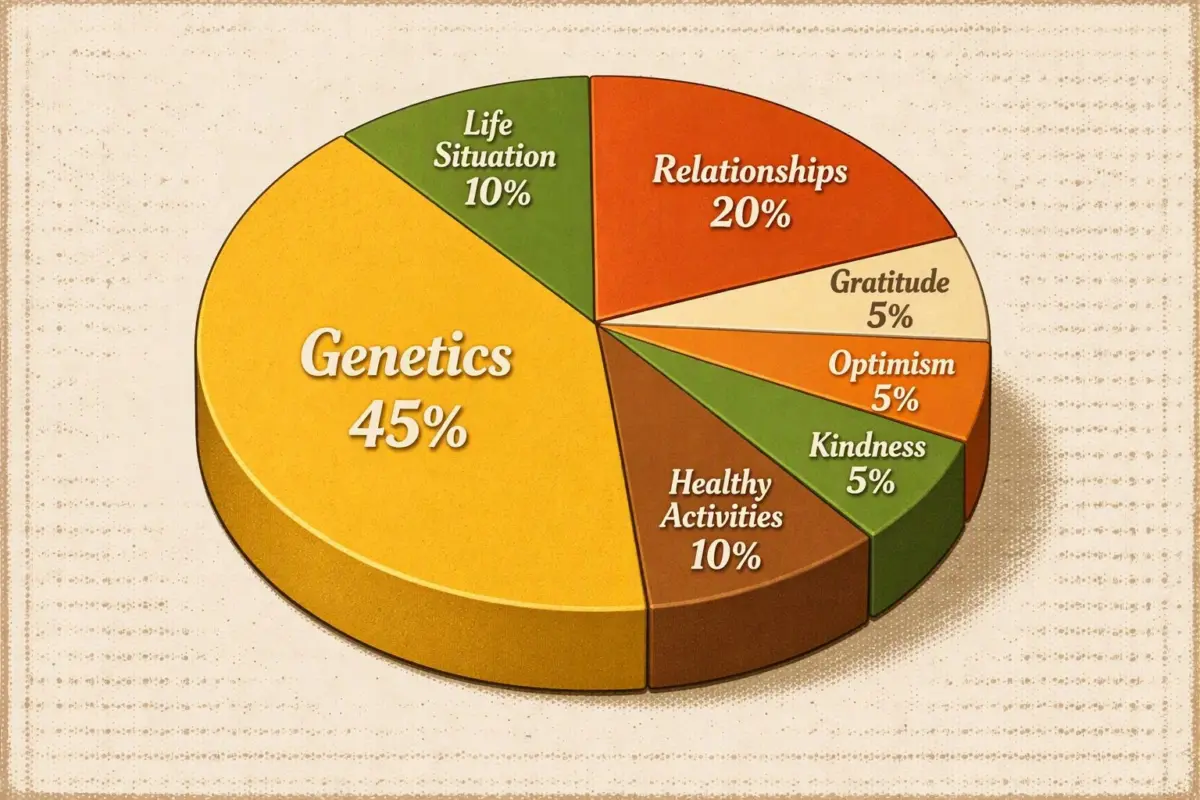
Furthermore, once a society achieves a baseline level of material prosperity, additional wealth yields diminishing returns regarding overall human happiness. Psychological research indicates that factors within personal control—such as cultivating strong relationships, practicing gratitude, maintaining optimism, and engaging in healthy physical activity—play a far greater role in long-term well-being than portfolio fluctuations.
Despite these reassuring historical trends, anxiety remains a powerful force among modern investors. Human beings evolved primarily as danger-detection machines. This evolutionary trait ensured survival in ancestral environments by keeping individuals constantly alert to potential threats. However, in modern society, where acute physical dangers are largely mitigated, this detection machinery struggles to shut off. When one source of worry is resolved, the brain naturally seeks out new targets for concern, shifting effortlessly from predators and disease to food scarcity, social exclusion, and eventually, portfolio management and tax strategies.

This persistent background fear is frequently amplified by a daily diet of sensationalized news media. Financial journalism thrives on highlighting the most alarming daily scenarios, cultivating an environment of chronic stress. To combat this, experts emphasize the importance of shifting focus from passive media consumption to active, positive behaviors. Reconnecting with the physical world, engaging in problem-solving, and surrounding oneself with optimistic, productive peers can fundamentally alter an individual’s mental landscape.
Viewing major life transitions and technological shifts through the lens of experimentation rather than existential threat offers another powerful antidote to fear. Whether navigating a career change, adjusting to a new vehicle, or entering early retirement, approaching uncertainty as an experiment strips away its terror.

This experimental mindset applies directly to the current artificial intelligence boom. Rather than succumbing to doom-scrolling and fear-mongering regarding superintelligence or market collapse, the AI era can be productively viewed as a massive technological experiment. Observers with backgrounds in technology and economics often characterize artificial intelligence not as an impending overlord, but as a sophisticated cognitive tool capable of dramatically enhancing efficiency.
Much like a nail gun in construction, AI acts as a productivity amplifier, supercharging cognitive output and reducing costs across various industries. While this technological leap inevitably displaces certain traditional entry-level office and driving roles, it simultaneously lowers service costs and catalyzes the creation of entirely new economic sectors, mirroring the transformative impact of the internet and mobile applications.

While the rewards of such technological revolutions often concentrate among capital owners and shareholders—including many everyday investors participating in broad market funds—the overarching reality remains consistent. Artificial intelligence is simply the latest in a long line of technological innovations that require deliberate choices. It is an opportunity for learning, adaptation, and growth rather than a reason for panic.
Ultimately, navigating market bubbles and economic uncertainty requires confronting the root causes of anxiety rather than merely treating its symptoms. By recognizing the evolutionary origins of fear, tuning out sensationalized media, and embracing a philosophy of resilience and continuous learning, individuals can successfully manage the inevitable swings of the modern economy. As many long-term planners emphasize, everything worthwhile on the other side of uncertainty lies waiting for those brave enough to look past their fears and engage with the world as it is.