
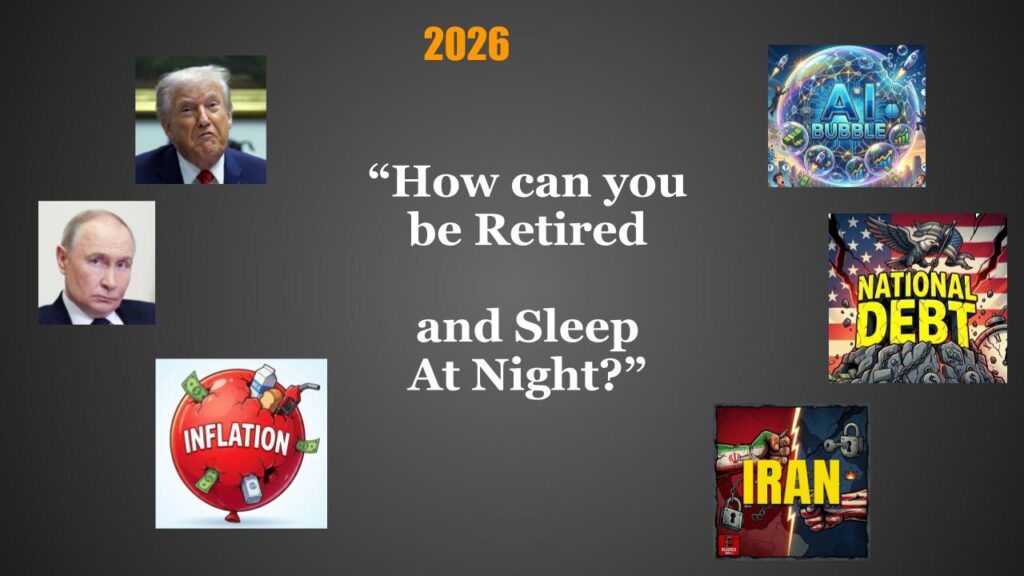
As the global stock market continues to scale unprecedented heights, driven largely by a frenzied boom in Artificial Intelligence, investors are once again grappling with an age-old anxiety. Market watchers frequently dust off expressions of disbelief as major indices surprise the financial world, rising to record valuations that inevitably spark fears of an impending crash. For many, the current AI-driven market surge feels eerily reminiscent of the dot-com mania of the early 2000s, raising urgent questions about whether a massive economic correction could derail retirement plans worldwide.

Financial commentators and early retirement advocates are increasingly addressing these anxieties, drawing parallels between today’s technological fervor and past market cycles. Among them is the veteran internet financial writer known as Mr. Money Mustache, who recently marked 21 years of retirement. Reflecting on decades of market volatility, he debuted a presentation addressing these concerns at the Camp FI Midwest event, with plans for an expanded address at the upcoming Bogleheads conference in November.

The core of the current investor anxiety centers on the speed and scale of the AI revolution. While artificial intelligence is widely acknowledged as a transformative technological invention, market participants worry that the mania surrounding it is moving too fast, setting the stage for a dramatic market downturn. For figures who lived through the dot-com boom—an era that similarly launched early careers before nearly derailing personal financial stability during the subsequent crash—these cycles are intimately familiar. Yet, historical perspective suggests that economic panics, while severe in the short term, often look remarkably small when viewed across a multi-decade horizon.

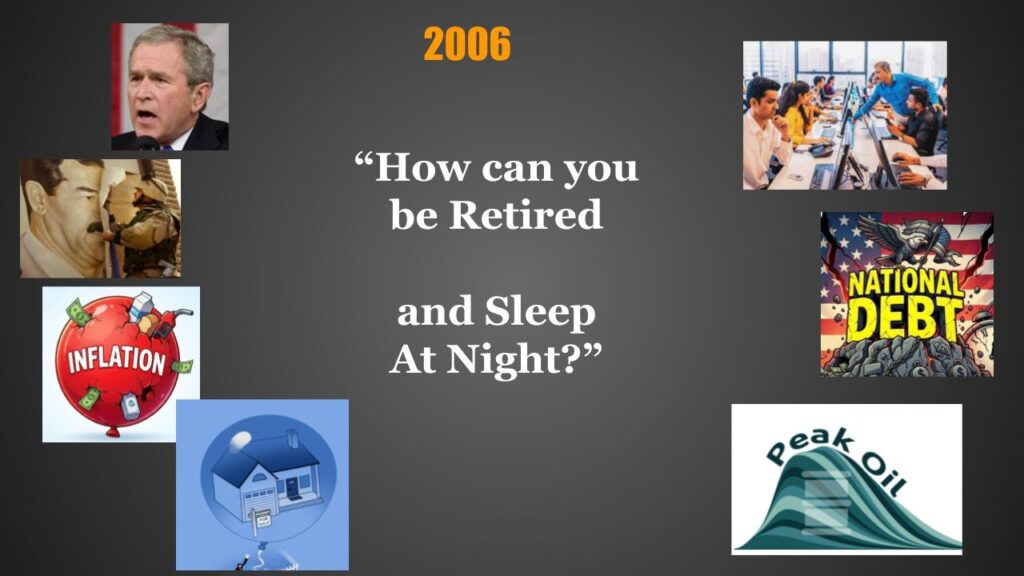
To understand why seasoned retirees remain calm amidst ongoing market turbulence, financial analysts often point to the shifting nature of public anxiety over time. Looking back two decades to 2006, investors faced a completely different set of existential dreads. Back then, the media cycle was dominated by concerns over geopolitical conflicts in the Middle East, escalating national debt, inflation, and an overvalued housing market driven by irrational exuberance and complex financial leverage. There were parallel fears that globalization and outsourcing to nations like India and China would permanently destabilize Western employment, alongside intense debates over peak oil and the imminent depletion of global fossil fuel supplies.
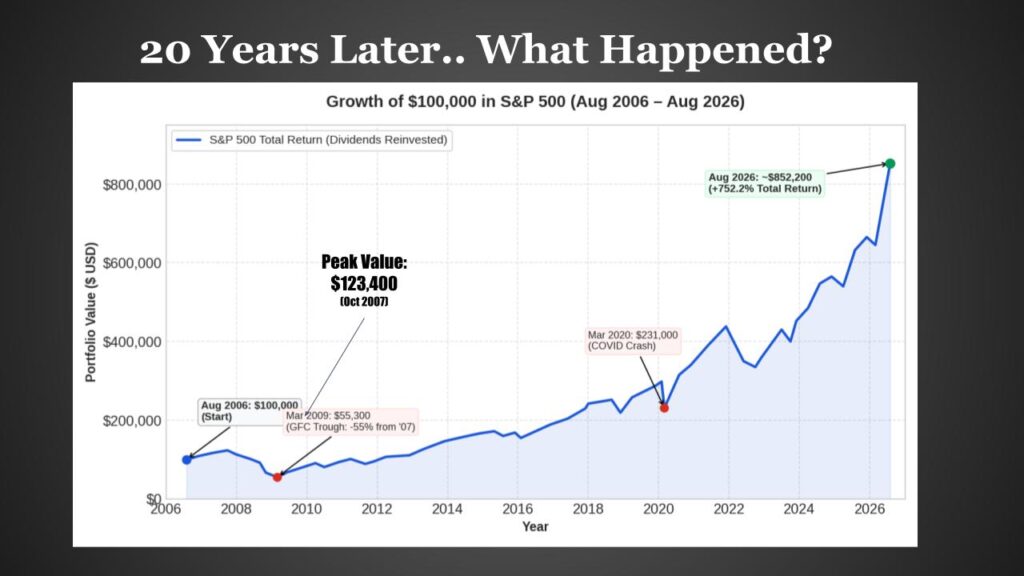
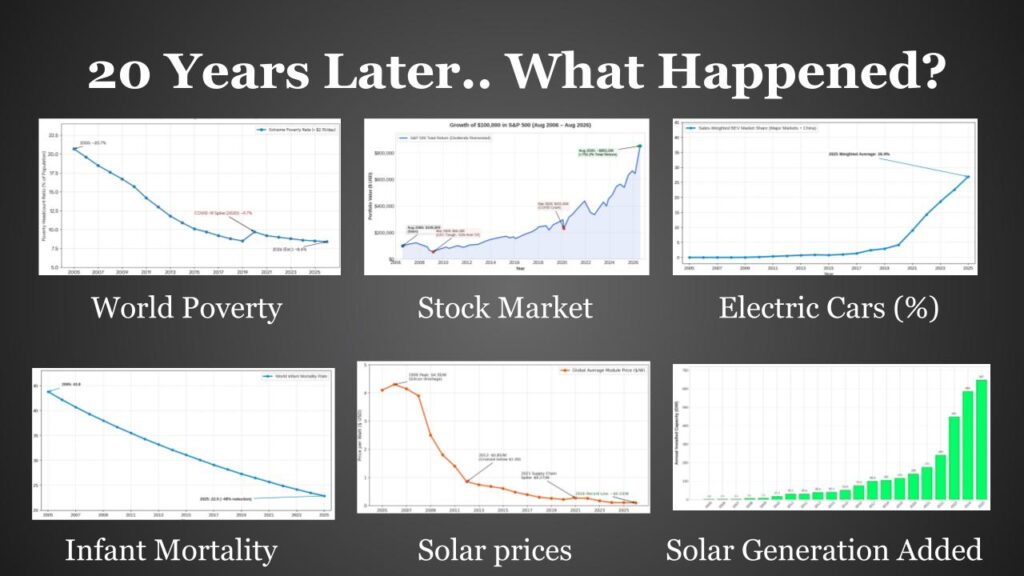
Despite those widespread fears, the subsequent 2008 Great Financial Crisis—the deepest economic downturn since the Great Depression—was eventually absorbed by the broader trajectory of economic growth. Historical market data indicates that a substantial long-term investment made during those anxious years still multiplied significantly over the following twenty years, comfortably weathering subsequent shocks such as the 2020 pandemic-induced market crash.
Beyond financial markets, global living standards over the past two decades have demonstrated remarkable resilience and improvement. Data highlights significant drops in extreme poverty rates globally, alongside a dramatic reduction in infant mortality. Concurrently, clean energy adoption accelerated rapidly, driven by a monumental decrease in the cost of solar panels, which now account for the vast majority of new energy generation capacity globally. Meanwhile, the market share for electric vehicles has surged from negligible levels to a substantial portion of worldwide auto sales.
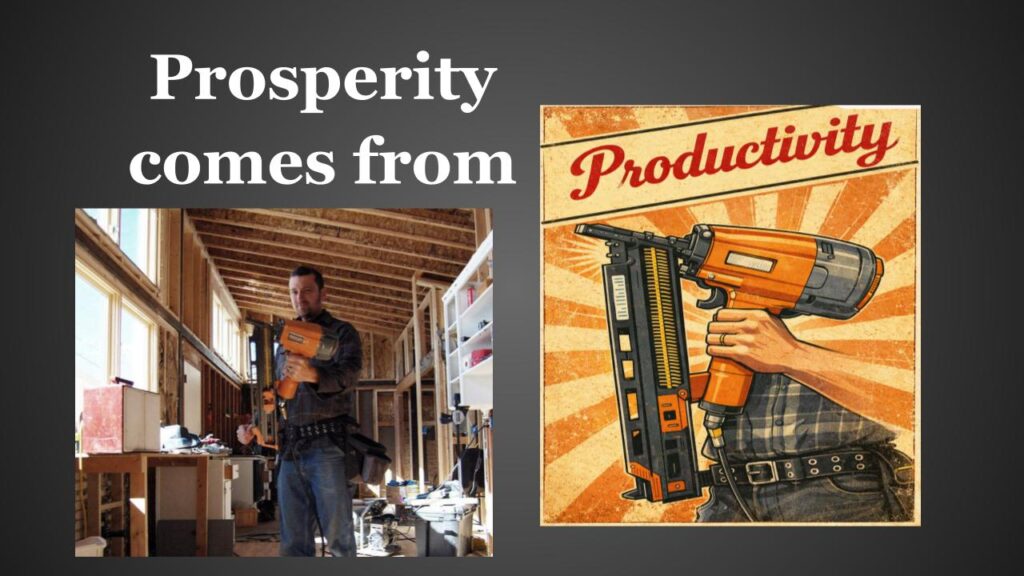
These long-term trends underscore a fundamental economic principle: true prosperity is not derived from the abstract numbers flickering across computer screens in the stock market or financial system, but rather from human productivity. Market systems are fundamentally human inventions, and when financial architectures experience systemic corrections, societies routinely adapt, restructure, and continue generating value. High productivity remains the primary driver of rising living standards, economic growth, and the feasibility of early retirement.
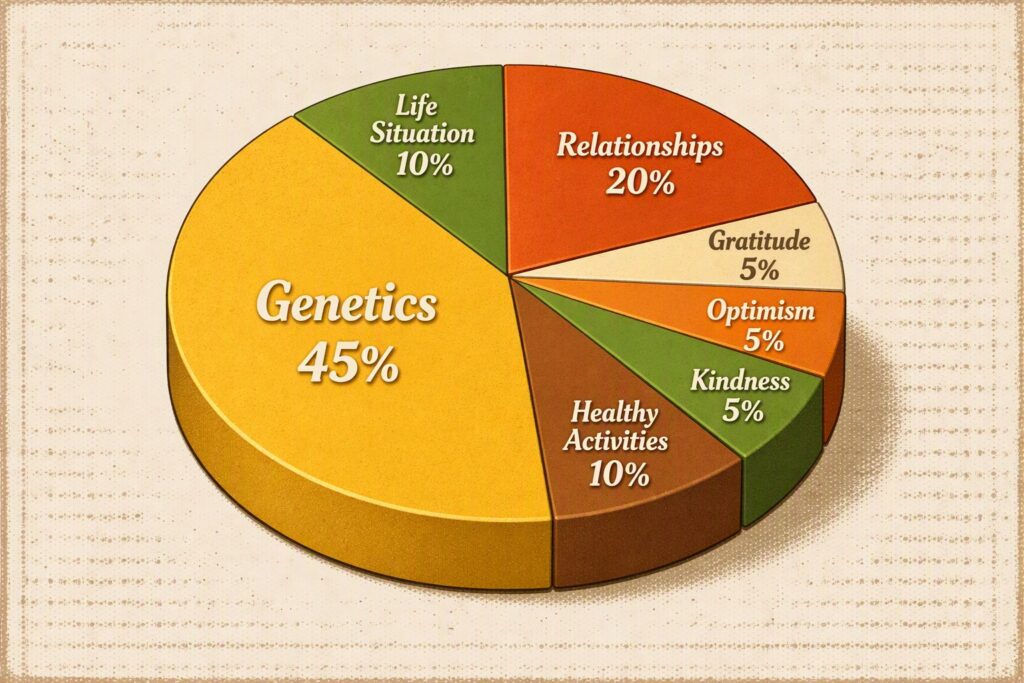
At the same time, psychological researchers and financial educators emphasize that human anxiety is rarely quieted by financial security alone. Evolutionary biology has shaped human beings into vigilant danger detection mechanisms. Once immediate threats regarding physical survival, food security, and basic economic stability are resolved, the human mind tends to shift its worries toward higher-order concerns, ranging from social acceptance and neighborhood aesthetics to complex tax strategies and government regulations regarding retirement account distributions.
Experts suggest that combating this persistent background fear requires self-awareness and an understanding of personal history, noting that financial scarcity mindsets are often inherited from previous generations who lived through historic economic traumas like the Great Depression. By identifying the root causes of financial anxiety and confronting worst-case scenarios rationally, individuals can replace passive worry with active engagement. Proponents of this philosophy advocate for reducing exposure to sensationalized daily news media, focusing instead on physical health, outdoor activity, and cultivating connections with optimistic, productive communities.
Approaching major life transitions and technological shifts through the lens of experimentation can also reframe uncertainty from a threat into an opportunity. Rather than succumbing to doom-scrolling and fear-mongering narratives regarding Artificial Intelligence, analysts encourage viewing AI as a powerful cognitive tool designed to enhance human efficiency and productivity.
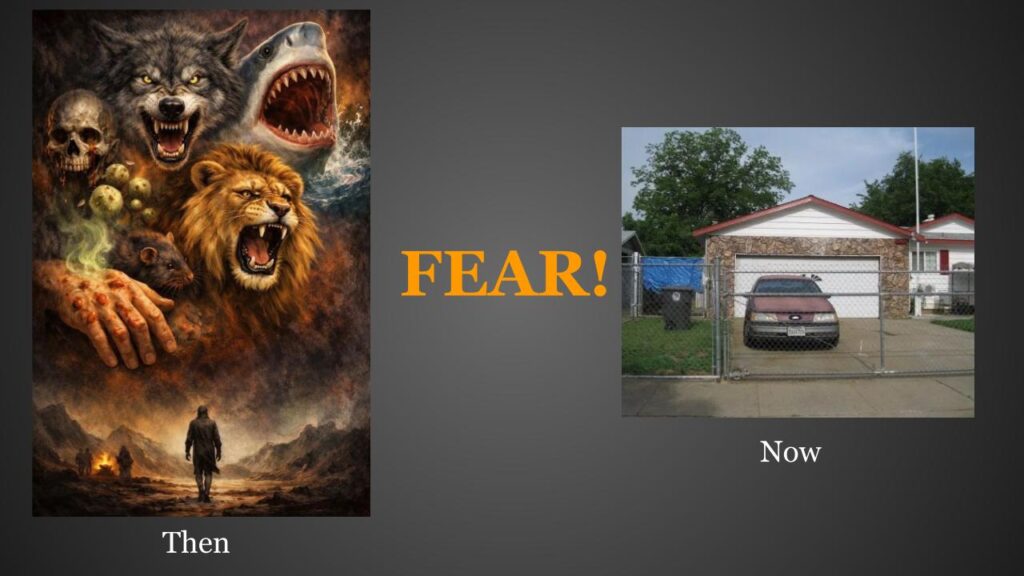
Much like previous technological revolutions—including the advent of the internet and the proliferation of mobile smartphones—the AI boom will inevitably displace certain traditional administrative and operational roles while simultaneously lowering service costs and catalyzing entirely new industries. While the economic rewards of such innovations frequently concentrate among capital owners and shareholders, the broader technological integration represents a continuation of human progress. Ultimately, navigating financial bubbles and technological transitions depends less on predicting unpredictable market movements and more on mastering personal responses to uncertainty, keeping in mind that meaningful growth frequently lies just beyond the boundary of fear.