

After more than a decade of financial stability characterized by historically low borrowing costs, the global economic landscape has undergone a dramatic shift. Interest rates, which lingered near zero following the aftermath of the 2008 financial crisis, have suddenly surged to heights not seen in two decades. This abrupt monetary tightening has upended traditional financial planning, forcing everyday consumers, investors, and homebuyers to reevaluate their strategies in a vastly different environment.
While financial media outlets routinely deliver play-by-play coverage of each incremental rate hike by the Federal Reserve, consumers are often left grappling with a more practical and pressing concern: what actions, if any, should they actually take in response?

Why Is This Happening, and What Got Us Here?
To understand the current economic environment, it helps to look at interest rates as the accelerator pedal of the broader economy, with Federal Reserve Chairman Jerome Powell at the wheel. For the better part of two decades, the central bank kept that accelerator pressed down firmly, injecting a steady stream of low-cost money into the financial system through near-zero interest rates.
This era of cheap money made mortgages exceptionally affordable, fueling a surge in housing demand that drove both existing home sales and new construction. Similarly, businesses and venture-backed startups benefited from accessible, low-interest capital, allowing them to fund operations, lease office space, build facilities, and hire personnel. Those employees, in turn, participated in the broader consumer economy by purchasing homes, vehicles, and everyday goods.
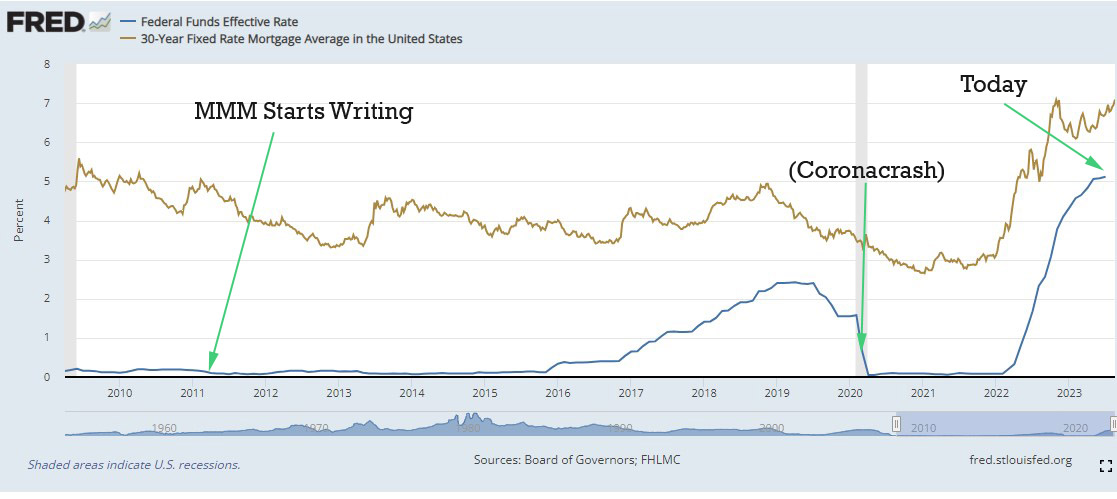
While this prolonged period of loose monetary policy supported steady economic growth, innovation, and general prosperity, it eventually pushed the system to its limits. Too much capital began chasing a limited supply of goods—most notably real estate—triggering an unacceptably rapid acceleration of inflation.
To cool the overheating economy, the Federal Reserve eased its foot off the accelerator, raising interest rates to curb demand. As borrowing costs climbed, economic activity naturally moderated. Mortgages became significantly more expensive, causing many prospective homebuyers to temporarily shelve their purchase plans. Corporations faced with higher debt-servicing costs scaled back capital expenditures, delayed facility construction, and instituted workforce reductions. Major technology firms, including Meta and Amazon, shed thousands of jobs, while the broader banking sector experienced localized turbulence following the collapse of several mid-sized institutions.

Public discourse surrounding these economic shifts often leans toward polarization, with various political and ideological factions offering divergent interpretations of current conditions. Yet despite widespread public sentiment suggesting the country is on the wrong economic track, core indicators tell a different story. Unemployment rates have hovered near historic lows, and broader economic output remains remarkably resilient. In essence, the current economic cooling period functions as a natural stabilization phase designed to allow the economy to digest years of rapid expansion without overheating.
Market Strategy: Stocks and Savings in a High-Rate Environment
A primary concern for retail investors is whether to divest from the stock market out of fear of a severe correction. Historically, the equity market trends upward over the long term, despite periodic and unpredictable volatility. Because market timing remains notoriously difficult, attempting to cycle in and out of equities based on short-term macroeconomic shifts rarely proves successful.

From its peak at the beginning of 2022 through late 2023, the broader U.S. stock market experienced a modest downturn, trading roughly flat over a multi-year span when accounting for inflation and modest dividend yields. For long-term investors utilizing a disciplined accumulation strategy, lower equity valuations translate to a more favorable entry point for purchasing index funds compared to previous market highs.
Concurrently, the rise of high-yield savings accounts, money market funds, and short-term bonds offering returns upwards of four to five percent has introduced a new dynamic for cash management. While ultra-low interest rates made equities the default choice for any meaningful return, the emergence of attractive risk-free yields prompts a reevaluation of short-term cash holdings. However, because equities continue to offer long-term growth potential and current market valuations reflect a relative discount, many long-term investors maintain a balanced approach, prioritizing consistent asset accumulation over chasing short-term yield differentials.

The Impact on the Housing Market
The sector most acutely impacted by rising interest rates is real estate. The rapid escalation of typical mortgage rates from roughly 3 percent to upwards of 7.5 percent has fundamentally altered the economics of buying and selling residential property.
To illustrate the stark shift in financing costs over a short period, consider a prospective buyer purchasing a home with a standard 10 percent down payment. At a 3 percent interest rate, monthly borrowing costs remain manageable. When that same mortgage is subjected to a 7.5 percent rate, the monthly debt service increases dramatically, pricing many median-income buyers out of the market entirely. Existing homeowners, meanwhile, are disincentivized from selling because doing so would mean forfeiting their locked-in, ultra-low mortgage rates in favor of much higher financing costs on a new property.
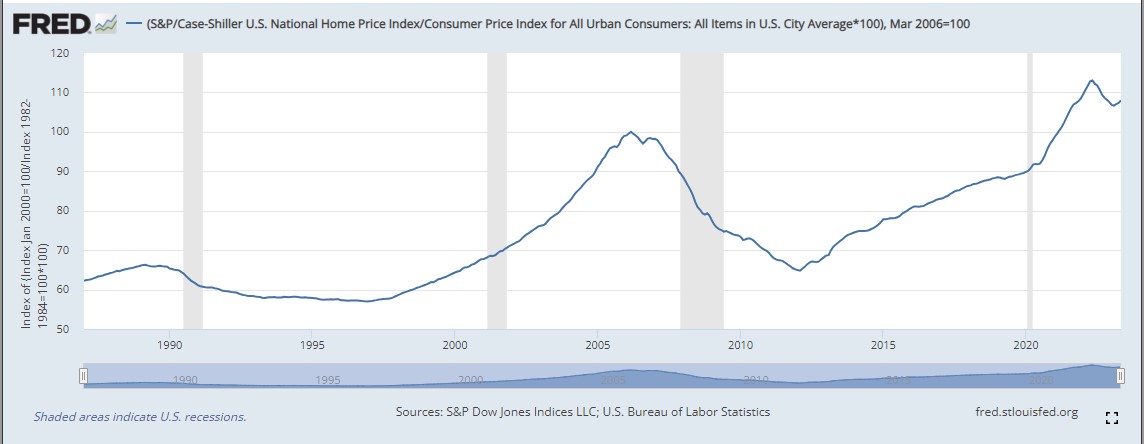
This dynamic is precisely the intended mechanism of monetary tightening. Higher borrowing costs are designed to cool housing demand, reduce speculative real estate investment, and curb rapid price appreciation. Over time, these pressures are expected to stabilize property values and, in some regions, prompt price corrections.
However, the trajectory of home prices depends heavily on long-term supply and demand fundamentals, including construction costs, labor availability, and local regulatory frameworks. While technological advancements and modern building materials can streamline construction efficiency, regulatory burdens, complex zoning laws, and local restrictions frequently constrain new supply, keeping upward pressure on prices in many metropolitan areas.
When Will Interest Rates and House Prices Shift?
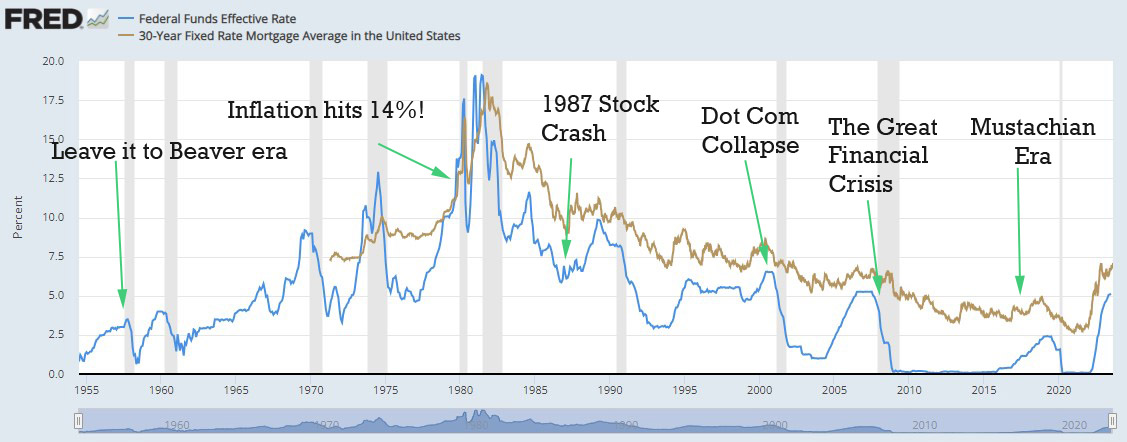
Despite the recent spikes, current interest rates are not historically anomalous; rather, they align closely with long-term historical averages. The prolonged era of near-zero rates following the 2008 financial crisis represents an outlier in modern economic history rather than a permanent baseline.
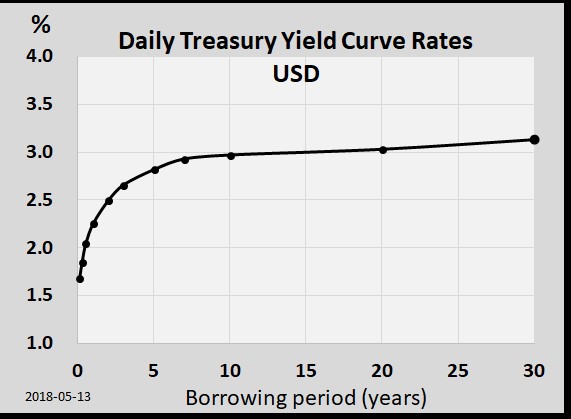
Future reductions in interest rates will likely depend on macroeconomic indicators, specifically slowing inflation and rising labor market slack that signal a cooling economy. Financial markets already offer a window into investor expectations through the U.S. Treasury yield curve. When short-term yields exceed long-term yields—a phenomenon known as an inverted yield curve—it typically indicates that bond market participants anticipate future rate cuts driven by an impending economic slowdown or recession. Historically, an inverted yield curve has served as a reliable, though imperfect, predictor of broader economic contraction.
Ultimately, while macroeconomic variables such as interest rates and housing cycles remain outside individual control, long-term financial resilience is built on personal fundamentals. Maintaining a balanced approach to earning, saving, and managing personal debt helps insulate households from broader market volatility, ensuring that macroeconomic shifts appear less like crises and more like manageable ripples in the wider economic current.