

Nearly nineteen years into an early retirement that captivated a generation of savers, financial independence advocate and blogger known as Mr. Money Mustache has revealed an unexpected psychological hurdle: the absolute freedom of a work-free lifestyle can easily devolve into a trap of convenience and self-sabotage.
Reflecting on nearly two decades of early exit from the traditional workforce, the veteran blogger shared that while the initial years of freedom were filled with intense parenting, home restoration projects, traveling, and writing, a subtle inertia has crept into his daily routine over the last few years. Rather than engaging in fulfilling, high-value tasks, he found himself drifting toward the couch earlier each afternoon, seeking digital distractions and wrestling with a lack of energy and focus for the activities he theoretically enjoyed the most.

To most people outside the movement, combining total financial freedom with a flexible schedule sounds like the ultimate dream—a non-stop playground of self-actualization. However, the author argues that freedom and accumulated wealth ultimately act as magnifying glasses, revealing a person’s true psychological strengths and weaknesses. At one end of the spectrum lies absolute stagnation, while at the other lies relentless productivity and large-scale philanthropy.
For years, the author managed to strike a natural balance. The rigorous demands of raising a young child occupied the first decade, complemented by building houses, recording videos, and publishing hundreds of blog articles. Yet, as the pace slowed, a paradox emerged: having the complete autonomy to do anything meant never having to do anything he did not immediately feel like doing. This realization exposed a counterintuitive flaw in the early retirement model. Freedom is transformative when it rescues an individual from a grueling 5am commute and a stifling corporate office cubicle. However, that same freedom is squandered if it simply leads to passive consumption while scrolling social media. Without deliberate intention, freedom can become a sophisticated tool for avoiding difficult, high-friction tasks.
Recognizing and Combating Self-Sabotage
The author noted that his previous attempts to combat this sluggishness involved studying health, wellness, and neurobiology. He explored strategies to avoid excessive comfort and boost daily energy, sharing these insights with readers through various articles. Yet, a recurring pattern emerged. He would learn effective techniques, incorporate them successfully for a brief period, and then his brain would quietly manufacture plausible excuses to abandon consistency.

This behavioral trap became particularly evident when examining physical fitness. Recognizing that regular workouts offer a massive return on investment for overall well-being, the author frequently fell into a protracted internal negotiation. He would wait for the ideal conditions—high energy levels, pleasant weather, and meticulously prepared gym setups the night before—only to find that the golden moment frequently failed to materialize. The resulting inconsistency yielded predictable results: lackluster fitness levels and prolonged gaps between training sessions.
The turning point came when he replaced this meandering internal dialogue with a blunt, actionable mindset. Instead of waiting to "feel like" working out, he learned to treat the very moment of hesitation as an immediate alarm bell. Catching the hesitation in real-time transformed a trigger for procrastination into a mandatory trigger for action. Rather than running away from difficult or uncomfortable tasks, he began leaning directly into them.
Finding Inspiration in Extreme Overachievement
While discussing these behavioral shifts with acquaintances, the author noticed a stark divide. Roughly half of his peers related deeply to the struggle of underachievement and a desire to do more, while the other half—who juggle multiple businesses, large families, and mountain triathlons—felt they were already carrying too much. Both extremes, he noted, could benefit from a move toward the center.

The definitive catalyst for his personal turnaround, however, came from listening to a podcast interview featuring endurance athlete and retired Navy SEAL David Goggins. Known for pushing the human body through unimaginable extremes—including running hundreds of miles without sleep and setting world records for pull-ups—Goggins presented an extreme portrait of psychological resilience.
While the author made it clear that he has no desire to replicate Goggins’ grueling physical feats, exposure to such an extreme example radically shifted his perspective on personal limitations. It reinforced the idea that most barriers are entirely mental rather than physical or circumstantial. Rather than viewing life through the lens of fixed external constraints, he embraced a framework where internal resistance can be systematically dismantled.
Reclaiming Vigor and Sustaining Momentum
Armed with a concise, hard-hitting phrase jotted down on a piece of cardstock and taped to his bathroom mirror—stating bluntly that he already knows what needs to be done—the author immediately altered his daily habits. By treating both the desire and the lack of desire to work out as immediate triggers to head to the gym, he established unwavering consistency.
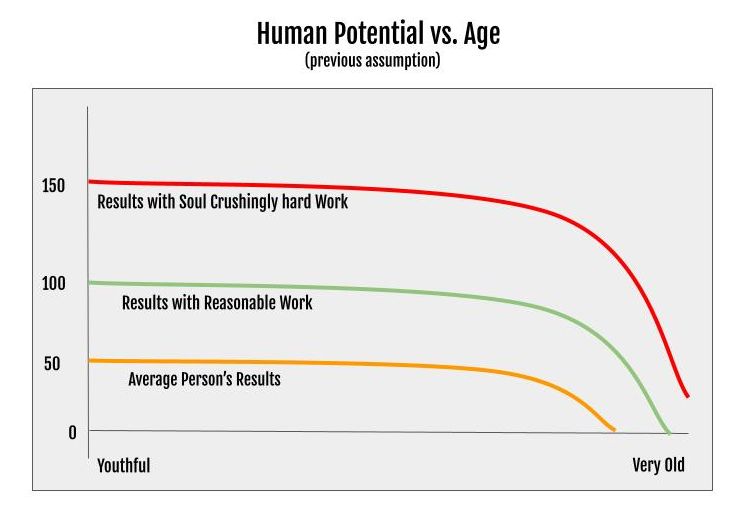
The physical and mental dividends were swift. Over the course of four months, he gained ten pounds of lean muscle mass, restoring the strength and flexibility he possessed in his twenties. Joint mobility improved noticeably, and the renewed discipline naturally spilled over into other areas of his life, including regular running routines, increased social engagement at his coworking space, and renewed focus on writing for his audience.
To maintain this newfound momentum, the author has continued drawing inspiration from rigorous thinkers and practitioners, working through audiobooks by Goggins, health longevity expert Peter Attia, and leadership author Jocko Willink. While acknowledging that critics often dismiss this genre of motivational and health content, he advocates for a selective approach—absorbing the principles that drive personal progress while discarding the rest. Ultimately, by recognizing hesitation not as a valid excuse to rest, but as a direct signal to act, he has successfully transformed his hard-won freedom from a passive retreat into an active, disciplined lifestyle.