
The National Football League has taken firm disciplinary action against on-field officials, handing out rare suspensions to a line judge and a referee following separate incidents of unprofessional conduct and verbal altercations with players during recent games. The league’s vice president of officiating, Ramon George, issued the bans, highlighting the NFL’s growing emphasis on maintaining professional standards and mutual respect between officials and players on the gridiron.
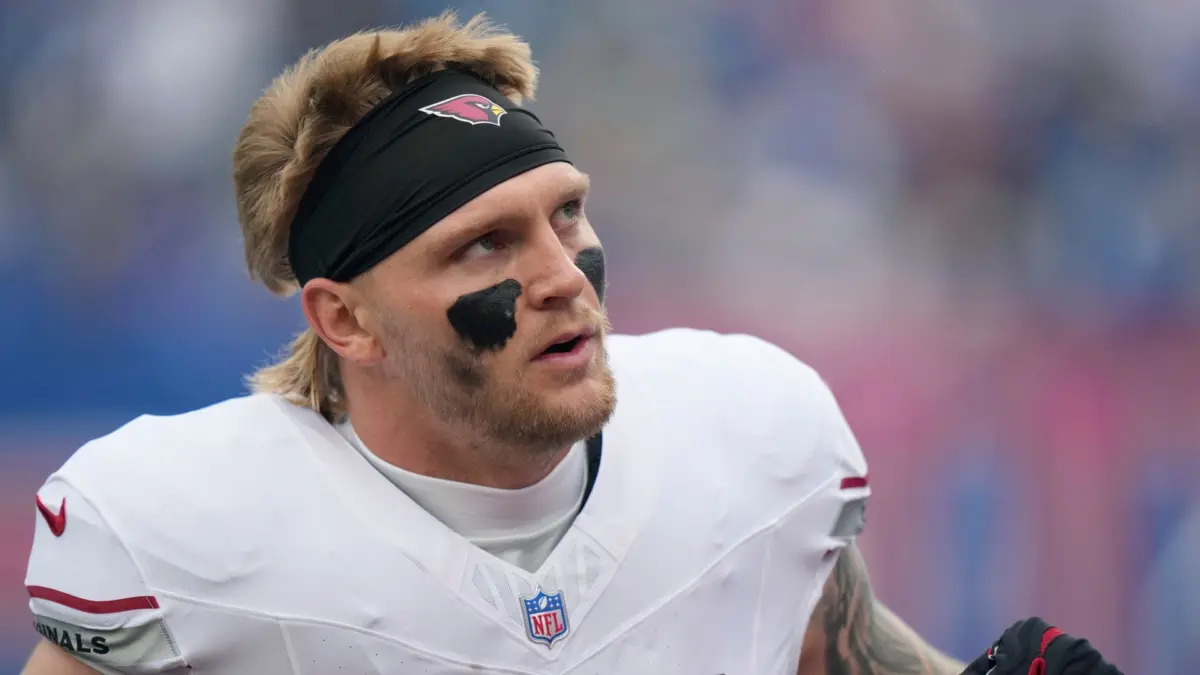
Line judge Jeff Seeman has been suspended for two games after being caught clearly on camera swearing directly at Arizona Cardinals tight end Trey McBride. The heated exchange occurred during the Cardinals’ hard-fought loss to the New York Giants on Sunday, drawing immediate attention from television broadcasts and social media platforms alike.
The incident took place with just under five minutes remaining in the contest, at a critical juncture when officiating decisions were already under intense scrutiny. The friction began when officials opted not to throw a flag for pass interference or illegal contact against New York defensive back Dru Phillips. Phillips had made physical contact with McBride just before the ball arrived from quarterback Jacoby Brissett on a crucial third-and-two play, stalling the Cardinals’ offensive momentum.
Following the unpenalized play, Arizona was forced to punt, swinging the momentum back to the Giants. New York ultimately capitalized on the situation and secured a 36-24 victory, sealed when Deonte Banks intercepted a pass from Brissett and returned it for a game-clinching pick-six as time expired. However, the game’s final score was quickly overshadowed by the viral footage of the verbal confrontation between Seeman and McBride.
Reaction from the Arizona Cardinals organization was measured but clear regarding the unacceptability of the behavior. Arizona head coach Mike LaFleur addressed the incident during his subsequent media availability, offering a balanced perspective while acknowledging the reality of the situation.
"Obviously, you hate to see it, for obvious reasons," Arizona coach Mike LaFleur said. "I do want to give the man a little bit of grace, too. I know Jeff. He’s a good man. It’s unfortunate it happened. It can’t happen, obviously, and I’ll leave it at that."
While the Cardinals’ coaching staff sought to balance empathy with accountability, the league’s player representation strongly condemned the official’s actions. The incident quickly drew the ire of JC Tretter, the executive director of the NFL Players Association and a retired offensive lineman who played eight seasons in the league. Tretter took to social media to voice the union’s strong disapproval, accompanying his statement with the video clip of the interaction.
"This kind of behaviour from an official towards a player is unacceptable," Tretter stated. "Players are consistently held accountable when the roles are reversed. We expect the NFL to hold officials to the same standard."
The pressure from the players’ union underscored a long-standing sensitivity regarding player-official dynamics, where athletes face severe financial penalties and fines for criticizing or using inappropriate language toward referees, creating heightened expectations for reciprocal professional decorum from the officiating crew.
Seeman’s suspension was not the only disciplinary action announced by the league office. Referee Adrian Hill was also handed a one-game suspension for unprofessional conduct stemming from an incident during the matchup between the Miami Dolphins and the Minnesota Vikings.
The interaction involving Hill occurred after a collision knocked the referee to the ground. When Minnesota Vikings linebacker Eric Wilson attempted to extend a helping hand to assist the official back to his feet, Hill reacted aggressively, yelling at Wilson and pointing emphatically for him to get away.
Minnesota head coach Kevin O’Connell addressed the bizarre sequence on Monday, offering context from a high-stakes, fast-moving competitive environment while supporting the overall integrity of the veteran official.
"I just think it’s one of those situations in kind of a high-energy moment there," Minnesota coach Kevin O’Connell said Monday. "I think stuff like that can happen sometimes, but I don’t have any major concerns, and I think Adrian’s a really good official and does a really good job. I think that was just kind of fast moment that happened, and we can put it behind us, hopefully."
Despite the understanding expressed by coaches like O’Connell and LaFleur, the league’s front office decided that public reprimands and standard internal reviews were insufficient, necessitating formal game suspensions to reinforce behavioral boundaries for officiating crews. The NFL Referees Association did not immediately respond to requests for comment regarding the disciplinary decisions made by Ramon George and the league office.
These recent suspensions highlight a historical precedent of disciplinary measures taken against officials who cross the line during emotional on-field moments. The league has previously intervened when verbal altercations or accusations of derogatory remarks have surfaced between referees and players, aiming to protect the integrity and decorum of the sport.
Umpire Roy Ellison, for instance, previously faced significant league discipline on multiple occasions for his on-field interactions. In 2018, Ellison was fined $9,300 and placed on administrative leave for one game following accusations that he used a derogatory term toward Buffalo Bills defensive end Jerry Hughes. Years prior, in 2013, Ellison was also slapped with a one-game suspension after making what the league classified as a "profane and derogatory statement" to Washington left tackle Trent Williams.
The recurrence of such penalties demonstrates that while the NFL acknowledges the immense pressure and rapid pace under which officials must operate, it continues to draw a firm line against verbal hostility, profanity, and unprofessional physical dismissals directed at players. As the season progresses, the league’s leadership hopes these strict measures will reinforce mutual respect on the field, ensuring that the focus remains entirely on the athletic competition.