
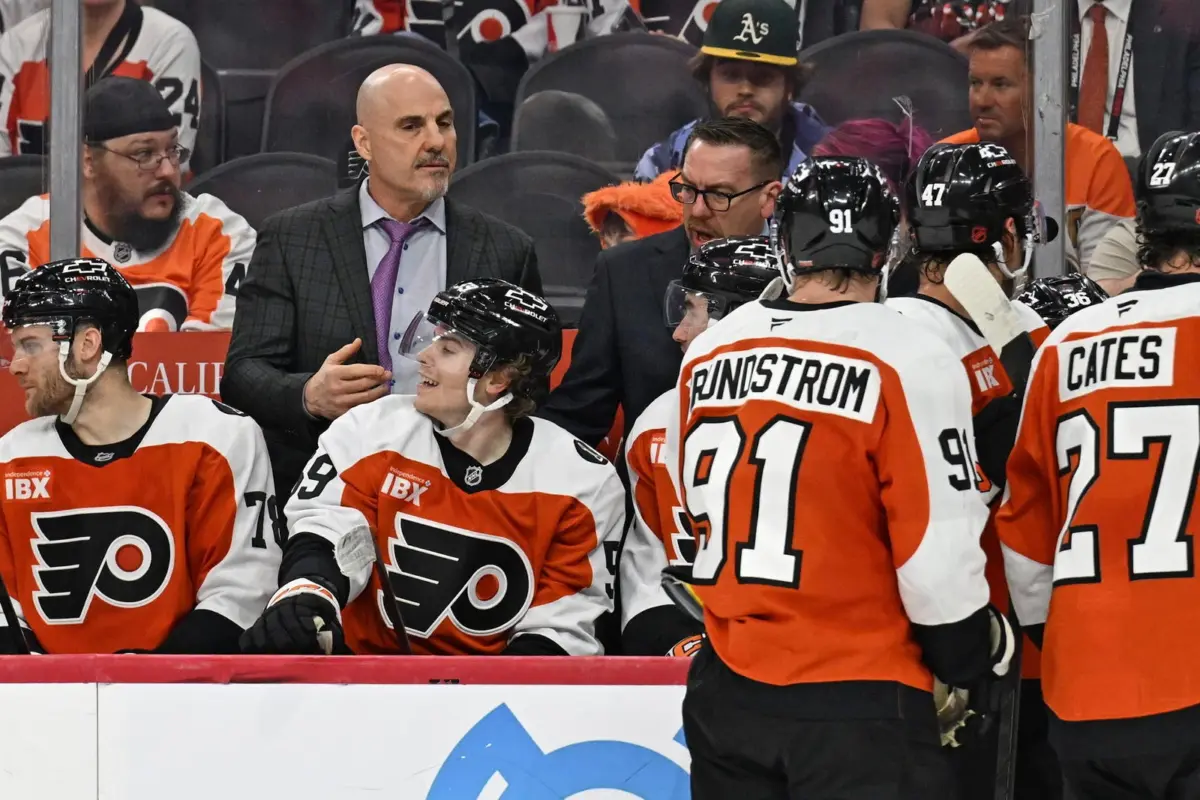
In Philadelphia, some things are as certain as the changing of the seasons: Tourists will inevitably flock to the iconic Rocky statue on the steps of the Philadelphia Museum of Art, passionate locals will engage in endless, heated debates over who serves the absolute best cheesesteaks in town—with strong arguments made for spots like Jim’s South Street—and the Philadelphia Flyers’ power play will continually look entirely inept.
Philadelphia’s special-teams unit has achieved a rare kind of consistency over the years, though it is the kind that brings dread rather than celebration. The trouble is that the unit is consistently bad, having finished dead last in the National Hockey League in power-play efficiency in four out of the last five seasons. As the early stretch of the 2026-27 NHL campaign unfolds, the Flyers’ special teams have looked just as lost, disjointed, and devoid of answers as they did throughout those previous struggles.
Granted, it remains a relatively small sample size just three games into the new regular season, but the visual indicators and underlying metrics look strikingly and distressingly familiar. There is simply not enough movement away from the puck. There are not nearly enough faceoff wins to establish immediate offensive-zone possession. Above all, there are not enough shots being directed toward the opposition’s net.
These persistent shortcomings came to a frustrating head for the home crowd at the Wells Fargo Center, where frustrated fans could be heard booing as the Flyers squandered a golden late-game power-play opportunity. That late-game man-advantage could have easily snapped a tense 2-2 tie and potentially secured a statement victory on Saturday night against the defending Stanley Cup champion Carolina Hurricanes.
Adding an extra layer of misery to the evening, the Hurricanes ultimately capitalized on their own opportunities and snatched the game away on, fittingly enough, a power-play goal scored by defenseman Shayne Gostisbehere. The twist of fate carried a heavy dose of irony for the Philadelphia faithful: Gostisbehere is the exact same player the Flyers literally traded away for nothing back in the summer of 2021. In what ultimately proved to be a disastrous salary-cap-clearing move, the Flyers shipped Gostisbehere to the Arizona Coyotes alongside valuable second- and seventh-round draft picks, receiving absolutely nothing of tangible value in return.
Ever since that fateful transaction, the organization has been searching high and low for a legitimate power-play quarterback capable of organizing the attack, walking the blue line, and distributing the puck with precision.
The Flyers currently sit with an underwhelming 0-1-2 record to begin the new season. They have managed to steal two standings points entirely because of the terrific, standout goaltending of Joseph Woll, who has routinely been forced to stand on his head behind a heavily outmatched defensive structure. In their latest loss against Carolina, the Flyers went 0-for-4 on the power play, bringing their dismal special-teams conversion rate to 0-for-8 through the first three games of the schedule.
Across those opening eight man-advantage opportunities, the power play has managed to generate a meager total of just seven shots on goal. Poor puck possession and a glaring inability to enter the offensive zone cleanly have played major roles in the ongoing offensive drought.
"Our execution is not good," the team’s coaching leadership noted regarding the stagnant special-teams play. "We have to execute. Other teams are going through the same thing. Everyone’s had six, seven, eight practices. That’s not an excuse. We’re going to have to fast-track this."

Yet, a pressing question remains for the front office and the coaching staff: How exactly does a team "fast-track" its special-teams execution when it features essentially the same personnel—with the return of a now-healthy Tyson Foerster serving as the primary roster exception—that operated at an NHL-worst 15.7 percent efficiency rating on power-play chances just a season ago?
Despite the mounting statistical evidence and the audible groans from the home crowd, veteran winger Travis Konecny remains outwardly unconcerned by the early-season numbers. Speaking after recent practices and games, Konecny maintained that the power play is "not an issue" and insisted that the team is consistently generating "many good looks" when playing with a man advantage.
Those reassuring words might carry more weight and seem less hollow if the exact same problem hadn’t stubbornly persisted for more than five full seasons through multiple roster turnovers and tactical shifts.
General manager Danny Briere opted not to add a bonafide No. 1 center to the roster during the off-season. While the front office did aggressively attempt to secure restricted free agent Leo Carlsson, the young star ultimately remained with the Anaheim Ducks, leaving a glaring, unfilled void down the middle of the ice that has critically hampered the power play and the offensive attack as a whole.
The wider team statistics underline the offensive struggles currently gripping the franchise. Philadelphia has managed to score a total of just four goals across its first three games of the 2026-27 season. More alarmingly, the Flyers have been heavily outshot by a staggering 122-62 margin across that same span, spending far too much time defending in their own zone. Meanwhile, opposing power plays have successfully cashed in for four goals against Philadelphia, while the Flyers’ own special teams remain completely shut out.
The bottom line for the franchise is sobering: Over recent years, the organization has cycled through different head coaches, altered personnel combinations, and implemented various tactical systems, yet the power play has stubbornly remained the team’s single most glaring weakness.
The overarching reality may simply point back to personnel. Perhaps the franchise ultimately needs to find the right dynamic player to finally fix the broken unit from within.
If the current offensive and special-teams woes continue to drag the team down through the opening weeks of the schedule, general manager Daniel Briere may well be forced to explore the trade market sooner rather than later to inject life into the lineup. While acknowledging that it is still very early in a grueling 82-game regular-season schedule, the front office faces a fair question from an impatient fan base: Is it ever truly too early to finally solve a lingering problem that has held the franchise back for half a decade?