
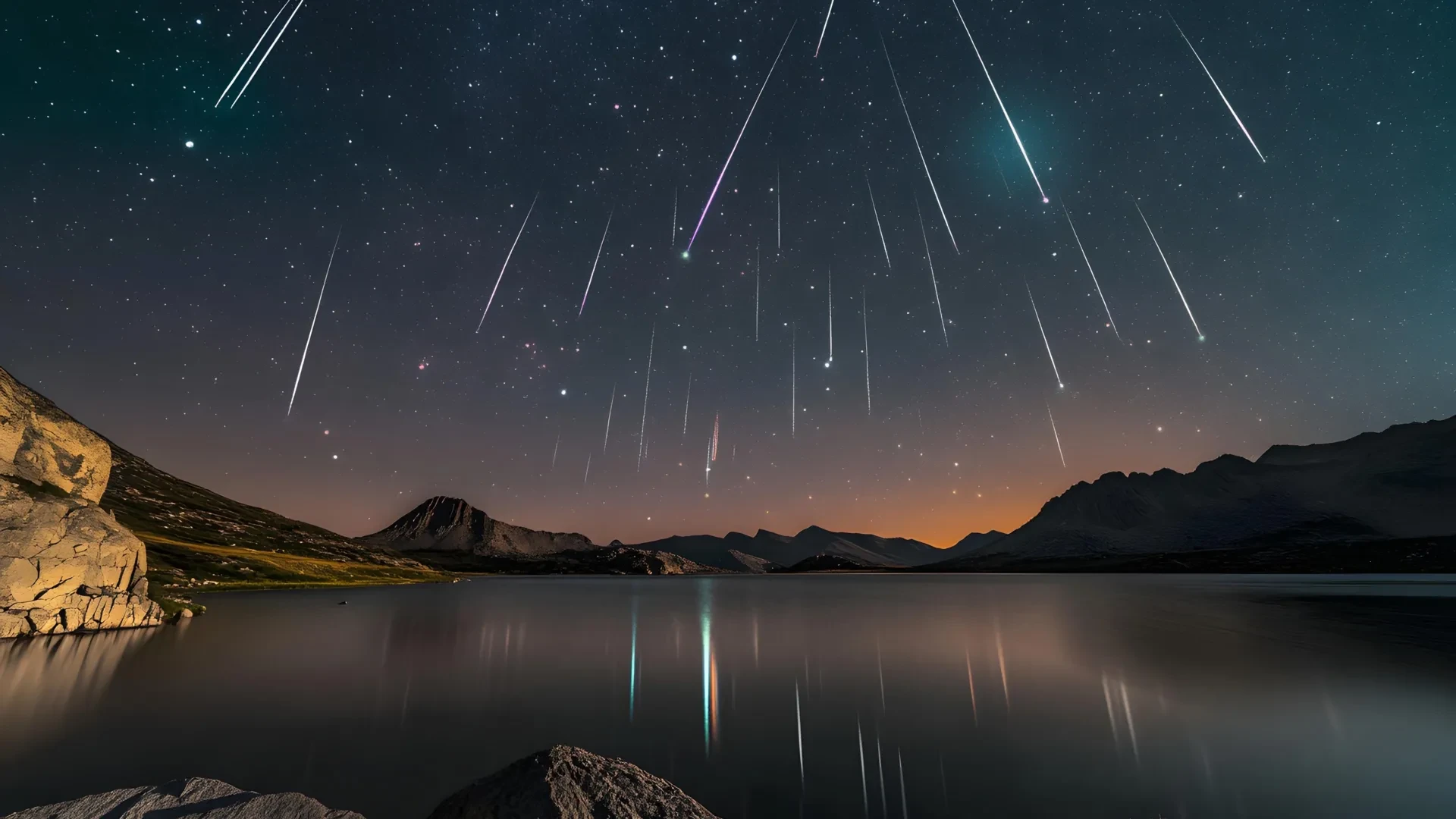
October offers several memorable sights for skywatchers, including Saturn at opposition, the Orionid meteor shower, and a close pairing of the Moon and the Pleiades, also known as the Seven Sisters. Saturn leads October’s celestial lineup, followed later in the month by meteors linked to Halley’s Comet and a close encounter between the Moon and one of the best known star clusters in the night sky. Together, these events make October a busy month for anyone looking up after sunset or before dawn.
These autumn evenings bring some of the most favorable conditions of the year for stargazers and astronomy enthusiasts. As the nights grow longer and, in many regions, crisper and clearer, the celestial sphere opens up with distinct planetary alignments, annual meteor activity, and iconic deep-sky objects. Whether observing from urban backyards with the aid of optical instruments or traveling to remote dark-sky locations for unobstructed views, observers will find a remarkably active astronomical calendar unfolding overhead throughout the month.
Saturn Reaches Opposition
On October 4th, Saturn reaches opposition, offering one of the best viewing opportunities of the year for the ringed planet.
Opposition occurs when Earth moves directly between the Sun and Saturn. From our perspective on Earth, Saturn then appears on the opposite side of the sky from the Sun. As a result, the planet rises in the east around sunset, climbs highest in the southern sky near the middle of the night, and remains visible for much of the night until it sets in the west around dawn. During opposition, Saturn is also at its closest point to Earth for the year, making its disk appear slightly larger and brighter in telescopes than at any other time.
Beyond its striking appearance to amateur astronomers, Saturn is currently drawing significant scientific attention because of unusual and dynamic activity in its atmosphere. Astronomers have long studied a remarkable hexagon-shaped jet stream stretching nearly 20,000 miles across the planet’s north pole. This persistent, six-sided atmospheric phenomenon has fascinated researchers since it was first documented during early flybys and subsequently studied in detail by the Cassini spacecraft.
More recent observations from NASA’s Hubble Space Telescope have revealed an even more surprising feature: a ten-sided atmospheric wave surrounding Saturn’s south pole. This newly analyzed feature, located deep in the southern hemisphere, appears to be growing stronger over time. That gives researchers a rare and valuable opportunity to observe a massive atmospheric structure as it develops and evolves in real-time, providing fresh insights into the complex meteorology of gas giant planets.
Orionid Meteor Shower Peaks in October
The Orionid meteor shower reaches its peak activity during the night of October 21st and into the morning hours of October 22nd.
These fast-moving meteors come from small pieces of debris, dust, and rock left behind along the orbital path of Halley’s Comet, one of the most famous periodic comets in history. Every year, as Earth passes through this trail of cosmic debris, the tiny particles collide with our upper atmosphere at high speeds, burning up and creating the bright streaks of light we recognize as shooting stars. Although the Orionids appear to originate from a radiant point located in the direction of the prominent constellation Orion, individual meteors can flash unexpectedly across any area of the night sky.
Viewing conditions will not be ideal for the entire night this year, presenting a common challenge for meteor observers. A bright waxing gibbous Moon is expected to dominate the night sky for the early part of the evening, washing out some of the fainter and more delicate meteors with its intense moonlight.
The best opportunity to see the shower in its full glory may arrive during the few hours immediately before dawn, after the Moon has set below the horizon. For better viewing success under these conditions, astronomers recommend finding a dark location situated well away from bright urban lights, allowing your eyes adequate time to dark-adapt for at least twenty minutes, and scanning a wide area of the sky rather than focusing on a single spot.
The Moon Meets the Seven Sisters
Another striking astronomical sight arrives on the night of October 27th into the 28th, when the Moon passes in close visual proximity to the Pleiades star cluster, also known as the Seven Sisters.
The Pleiades have inspired folklore, navigation traditions, and stories in many ancient cultures across the globe for thousands of years. Part of their widespread importance and cultural recognition may stem from the fact that the cluster is exceptionally bright and can be easily seen from nearly every inhabited part of the world.
To find this striking pairing in the night sky, observers should look toward the eastern horizon during the evening hours as both the Moon and the Pleiades rise higher and become more prominent. To the unaided human eye, the cluster looks like a slightly hazy, compact group resembling a miniature dipper of six to seven distinct stars, though dark skies often reveal several more members of the cluster.
No special equipment is required to appreciate the beauty of the Pleiades, as they are easily visible to the naked eye under normal conditions. However, using binoculars or a small telescope can reveal the cluster in much greater detail, showing dozens of faint blue stars embedded in delicate wisps of reflection nebula dust that surround the system.