
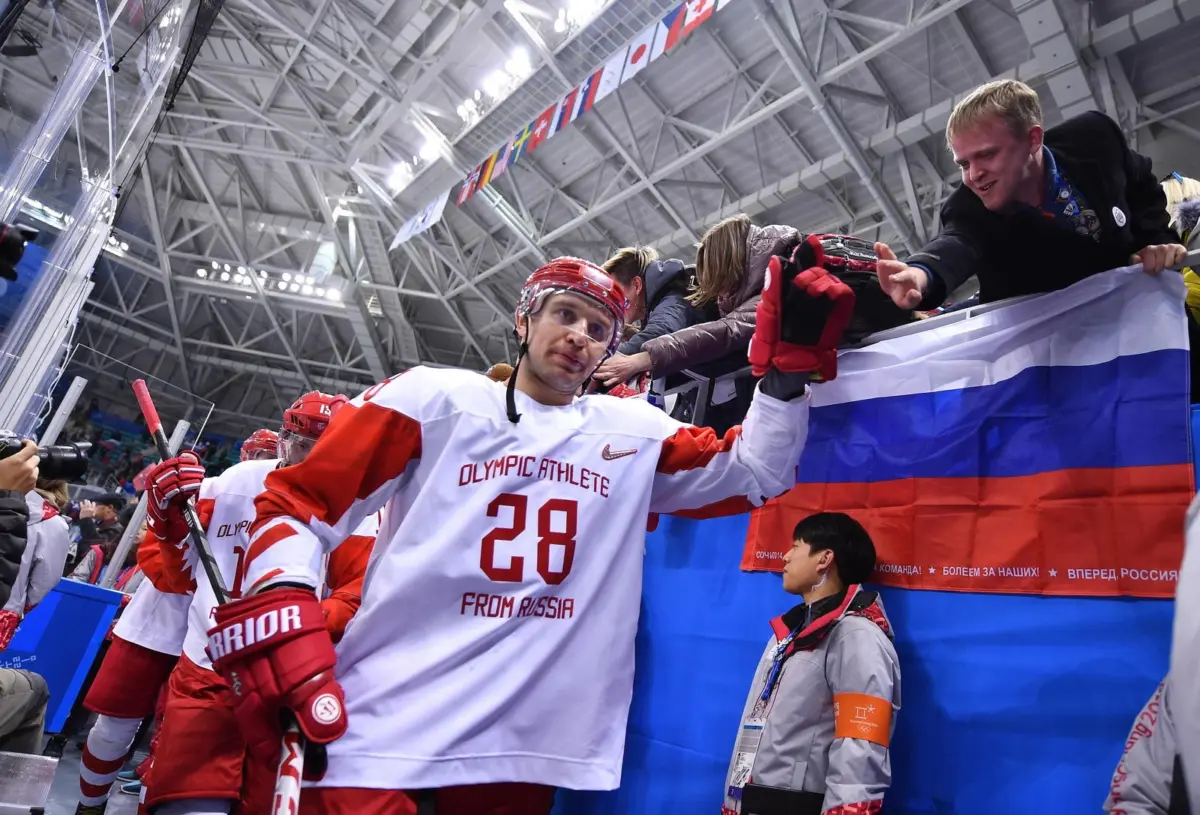
The long-standing uncertainty surrounding the participation of Russian and Belarusian athletes in international sporting events hosted on Canadian soil has finally been met with a definitive ruling from the highest levels of government. Canadian Prime Minister Mark Carney has officially announced that Russia will not be permitted to take part in the upcoming World Junior Hockey Championship, which is scheduled to begin on December 26 in the province of Alberta.
The announcement brings immediate clarity to a complex situation that has placed international ice hockey at the center of a volatile geopolitical storm. When directly questioned by CPAC regarding the potential inclusion of Russian athletes in the prestigious holiday tournament, Prime Minister Carney did not mince words, framing the decision firmly within the context of ongoing international conflict.
"While Russia and Belarus are supporting this illegal and unjustified horrific war in Ukraine, as long as that’s going on, there will be none of those athletes competing for their countries in Canada," Carney stated on Tuesday. Expanding further on the implications for the upcoming showcase of under-20 hockey talent, the Prime Minister added, "So if you’re asking specifically about the World Juniors, the Russians will not be there."
This high-level governmental stance arrives in the wake of a crucial and controversial legal development on the international sports stage. Just weeks prior, on October 30, the Court of Arbitration for Sport (CAS) delivered a ruling determining that Russia must be deemed eligible to return to international ice hockey world championships sanctioned by the International Ice Hockey Federation (IIHF).
The CAS decision immediately created a profound friction point between legal mandates, international sports governance, and national foreign policies. The IIHF responded to the October 30 ruling the same morning it was handed down, publicly expressing its disappointment with the decision. However, the international governing body simultaneously acknowledged the binding nature of the legal process, stating that it would ultimately act in accordance with the CAS’s ruling.
This left the door open for Russian participation from a regulatory standpoint, sparking widespread debate across the hockey world and placing host nations and domestic federations in a difficult position. For Canada, which has steadfastly aligned its cultural and political institutions with sanctions against Moscow following the invasion of Ukraine, the CAS ruling set up an inevitable collision between sports administration and national security policy.

Hockey Canada was quick to respond to Prime Minister Carney’s definitive declaration, signaling strong alignment with the federal government’s directives. In an official statement, the national sports organization expressed its gratitude for the government’s clarity.
"Hockey Canada thanks the Government of Canada for today’s strong position that Canada intends to prevent Russian and Belarusian officials and athletes from participating under their national symbols in international sporting events taking place on Canadian soil," the organization said. Furthermore, Hockey Canada indicated that domestic authorities would not delay in adapting to the new reality, noting, "We will be meeting with our Board of Directors this week to discuss next steps given the government’s clear position."
The implications of the CAS ruling and the subsequent Canadian government response extend far beyond the borders of North America, triggering a sweeping wave of resistance across Europe. In the weeks following the court’s decision, multiple European hockey federations have come forward to voice their profound disappointment regarding the potential reintegration of Russian teams into IIHF-sanctioned events.
Resistance has transformed from verbal disapproval into a coordinated boycott movement. Representatives from several prominent hockey-playing nations—including Sweden, Finland, Czechia, Norway, Denmark, and Latvia—have explicitly stated that they will refuse to take to the ice against Russia, regardless of the CAS’s order of inclusion. These federations are actively working to build a unified bloc to pressure the IIHF into respecting broader diplomatic and safety concerns.
Heikki Hietanen, chairman of the Finnish Ice Hockey Association, elaborated on this growing coalition in a translated statement. "We are currently gathering as many countries as possible to form a common front to tell the IIHF that none of us will play against Russia in this situation," Hietanen explained, highlighting the deep-seated reluctance of neighboring European nations to normalize athletic competition with Russia while the conflict in Ukraine persists.
Similarly, the Czech Ice Hockey Association issued a strong statement reinforcing its solidarity with the broader European resistance. "Czech hockey is joining the position of other European hockey federations that have announced that their national teams will not play in matches against Russia," the federation noted in its translated remarks.
As the December 26 start date for the World Junior Hockey Championship in Alberta draws closer, tournament organizers, international officials, and participating federations must navigate the logistical and competitive fallout of Prime Minister Carney’s announcement. While the CAS ruling mandated legal eligibility, the convergence of the Canadian government’s hardline stance and the mounting boycott from European hockey federations ensures that the path forward for international ice hockey remains fraught with unprecedented geopolitical division.