
It didn’t take long for prospectors and local miners to stake their claims on public lands in southeast Utah that were recently stripped of their protected status within the Bears Ears National Monument.
On September 11, marking the very first day that 1.2 million acres of formerly protected federal land were officially opened up to new mining activity, prospectors rushed to file 16 separate claims. The swift move by miners comes just two months after President Donald Trump slashed the sprawling monument’s footprint by about 90 percent, reversing protections that had long been a battleground for conservationists, local tribes, and the mining industry.
All of the initial claims filed on opening day appear to have been submitted by small-scale, local miners who maintain other everyday jobs and small businesses, but harbor a dedicated interest in unearthing valuable minerals, particularly uranium. However, the rapid timing of these filings has immediately alarmed environmental organizations, such as the Southern Utah Wilderness Alliance, who warn that these early moves are just the tip of the iceberg and signal a troubling future for the region’s delicate ecosystems.
"Hobby miners who want to go locate claims, play miner on the weekend, leave disturbance and pollution in their wake, that really damages the monument resources," said Steve Bloch, an attorney for the environmental nonprofit, expressing deep concern over the long-term ecological degradation of the remote landscape.
Among those moving quickly to secure territory was George Schultz, an off-roading guide based in Moab, who filed three separate claims in the Lockhart Basin area. Defending his actions, Schultz noted that staking a claim is merely an initial administrative "step" in the broader mining process and pointed out that Bureau of Land Management lands situated outside of strict monument protections are legally designated for multiple uses, including resource extraction.
While Schultz declined to explicitly state which specific minerals he expects to unearth at his newly claimed sites, his professional background includes documented experience in uranium exploration.
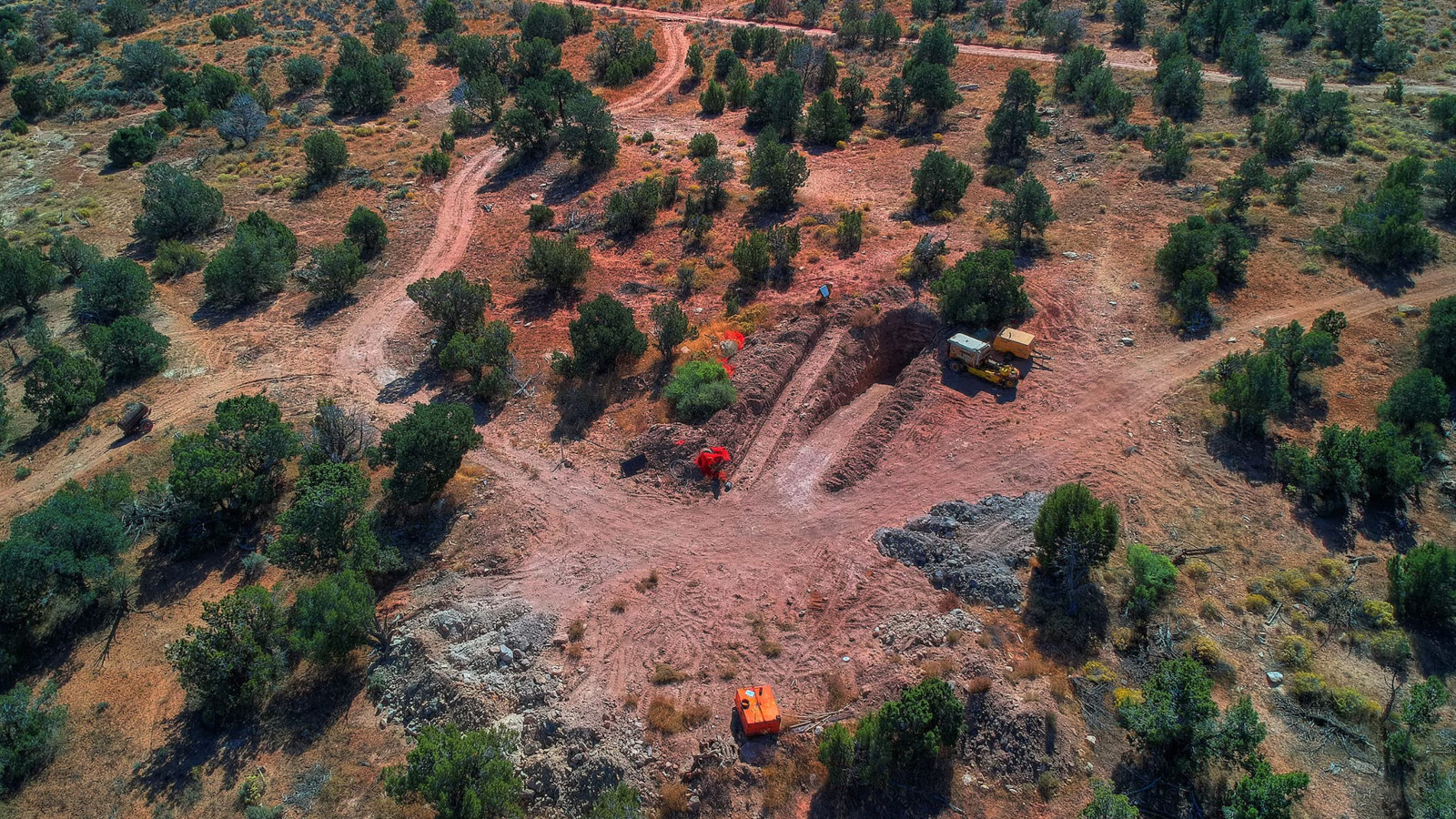
Meanwhile, a substantial portion of the initial filings came from a single family-run operation. Thirteen of the Bears Ears mining claims were filed by Kimmerle Mining, a Moab-based enterprise. These filings included two modifications to expand the existing 21-acre Easy Peasy mine, alongside 11 additional claims staked in the immediate vicinity.
Kyle Kimmerle, a managing member of the mining company, declined to comment when contacted about the new claims. However, public records indicate that Kimmerle’s business interests extend well beyond local prospecting. In 2024, he was appointed to the board of directors of Urano Energy, a Canadian mining company with a primary focus on uranium development. In addition to his mining ventures, Kimmerle apparently operates a Moab-based general contracting business and a local tire shop.
The controversy surrounding Bears Ears National Monument is the latest chapter in a long-standing political tug-of-war. The monument was established initially by President Barack Obama during his final weeks in office in December 2016, adding strict federal protections to roughly 1.35 million acres of culturally and ecologically significant public land in the southeastern corner of Utah.
The political pendulum swung dramatically the very next year when President Trump slashed the monument’s footprint by about 85 percent during his first term. Years later, President Joe Biden restored the monument to its original boundaries and even slightly expanded its territory during his administration. That restoration was short-lived, however, as Trump once again significantly reduced the size of the monument this summer, setting off the current scramble for mineral rights.
This back-and-forth mirrors the tumultuous history of the nearby Grand Staircase-Escalante National Monument in southern Utah. Established by President Bill Clinton in 1996, Grand Staircase-Escalante has likewise experienced decades of repeated downsizing and boundary restorations under successive presidential administrations.
In his latest proclamation shrinking Bears Ears, Trump took the unprecedented step of disbanding the tribal commission that had been co-managing the monument alongside the Bureau of Land Management. The president’s official proclamation also explicitly listed what critics and legal experts describe as a "grab bag of minerals" that the lands "may or may not" contain. According to Bloch, the listed commodities include silver, copper, molybdenum, lead, uranium, vanadium, and zinc.
Trump’s proclamation argued that the extraction of these underground resources would "create jobs, fuel prosperity, and are essential to important sectors of the economy of the United States."
"He was kind of flagging for people that he [and] the administration think that mining is a better use of these areas," Bloch observed, interpreting the administration’s policy signals as a direct invitation to industrial prospectors.
Kimmerle’s deep involvement in the region’s mining politics is well-documented. He was previously a party to a 2023 federal lawsuit challenging President Biden’s restoration of the Bears Ears boundaries in 2021. Through his company, Kimmerle owns the Easy Peasy mine and previously extracted approximately 30 tons of ore in a targeted search for uranium back in 2018. At that time, however, market conditions and low uranium prices made full-scale extraction unprofitable, leading the operation to suspend its activities.
Market dynamics, however, are shifting rapidly. With the modern surge in artificial intelligence data centers and the massive projected demands they will place on the national electricity grid, the Trump administration—alongside Utah Governor Spencer Cox’s Office of Energy Development—has increasingly championed nuclear energy as a reliable, zero-emission solution for powering the nation’s future. Uranium serves as the primary raw fuel required to power commercial nuclear reactors.
During the 2023 legal battle, Kimmerle asserted that having his mining claims "locked up" within the restrictive boundaries of the Bears Ears monument rendered them entirely "useless" and cost his business up to $3 million in potential lost profits.
Kimmerle had previously attempted to file his new Bears Ears claims as early as July, immediately after Trump issued his executive proclamation slashing the monument’s size. However, federal administrative rules dictated that the lands were not officially open to the acceptance of new mining claims until September 11. County records obtained by the Southern Utah Wilderness Alliance confirm that San Juan County formally recorded both the Kimmerle and Schultz filings on that exact reopening date.
The rush to secure mineral rights extends beyond small-scale operators. Public financial disclosures show that the CEO and chairman of Energy Fuels purchased thousands of shares of his own company’s stock just days before Trump announced the downsizing of Bears Ears. Energy Fuels operates the White Mesa Mill, which sits directly adjacent to the former monument boundary and remains the last conventional uranium processing facility operating in the United States.
Historically, Utah served as the third-most productive state in the nation for uranium output, with the vast majority of those mineral resources originating from the rich geological formations of the Colorado Plateau, according to data from the Utah Geological Survey.
Despite the renewed enthusiasm from prospectors and energy developers, conservation advocates remain skeptical that the region holds enough viable mineral wealth to justify the economic expense and environmental toll of industrial development. Bloch noted that independent miners and exploration companies spent decades "poking around in the monument, locating claims, moving dirt, seeing what was there" long before Bears Ears was ever designated as a national monument, as well as during the first Trump administration when the boundaries were temporarily reduced.
"There were no production-level mines that were established," Bloch said, pointing out that historical exploration rarely translated into commercially successful operations.