
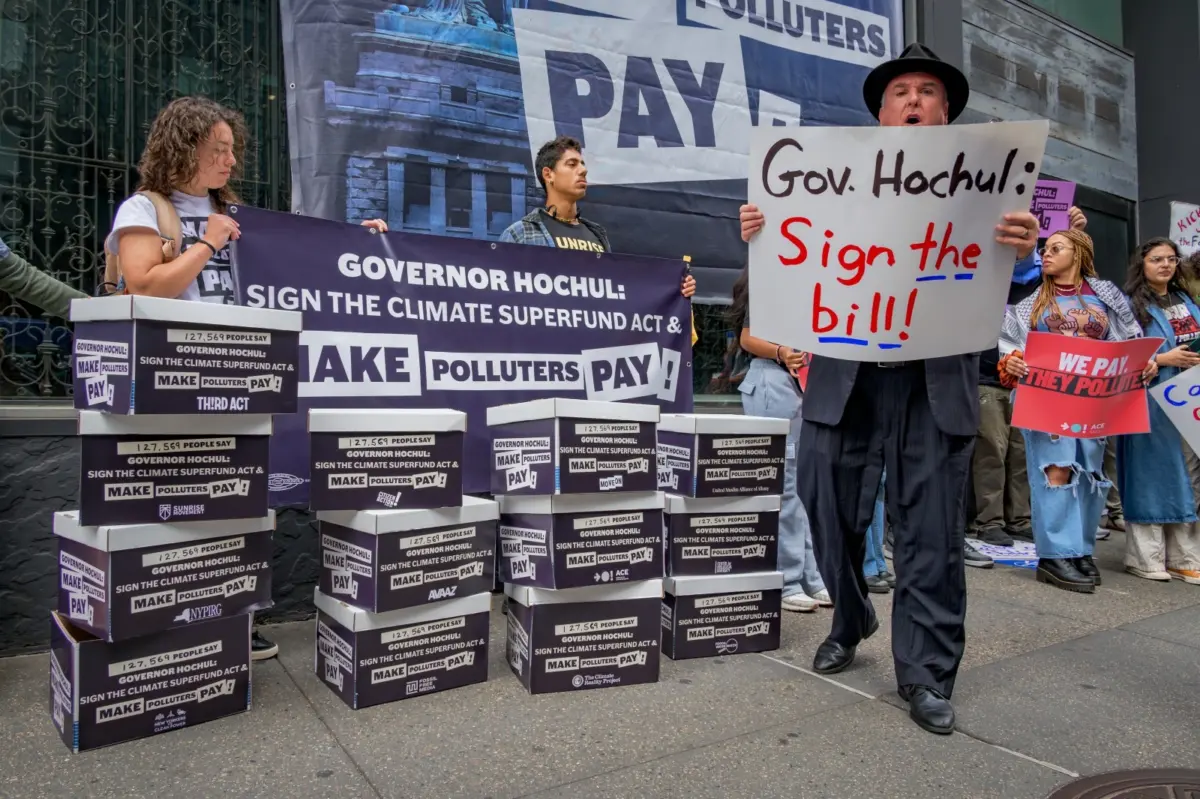
Last week, another federal judge blocked New York’s landmark “climate superfund law,” delivering a significant setback to the state’s ambitious attempt to make major fossil fuel companies pay billions of dollars for climate-related damages linked to their historical business activities. Signed into law in 2024, the legislation had quickly inspired a wave of similar proposals across the country as lawmakers sought innovative ways to hold Big Oil financially accountable for the mounting costs of a warming planet.
The twin federal court rulings against New York are certainly a harsh blow to the advocates who championed the measures. However, legal experts and lawmakers emphasize that these decisions are not necessarily a death knell for the broader state-level accountability approach. According to interviews with seven lawmakers from Connecticut, Hawai‘i, Rhode Island, New Jersey, and New Hampshire, the recent judicial decisions have limited direct legal relevance to their respective jurisdictions. Most of these legislators expressed a continued, unwavering interest in advancing their own versions of superfund legislation during upcoming legislative sessions.
What poses a far more immediate and existential threat to these kinds of pollution-accountability laws is Suncor v. Boulder County, a high-profile case that the United States Supreme Court is scheduled to hear beginning next week. Although a formal decision may not be handed down until next spring, the eventual outcome has the potential to completely nullify all state-level attempts to make fossil fuel companies pay for local climate costs.
“Worst case, they rule that federal law — both statutory and constitutional federal law — preempts all of these cases, throws them all out,” said Pat Parenteau, an emeritus professor at the Vermont Law School. According to Parenteau, such a ruling could quash not only superfund proposals, but also a wide array of consumer rights lawsuits, racketeering cases, and antitrust claims. This sweeping preemption would leave every state in the country facing billions and billions of dollars in climate adaptation costs with virtually no legal recourse against the primary drivers of global emissions.
New York’s climate superfund law was originally designed to extract $75 billion from major fossil fuel companies. The revenue was intended to help offset the massive fiscal burdens associated with climate change, including recovery efforts following extreme weather events and critical adaptive infrastructure projects, such as upgraded stormwater drainage systems and the installation of new cooling systems in public buildings. The legislative concept was directly inspired by the federal Superfund Act of 1980, known formally as the Comprehensive Environmental Response, Compensation, and Liability Act (CERCLA), which made chemical and petroleum companies financially responsible for cleaning up heavily polluted hazardous waste sites across the country.
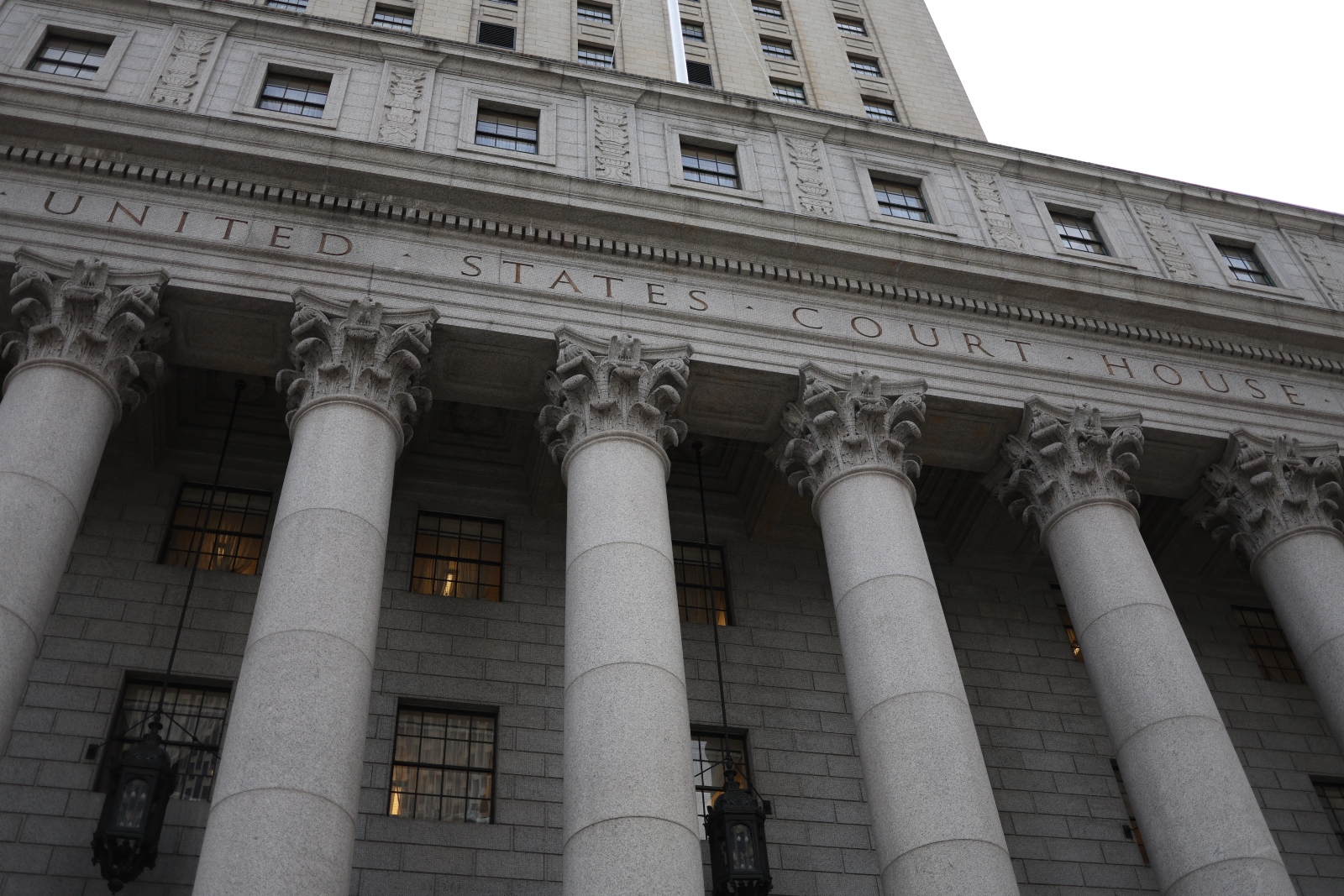
The two recent federal court decisions against New York concluded that the state’s law was preempted by existing federal law, specifically the Clean Air Act. In the initial ruling, Judge Brenda Sannes of the U.S. District Court for the Northern District of New York wrote that the legislative measure was “simply beyond the limits of state law.” Judge Sannes sided firmly with the fossil fuel companies and 22 red-state attorneys general who had joined forces to sue the state. New York is widely expected to appeal both adverse rulings.
To date, Vermont stands as the only other state to have successfully enacted a climate superfund law. That legislation is currently facing its own intense legal challenge from several of the same corporate plaintiffs opposing New York. Over the past month alone, Professor Parenteau noted that there has been a “flurry” of legal briefings and press statements coordinated by industry interests and conservative groups calling for its outright repeal.
Republican attorneys general and industry advocates have capitalized on the legal strike against New York to aggressively oppose climate accountability measures taking shape in other states. In New Jersey, Republican state Senator Michael Testa issued a statement declaring that pursuing a climate superfund measure in his state would be “a waste of time and resources.” Meanwhile, West Virginia Attorney General JB McCuskey warned Bloomberg Law that if any other state dares to pass this type of environmental policy, he plans to sue them “almost instantaneously.”
Despite these aggressive legal threats and the setbacks in New York, multiple Democratic lawmakers remain undeterred and fully committed to advancing climate superfund legislation in their home states.
“I don’t think it’ll make any difference,” said Karl Rhoads, an outgoing senator in Hawai‘i who sponsored a similar superfund bill last legislative year. “There’s no reason for the rest of us not to continue.”
Rhode Island Representative Jennifer Boylan and Connecticut Representative Josh Elliott both confirmed that they are actively planning to reintroduce climate superfund bills during their upcoming legislative sessions.
“I’m full speed ahead,” Representative Boylan said. She firmly dismissed the notion that the New York court case would inevitably doom similar legislation elsewhere, describing the narrative as “a convenient strategy to try to scare us all.”
Lawmakers from California, Illinois, and Massachusetts also voiced continued interest in putting forward new superfund bills, signaling that geographic momentum for polluter-pays legislation remains robust despite the hostile judicial environment in federal district courts.
In New Jersey, a climate superfund bill sponsored by Democratic Senator John McKeon stalled prior to the Legislature’s summer break. However, the measure may still be considered during the remaining year and a half of the state’s multi-year legislative session. Senator McKeon stated that he remains completely unconcerned by the New York ruling, emphasizing that New Jersey operates within a different federal court circuit and is governed by distinct legal precedents.
In New Hampshire, Democratic Representative Tony Caplan sponsored an unsuccessful bill last year aimed at determining the monetary costs of climate damage to the state and identifying the best means of recouping those costs. Caplan noted that he is currently focusing his legislative efforts on broader decarbonization initiatives rather than introducing another superfund bill. However, he attributed this shift to long-standing political opposition from his state’s Republican-controlled Legislature rather than any fallout from the New York court decisions.

“The lawfare goes on,” Caplan said. “The [New York] decision can be appealed, obviously, and there are blue states that will continue to push forward with these kinds of bills.”
Rachel Rothschild, an assistant professor at the University of Michigan Law School, argued that individual states “can and should push ahead” with their various climate liability initiatives. She pointed out that states are not legally bound by the rulings of New York District Courts, nor are they strictly constrained by whatever decision the higher-level Second Circuit Court of Appeals might eventually hand down if New York’s superfund lawsuits successfully make their way through the appellate process. However, Rothschild cautioned that a negative ruling in Suncor v. Boulder County represents a far more profound and systemic threat.
In narrow terms, the upcoming Supreme Court case considers whether a 2018 lawsuit brought by Boulder County and the City of Boulder against energy giants Suncor and ExxonMobil is permitted to proceed in state court. Fossil fuel industry representatives have argued vigorously that the lawsuit should be barred from state courts because it represents an improper attempt by local governments to dictate national climate policy.
If at least five of the eight participating justices rule that the local lawsuit is superseded by the federal Clean Air Act or the U.S. Constitution, that legal precedent will become binding across the entire country. (Justice Samuel Alito has officially recused himself from participating in the climate change dispute). Under such a sweeping ruling, individual states could be severely limited—or outright prohibited—from seeking any form of financial recompense from fossil fuel corporations, whether through traditional tort lawsuits or through innovative climate superfund-style legislation.
“My fear,” Professor Rothschild said, “is that this is going to be another notch in a long list of decisions that are threatening to our broader country and democracy, leaving states without the ability to do much on very flimsy and poorly reasoned legal grounds.”
Another, less sweeping possibility is that the Supreme Court justices might choose to punt on the case, given that the litigation has not yet traveled completely through the lower levels of the Colorado state court system. Rothschild described this as a cautious “wait-and-see” approach that would be far preferable to a total, sweeping victory for fossil fuel interests. Even so, she expressed concern that such an outcome would leave what she views as “bad law” on the books, specifically referencing the New York state superfund decisions and two other recent legal rulings that favor federal preemption regarding issues of transboundary pollution.
If Boulder ultimately prevails in the high court, its lawsuit and other state-level accountability measures will be legally cleared to move forward. States currently pausing to observe the outcome might gain vital clarity regarding what types of climate claims are legally permissible and consistent with the constitutional limits of state authority. For instance, the Supreme Court justices might suggest in their written opinions that states are restricted to claiming damages only for climate pollution released directly within their own borders, or that they may only collect financial penalties for clearly demonstrated localized harms.
“That might give us something of a yardstick with which we could evaluate what could be done under the climate superfund statutes,” said Jonathan Adler, a professor at the William and Mary Law School. “We’ll have to pay a lot of attention.”