
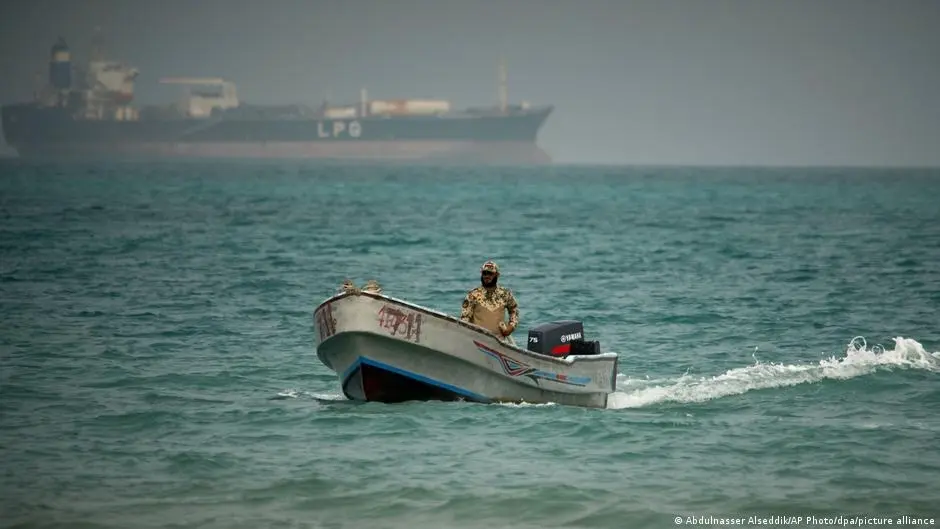
The widening conflict in the Middle East has crossed the narrow waters of the southern Red Sea and arrived within direct sight of the African continent. In September, Iran-backed Houthi rebels seized Yemen’s strategic Perim Island, placing one of the world’s most volatile military confrontations just miles from the fragile Horn of Africa.
Perim Island sits directly inside the narrowest chokepoint of the Bab el-Mandeb Strait, the maritime passage that links the southern entrance of the Red Sea to the Gulf of Aden. From the shores of the island, the mainland of Djibouti lies roughly 20 kilometers (12 miles) away, while the airspace of Ethiopia is less than a 20-minute flight. By taking control of the island, the Houthi movement positioned itself to command the visual and naval threshold between the Arabian Peninsula and East Africa.
The seizure prompted a rapid military response. In early October, Yemen’s armed forces, operating alongside their Saudi Arabian allies, launched a major counteroffensive to contest Houthi control in the area. The clashes mark the latest dangerous turn in a crisis that began escalating late in 2023, when the Houthis launched sustained missile and drone attacks against commercial merchant shipping in the wake of the Gaza war. Now, with ground and naval fighting concentrated around the Bab el-Mandeb, the conflict is generating severe humanitarian, economic, and security shocks across the African continent.
Economic consequences coupled with higher number of refugees
African economies were already experiencing acute financial pressure prior to the battle for Perim Island. Ongoing instability and disruptions in the Strait of Hormuz had already triggered widespread fuel and fertilizer shortages across Africa, driving up the cost of basic commodities, agricultural production, and transportation.
The prospect of the Bab el-Mandeb Strait becoming fully impassable threatens to compound these vulnerabilities. The waterway serves as a primary conduit for maritime traffic traveling between Asia, the Middle East, and Europe. If ships can no longer navigate the passage safely, commercial fleets face costly and disruptive alternatives. Shipping lines must either divert vessels through the Suez Canal under hazardous conditions, rely on complex canal operations controlled by Egypt, or bypass the Red Sea corridor altogether by routing traffic around the Cape of Good Hope at the southern tip of Africa. Many global carriers have already opted for this lengthy detour, and the substantial increase in transit times, fuel consumption, and operational expenses is consistently passed down to African and international consumers.
Beyond the macroeconomic fallout, the human toll of the fighting in Yemen reached Africa almost immediately. According to the United Nations Refugee Agency (UNHCR), at least 3,700 refugees have crossed the Bab el-Mandeb from Yemen into Djibouti since the September escalation began. The overwhelming majority of those arriving on Djibouti’s northern coastline are women and children who undertook perilous sea journeys to escape the intensified fighting.
Aid organizations are preparing for conditions to deteriorate further. The UNHCR is currently drawing up contingency plans to provide emergency humanitarian assistance to an estimated 10,000 additional people who are displaced in Yemen and may attempt the crossing into Djibouti.
However, accommodating this influx is placing immense strain on Djibouti’s host communities. Most refugees arrive in the country’s northern Obock region, an arid territory bordering Eritrea that is poorly equipped to sustain large displaced populations. Obock suffers from an extreme lack of basic natural resources, most notably drinking water.
"We don’t have much water here. There’s no groundwater at all," said Alessandra Roccasalvo, the United Nations Development Program (UNDP) representative for Djibouti. "Everything has to be desalinated." Because the local environment provides virtually no natural freshwater reserves, every gallon of water required for local communities and arriving refugees depends on complex, fuel-reliant desalination infrastructure.
Djibouti is a strategic military hub
Despite its small physical footprint and a population of just over one million, Djibouti plays an outsized role in international geopolitics and regional defense. The predominantly Muslim nation, situated directly on the Horn of Africa, derives its geopolitical prominence from its location along the Red Sea’s primary gateway.
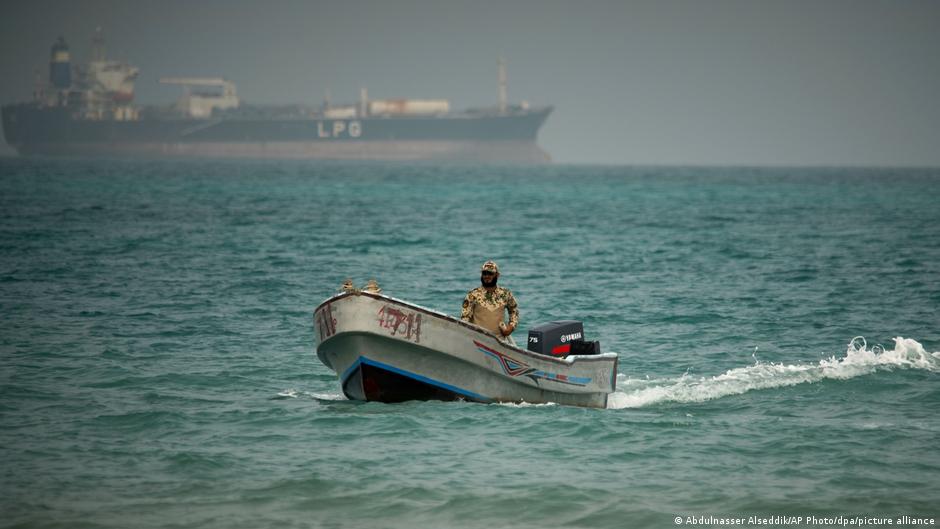
Over the past two decades, this geography has transformed Djibouti into one of the world’s most concentrated hubs for foreign military powers. The United States, China, France, Italy, and Japan all operate active military bases within the country, using their installations to monitor regional conflicts, secure international trade routes, and stage counterterrorism operations. Germany’s armed forces, the Bundeswehr, also maintained a military presence in Djibouti until 2021 as part of an international naval mission tasked with combating maritime piracy in the Gulf of Aden.
Alongside foreign military outposts, Djibouti’s commercial ports serve as vital transshipment centers where international carriers transfer containers and bulk cargo between global trade routes and local markets. To date, the Houthi advance on Perim Island and the subsequent counteroffensive have not emptied the docks in Djibouti. Cargo continues to move, but port operations and domestic economic development are facing indirect pressures.
Djibouti has been experiencing an economic expansion that relies heavily on imported industrial goods. The threat of maritime attacks near the coastline has altered that dynamic.
"Basically, there’s an economic upswing here — which means, as in any country experiencing an upswing, building materials are needed: cement, raw materials, and other things," Roccasalvo explained.
Much of that momentum is now at risk because the cost of bringing cargo through regional waterways has spiked. Ships traveling near the Bab el-Mandeb are forced to pay nearly twice as much for marine insurance and war-risk reinsurance as they did before the crisis escalated. "Many ships no longer want to pass through the Suez Canal," Roccasalvo noted. "Many no longer want to pass through the Red Sea." For Djibouti, higher maritime risk premiums translate into reduced cargo flows, higher import bills, and delays in securing essential construction materials.
Knock-on effects for landlocked neighboring Ethiopia
The shipping disruptions at the Bab el-Mandeb have direct, destabilizing consequences for landlocked Ethiopia. With a population of more than 120 million people, Ethiopia is the most populous landlocked country in the world, and it relies almost entirely on Djibouti’s coastal infrastructure. Approximately 95% of Ethiopia’s total export and import volume travels through Djibouti’s ports before moving inland by rail and road.
As commercial shipping operators absorb doubled insurance premiums and war-risk surcharges, Ethiopia’s economy has absorbed the brunt of the price increases. The country faces higher costs for imported essentials, including food products, manufactured machinery, and fuel.
The economic strain deepened shortly after the Houthis took Perim Island. On September 23, fresh fighting erupted in Ethiopia’s northern Tigray region, threatening the country’s domestic stability. In the ensuing weeks, the Ethiopian National Defense Forces (ENDF) launched operations against a Tigray-led rebel coalition seeking to challenge the federal government in Addis Ababa.
During the initial phase of the fighting, rebel forces advanced toward the primary transport corridor linking Djibouti’s commercial ports to Ethiopia’s interior. Although the ENDF subsequently reported tactical advances that pushed rebel fighters back and lessened the immediate danger of a total transit blockade, the episode exposed the vulnerability of Ethiopia’s primary economic lifeline. Analysts warn that as long as the internal conflict in northern Ethiopia remains unresolved, the trade corridor connecting Addis Ababa to Djibouti remains at risk of disruption.
The maritime crisis has compounded ongoing domestic resource pressures in Ethiopia. For months, the country has struggled with the wider trade fallout from the Strait of Hormuz crisis, which restricted fuel deliveries and forced the government to introduce fuel rationing.

In response to persistent supply vulnerabilities, Ethiopia has sought strategies to insulate its economy from external energy shocks. Among these initiatives is a push to replace imported petroleum with domestic energy sources, primarily through the promotion of electric vehicles powered by the country’s domestic electricity grid. In early 2024, Ethiopia enacted a landmark policy, becoming the first nation in the world to introduce a complete ban on the import of internal combustion engine vehicles for private transit, attempting to reduce its dependence on volatile maritime fuel routes.
Can the conflict in Ethiopia affect Bab el-Mandeb access?
The friction between domestic conflicts in the Horn of Africa and the maritime crisis in the Red Sea is further aggravated by regional diplomatic tensions. Diplomatic relations between Ethiopia and its northern neighbor, Eritrea, have broken down. In the evolving regional alignment, other neighboring states—including Sudan, Egypt, and Somalia—have increasingly found common cause with Eritrea, creating a diplomatic bloc uneasy with Ethiopia’s regional ambitions.
At the center of these tensions is the question of sovereign sea access. Since Eritrea gained independence in 1993, Ethiopia has lacked a coastline. Ethiopian Prime Minister Abiy Ahmed has repeatedly characterized this landlocked status as an existential and historical injustice that must be resolved. Abiy has suggested that Ethiopia will secure access to a sea port either through negotiated diplomatic agreements—such as a preliminary accord pursued with Somalia’s breakaway territory of Somaliland—or through the potential use of military force.
Regional security officials view the Eritrean port city of Assab, situated near the southern tip of Eritrea’s panhandle along the Red Sea coast, as the most likely flashpoint if Addis Ababa were to pursue access by force. Assab is located directly across from Yemen’s southwestern coastline and the Bab el-Mandeb. Should diplomatic friction between Ethiopia and Eritrea slide into an armed confrontation, the conflict would unfold within artillery and missile range of the shipping corridor, creating an expanded war zone on both the African and Arabian sides of the strait.
Security experts are also monitoring signs of operational convergence between armed groups across the Red Sea. Observers have highlighted emerging connections between Yemen’s Shiite Houthi movement and Al-Shabab, the Sunni militant extremist group based in Somalia. While the two organizations operate with fundamentally divergent theological frameworks, both share a deep hostility toward the United States and Israel. Regional intelligence reports suggest that shared anti-Western objectives and established maritime smuggling networks have facilitated contacts between the groups, raising concerns that weapons, tactics, and maritime disruption strategies could spread further into Somalia and the wider Horn of Africa.
Diplomatic efforts and economic adjustments across Africa
Confronted with multiple converging crises, African nations are seeking diplomatic mechanisms to prevent wider escalation in the waters separating Africa from the Arabian Peninsula.
In mid-September, the three African non-permanent members of the United Nations Security Council—the Democratic Republic of the Congo, Liberia, and Somalia—convened an emergency meeting to address the worsening security environment. Acting as a unified African bloc, the three nations issued an appeal demanding the preservation of open, unhindered commercial shipping lanes through the Bab el-Mandeb. They formally endorsed diplomatic initiatives aimed at resolving the Yemeni civil war under the direct auspices of the United Nations, warning that continued instability in Yemen directly undermines stability across East and Central Africa.
During the diplomatic consultations, Liberia’s Ambassador to the United Nations, Lews Garseedah Brown, formulated a set of joint principles alongside his counterparts from Somalia and the DRC. The framework highlighted the urgent need for a negotiated political settlement in Yemen, while emphasizing that the security of African shipping corridors is tied directly to peace efforts across the strait.
At the same time, the ongoing disruptions in the southern Red Sea are driving economic shifts across the African continent. As shipping operators evaluate alternative lanes to bypass the Bab el-Mandeb, commercial ports further south along the Indian Ocean are seeing shifting trade patterns. Maritime hubs in Kenya and Tanzania, including Mombasa and Dar es Salaam, are emerging as increasingly attractive destinations for transshipment cargo, with regional carriers reorganizing supply networks to avoid Red Sea transit risks.
Industrial actors are also adapting to the continent’s volatile energy market. While high global crude prices and supply bottlenecks have strained national budgets across Africa, private energy firms are shifting their operations. Nigeria’s Dangote Group has advanced plans for an initial public offering while announcing an initiative to build a major new oil refinery in Kenya, aiming to capture shifting energy flows and meet East Africa’s demand for refined petroleum products amid ongoing instability in Middle Eastern shipping corridors.