
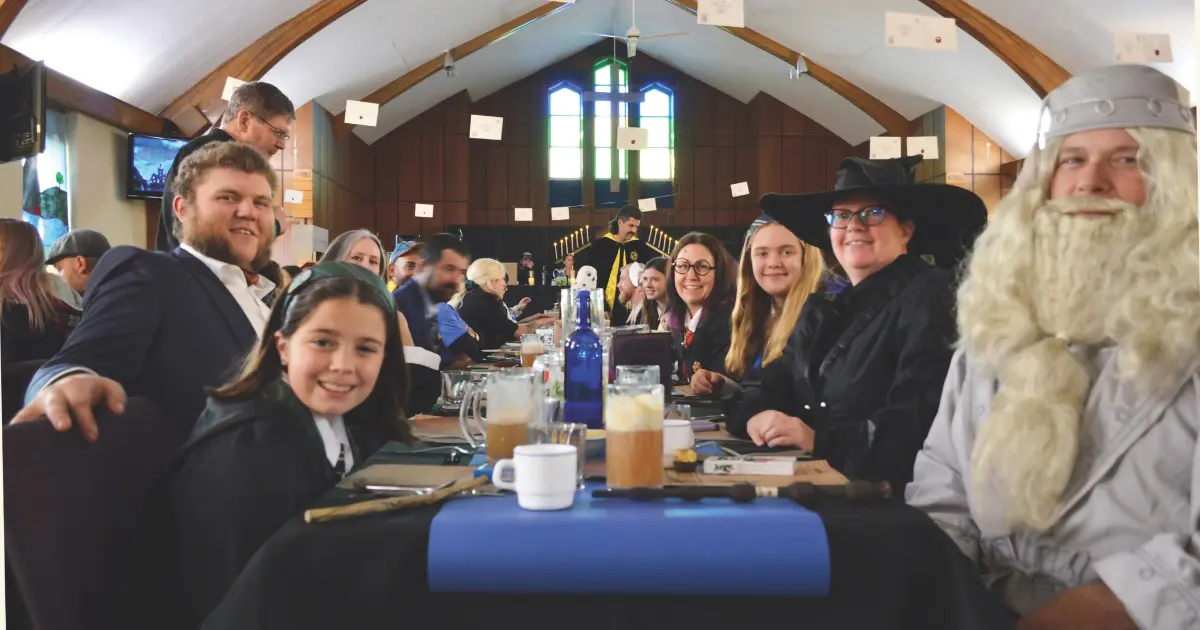
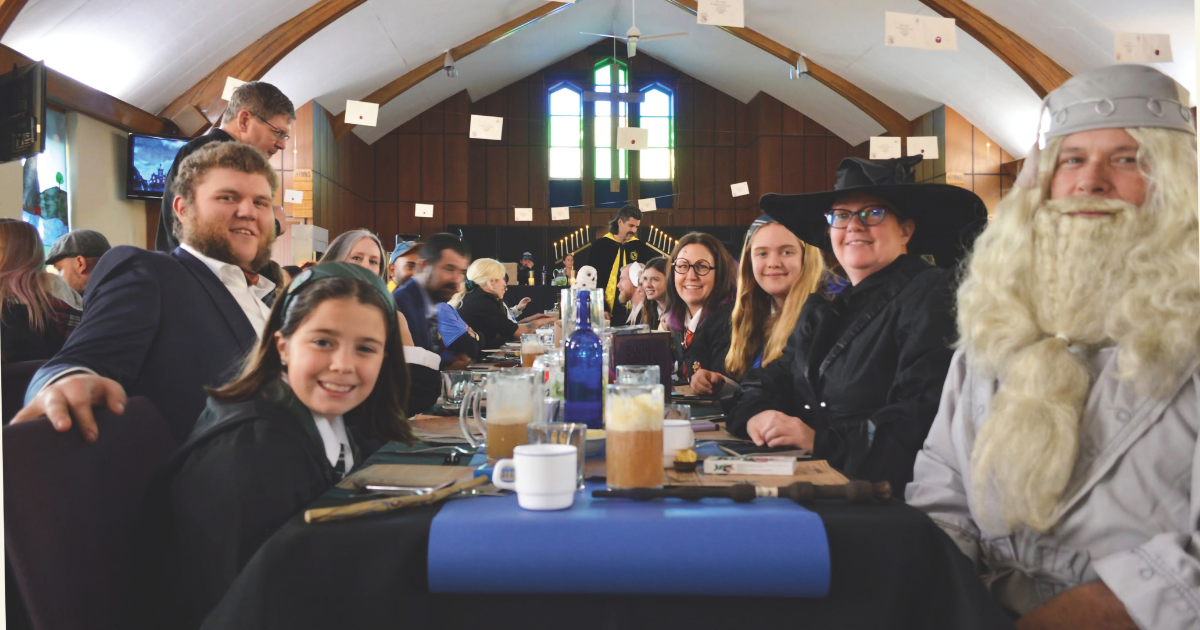
On a typical Saturday afternoon, St. Luke’s United Church in Sarnia, Ontario, is far from a quiet, underused building. The property buzzes with steady, purposeful activity as parents, children, and community volunteers weave between cars in the parking lot and the church’s main entrance. Voices echo from the basement community meetings, spilling up the stairwell and into the sanctuary above, creating a lively atmosphere that reflects the heart of the congregation.
For its roughly 60 dedicated members, this is simply a normal day at what they affectionately call the "little church on the corner." Perched on the edge of an actively changing neighborhood surrounded by local schools and low-income housing, St. Luke’s has spent more than 80 years intentionally shaping its daily ministry around the evolving needs of the surrounding community. Rather than retreating inward as neighborhood demographics shifted and operational pressures mounted, the congregation chose a path of radical hospitality and deep integration with local social services.
"We feel our purpose of being on that corner is to support the community in any way we can," explains Larry McLaren, chair of the church’s board of trustees. That philosophy has transformed the property into a critical hub for local families, youth, and advocacy organizations, proving that a historic house of worship can thrive in the modern era by redefining how it utilizes its physical space.
Over the decades, St. Luke’s has built a robust network of partnerships with both national and local organizations. These include collaborations with the Canadian Foodgrains Bank and Sarnia-Lambton Rebound, a prominent local agency dedicated to working with at-risk youth. Many of these relationships are remarkably long-term, founded on a simple premise: the church provides the physical space necessary for these vital programs to operate and reach the people who need them most.
Initially, these arrangements were rooted purely in altruism and community care. For years, the church charged a nominal fee of just one dollar a year to the Dow Centre for Youth, a facility that leases church land on the opposite side of the parking lot. This land houses vital programs run by Rebound alongside Big Brothers and Big Sisters of Sarnia-Lambton. A similar arrangement was previously extended to Community Living, which utilized the church’s former manse as supportive residential housing for young adults seeking independence.
However, as economic realities shifted and operational costs rose, the congregation recognized the necessity of generating more reliable revenue to sustain St. Luke’s ongoing operations. In response to these financial pressures, church trustees adjusted their approach while remaining deeply committed to their partners. In 2018, they raised Community Living’s lease to $500 a month—still a modest sum compared to commercial market rates, but one that provided crucial breathing room for the church’s budget. By 2024, the trustees successfully negotiated a two-percent annual increase on the lease to account for ongoing inflation, balancing fiscal responsibility with their core mission of service.
The church’s willingness to adapt physical spaces reached a new milestone in 2017, when leadership opened up a large portion of the main building for Rebound to establish a dedicated youth drop-in center. Accommodating this new initiative required significant structural alterations, including the elimination of the traditional fellowship room and the relocation of the Sunday school program down to the basement.
During the initial planning phases, some members of the congregation expressed natural hesitation about altering cherished spaces and sharing the building in such an intimate way. Yet, those concerns eventually dissolved. According to Rev. Melanie Kirk-Hall, the church’s minister, members ultimately came around "because they believed in the mission and ministry that would be possible."
The realization of that vision was heavily supported by external funding. A $75,000 grant from the United Church of Canada Foundation’s Seeds of Hope program provided the financial backing needed to complete the necessary renovations. Today, that space is known as "The Nest"—an L-shaped area featuring a fully equipped kitchen, laundry facilities, and a capacious lounge situated conveniently next to the church’s administration office. The Nest now hosts a thriving drop-in program five days a week, alternating between two distinct age groups: adolescents aged 12 to 15, and young adults aged 16 to 24. Rebound leases the space, paying an equitable rate calculated by the square foot.
Encouraged by the tangible success of these space-sharing partnerships, the congregation began to see even greater potential for generating supplemental income through rentals for public events, private meetings, and other neighborhood gatherings. In 2021, church leadership turned their creative attention toward the main sanctuary itself, embarking on an ambitious project to redevelop the sacred space into a flexible, multi-use community hub.
The comprehensive renovation introduced modern amenities designed to make the space comfortable and accessible for outside groups, including air conditioning, an accessibility lift, a portable sound system, a high-definition projection screen, and reliable internet access. Traditional wooden pews were removed to make way for movable chairs, allowing the room to be reconfigured easily for different types of gatherings. Additionally, the choir loft was taken down to create room for a proper stage, and the church kitchen underwent a modern update.
As with the youth center project, these sweeping changes met with some initial resistance from a portion of the congregation. McLaren notes that while some members worried about losing the traditional feel of the sanctuary, the leadership successfully bridged the gap. By carefully retaining key spiritual elements of the church—including the altar cross and the pulpit—while introducing comfortable, softer seating, they managed to honor the building’s sacred history while embracing its modern, practical utility.
These adjustments quickly proved their worth. Existing basement tenants, such as Alcoholics Anonymous, seamlessly integrated into the renewed facility, and St. Luke’s remains actively open to collaborating with new renters who align with the church’s values of inclusivity and community care.
Recognizing that long-term sustainability encompasses far more than just balancing a ledger, the forward-thinking congregation is also planning for the unpredictable future. Church leaders are actively considering scenarios where the congregation might eventually shrink to a size where it can no longer operate independently or adequately protect its cherished outreach projects. To safeguard against this, they are exploring proactive measures, such as appointing the United Church’s regional council as a trustee. Such a step would ensure that physical operations can continue uninterrupted and that the security of their main tenants’ occupancy remains permanently protected.
While the challenges of maintaining an aging building and a dynamic ministry are ongoing, McLaren proudly points to the church’s evolving use of its facilities as a modest yet undeniable success story. Community outreach continues to expand, new members drawn to the church’s progressive mission and active neighborhood presence have joined the fold, and, crucially, the church’s finances are currently operating firmly in the black.
For Rev. Kirk-Hall, the ongoing transformation is a testament to the remarkable spiritual dedication and enduring passion of her congregation.
"St. Luke’s has often worked toward a big vision," she reflects, observing the lively activity filling the hallways and meeting rooms. "There’s just this real internal consistency about who they are and who they want to be as followers of Christ in the world."