
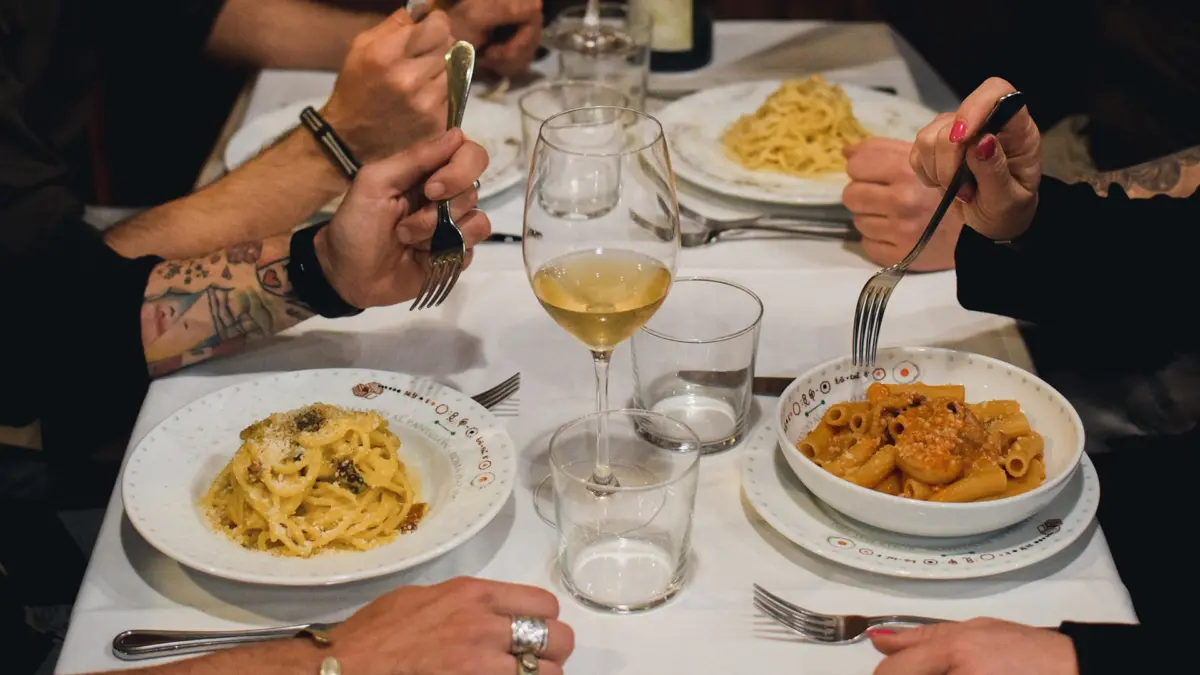
Roman cuisine remains a vivid reflection of the city itself—layered, deeply rooted in centuries of tradition, and full of striking contrasts. For travelers and locals alike navigating the historic neighborhoods, the finest meals are shaped as much by history as by the hands that prepare them. Family-run trattorias have served the city’s defining dishes for generations, preserving recipes for cacio e pepe, carbonara, roasted lamb, and offal-based specialties, many of which trace their origins back to Rome’s historic slaughterhouse economy.
While these time-honored institutions remain essential pillars of the local food culture, a vibrant wave of neo-trattorias continues to reinterpret the classics. At the same time, the broader dining landscape is shifting significantly, influenced by Rome’s expanding immigrant communities and global culinary traditions that range from Ethiopian to Venezuelan.

The transition of the seasons dictates the rhythm of the city’s kitchens. February and March in Rome often feel like a damp intermission that pivots quickly toward spring. One day requires ducking into neighborhood bars to escape a sudden downpour, while the next invites diners to scan sidewalk patios for a sunlit table. High season now revs up well before Holy Week, and by late March, the city moves at full tilt. This narrow stretch of the year is the ideal time to enjoy seasonal specialties like artichokes simmered with the first green peas, favas, and lettuce to create vignarola, Rome’s definitive spring stew.
Eating and drinking well in the Italian capital requires more than simply knowing where to go; it demands an understanding of the city’s idiosyncratic dining culture. Travelers frequently book tables months in advance, making last-minute reservations a challenge. Although online booking is increasingly common, many traditional establishments still rely heavily on telephone reservations. Calling at the very start or end of service—when the staff actually has time to pick up the phone—remains the best approach. Planning ahead is crucial, but leaving room for spontaneity is equally important.

The city’s dining map continues to evolve with notable additions. In San Giovanni, Beppe e I Suoi Formaggi has relocated from its former Ghetto shop to a larger space, where Beppe Giovale’s selection of Italian and French cheeses shares the table with dishes like tajarin with alpine butter. Near the Pyramid of Gaius Cestius, the third-generation family-run Taverna Cestia serves Roman classics, seafood, and wood-fired pizza alongside a thoughtful wine list. In the Prati-adjacent Della Vittoria neighborhood, Vetro pairs natural wines with small plates that borrow freely from Roman and wider European traditions, making it equally appealing for a casual evening drink or a full dinner.
Vetro
Vetro’s sidewalk crowd often looks like the Olympic games of cigarette-rolling, with drinkers claiming improvised seats and lingering over glasses of wine and beer. Inside, high-tops and tables offer a more settled way to explore a menu whose ingredients often speak fluent Roman while its sensibility ranges across Europe. Gildas and eggs with mayonnaise join tongue with sweet potatoes and piquillo peppers, while baccalà mantecato is reinterpreted as brandade accompanied by marinated zucchini and isot pepper. Ordering a few snacks and small plates naturally transforms a quick drink into an appealing dinner. Set in a former alimentari on Viale Carso, the bar pairs its neighborhood hangout atmosphere with a thoughtful natural wine selection spanning Italy, Spain, and southern France, including selections served sfuso on tap.

Orma Roma
Colombian chef Roy Caceres is a veteran of Roman fine dining. Although his landmark, Michelin-starred restaurant, Metamorfosi, did not survive the pandemic, his signature dishes have found a new home at Orma—an anagram of Roma—located just a few blocks southeast of the Galleria Borghese. Orma houses several distinct concepts: a bistrot functioning as a power-lunch spot on a shaded terrace, a cocktail bar specializing in tropical fruit- and herb-forward drinks, and a formal dining room offering tasting menus and à la carte dishes that blend Caceres’s Colombian heritage with Italian flavors and ingredients. Fans of the chef’s Uovo 65° Carbonara—a soft-cooked egg floating in Parmigiano-Reggiano foam, served with puffed pasta and tender strips of guanciale—will find it in the bistrot, while the restaurant features his renowned lacquered eel with pickled onions.
Colline Emiliane
A short walk from the Trevi Fountain, this friendly trattoria has been serving satisfying dishes from Emilia-Romagna, a region in northeastern Italy, since 1931, with the current family taking the helm in 1967. The menu is rich in egg-based, house-made pastas like tortelli di zucca (pumpkin pasta with butter and sage) and tagliatelle alla bolognese. Diners are encouraged to save room for hearty mains including bollidomisto, an assortment of simmered meats, and fried liver.

Armando al Pantheon
Situated just 100 feet from Rome’s most intact ancient monument, Armando al Pantheon champions local food traditions with unwavering dedication. For more than five decades, the Gargioli family has produced quintessential Roman classics such as fettuccine con le rigaglie di pollo (fettuccine with chicken innards) and coda alla vaccinara (oxtail braised in tomato and celery). Seasonal side dishes include puntarelle with anchovy sauce and carciofi alla romana during the cooler months, while the meal concludes with torta antica Roma, a ricotta and strawberry jam pie.
Moriondo e Gariglio
Moriondo e Gariglio operates as a fragrant time capsule steeped in cocoa. Founded in Turin by cousins Agostino Moriondo and Francesco Gariglio, who served as chocolatiers to the Savoy royal household, the chocolate shop followed the court to Rome in the late 19th century and eventually settled on Via del Piè di Marmo near the Pantheon. Glass counters display more than 80 handmade chocolates and bonbons. In autumn, locals stock up on the shop’s cult marrons glacés, while spring brings elaborately engineered Easter eggs with hidden surprises.

Cesare Al Pellegrino
Following the 2022 closure of Settimio al Pellegrino, a cult favorite featured on Anthony Bourdain’s Parts Unknown, Leonardo Vignoli and Maria Pia Cicconi of Cesare al Casaletto fame resurrected the space. They have preserved the historic institution’s signature tiled floors, midcentury furniture, and the infamous doorbell required for entry. Located near Campo dei Fiori, the trattoria offers a succinct menu featuring minestra con broccoli e arzilla (romanesco and skate soup) and former chef-owner Teresa Zazza’s legendary pan-fried meatballs, paired with an exceptionally affordable wine list.
Hosteria Grappolo d’Oro
While Roman restaurants have often earned a reputation for brusque service, Hosteria Grappolo d’Oro offers a welcoming alternative. Affable servers circulate through dining rooms framed by exposed wooden beams, delivering authentic versions of classic Roman dishes such as toothsome tonnarelli cacio e pepe and tender roasted suckling lamb. The restaurant’s four-course Roman tasting menu stands out as one of the best values in the city.

Forno Campo de’ Fiori
Located in the southwest corner of one of Rome’s most bustling squares, Forno Campo de’ Fiori bakes sweet and savory Roman specialties, including jam tarts and flatbreads. The bakery is particularly known for pizza alla pala, long slabs baked directly in a deep electric deck oven and sold in slices by weight. The combination of unctuous toppings and crispy bases creates a surprisingly balanced bite, particularly the famous pizza con mortadella.
Mazzo
Culinary power couple Francesca Barreca and Marco Baccannelli reopened their landmark restaurant Mazzo after a five-year hiatus, establishing a more central location in San Lorenzo that makes it easily accessible to residents. The dining room has expanded from a single 12-seat communal table to a full-fledged restaurant complete with a massive porthole viewing into the brightly lit kitchen. The menu plays with nostalgic forms, offering dishes like wagon wheel pasta with braised beef and onions alongside signature items like fried tripe with grated pecorino Romano in a pool of tomato sauce.

Trattoria Monti
Run by the Camerucci family, this well-loved trattoria is located in the multicultural Esquilino district near Stazione Termini rather than Monti proper. The cuisine draws heavily from the Marche region, featuring game dishes such as braised rabbit and roasted duck, meat-filled fried olives, and the legendary raviolo filled with a runny egg yolk and dressed in butter and sage.
Salumeria Roscioli
Founded in the Historic Center in 2004 by Rome’s premier baking family, Salumeria Roscioli functions simultaneously as a deli, wine bar, and restaurant. While the menu is extensive, the culinary highlights include artisan cheeses like burrata with semi-dried tomatoes, cured meats such as Culaccia and mortadella, and classic pasta dishes like gricia, cacio e pepe, amatriciana, and carbonara.

Boccione – Il Forno del Ghetto
For two centuries, Rome’s Jewish community was confined to a walled ghetto along the Tiber River. Although the original buildings are gone, a historic ghetto-era bakery survives on the neighborhood’s main thoroughfare. Its signature pizza ebraica—a fruitcake studded with nuts, raisins, and candied fruits—is complemented by ricotta and sour-cherry tarts, amaretti, and cinnamon-spiced biscotti loaded with whole almonds.
Mrgda
Via Prenestina has served as a hub for Ethiopian and Eritrean community and cuisine in Rome for decades, and Mrgda stands out as a premier destination on this wide avenue at the edge of Pigneto. Diners can enjoy free-flowing tej, a honey-fermented wine that pairs with richly spiced legumes, aromatic vegetables, braised chicken, and raw beef, all scooped up using ethereal, naturally leavened injera.

Ma Che Siete Venuti A Fa’
Routinely recognized among the best beer bars in Europe, this long-established craft beer pub in Trastevere pours around a dozen draft beers from Italy, the United States, Belgium, Germany, and the United Kingdom, alongside a curated bottle selection. The knowledgeable staff guides patrons through the offerings while street-side tables provide a front-row seat to Trastevere’s vibrant nightlife.
L’Elementare
With multiple locations across Rome, the Trastevere outpost of L’Elementare stands out for its execution of Roman pizza tonda—thin, nearly rimless pies that are crisp and chewy at the edges. Baked longer than Neapolitan pizzas, these pies maintain structural integrity to support rich toppings. The menu also features molten supplì al telefono, fried lasagna bricks, and fried parcels of tonnarelli cacio e pepe.

Trapizzino
Trapizzino is a street-food concept created in 2008 by pizzaiolo Stefano Callegari, combining the shape of a triangular tramezzino sandwich with long-fermented pizza dough. The tricornered pockets are filled with traditional Roman comfort foods such as oxtail simmered in tomato and celery, chicken cacciatore, and tripe. The Trastevere branch offers full table service and a bar featuring Lazio wines.
Jerry Thomas Bar Room
Tucked away at number 10 on Via del Moro in Trastevere, this windowless inner sanctum evokes the interior of the Orient Express with wooden accents and overhead racks. The bartenders’ attire and glassware reflect a bygone era, while the menu features bottled classic cocktails and champagne, offering a refined oasis within a bustling nightlife district.

Latteria Trastevere
Latteria Trastevere operates as a wine bar and bistro in the heart of Rome’s nightlife district, focusing on natural wines, cheeses, and cured meats sourced from small producers across Italy. Owner Antonio Cossu also introduces Sardinian specialties like sa fregola with crab and bottles from Barbagia, one of the island’s celebrated wine regions.
Sora Lella
Founded in 1959 by actor and culinary icon Elena Fabrizi, Sora Lella is situated in a medieval tower on the Tiber Island and remains deeply tied to Rome’s culinary identity. After a period of coasting on its reputation, the restaurant has returned to top form under the third generation, serving traditional Roman dishes alongside underappreciated local wines from Lazio.

L’Antidoto
Located on a cobbled Trastevere side street, L’Antidoto began as a natural wine bar in 2020 and evolved into a destination dining experience following the arrival of chef Mirko Pelosi. Drawing on training in France, Norway, and Scotland, Pelosi ages fish, ferments vegetables, and incorporates global spices into a constantly changing menu anchored by technical precision and seasonal ingredients.
Tempio di Iside
A short walk from the Colosseum, Tempio di Iside is an elegant seafood restaurant celebrated for its raw dishes, including fish carpaccio, sea urchin roe, langoustines, and oysters. Signature pasta dishes feature sweet red shrimp, cherry tomatoes, and pecorino, demonstrating that seafood and cheese pairings can succeed in skilled hands.

Menabò Vino e Cucina
Located in the Centocelle district of eastern Rome, Menabò Vino e Cucina offers a tour of Italian regional comfort food. The menu ranges from rigatoni with oniony Neapolitan-style braised beef to pasta with chickpeas and mussels, paired with a natural and traditional wine list.
Forme Dispensa a Ripa
Following a career in prominent Roman gourmet shops, Pasquale Borriello opened this small Trastevere shop near San Francesco a Ripa. The space features high-top tables where patrons can sample natural wines and craft beers alongside cheeses from artisanal producers across Italy.

Otaleg
Trained by gelato maestro Claudio Torcèl, Marco Radicioni crafts natural gelato using meticulous sourcing and restrained sweetness. His locations in Monteverde Vecchio and Trastevere serve rich gelato alongside specialty coffee and artisanal pastries.
Ruver Teglia Frazionata
Located near the Circo Massimo, Pizzarium alumnus Alessandro Ruver runs a tiny laboratory dedicated to pizza in teglia. Using long-fermented dough that bakes into a light, crisp crust, Ruver tops his trays with ingredients sourced from small farms in central Italy.

Santo Palato
Chef Sarah Cicolini’s neo-trattoria in the Appio Latino district has become a destination for a bold, updated take on Roman cooking. The larger dining space accommodates a larger kitchen where Cicolini prepares tender tripe, chicken gizzard frittata, and carbonara, visible to diners through large glass windows.
Beppe e I Suoi Formaggi
After nearly two decades in the historic Ghetto, cheesemaker Beppe Giovale relocated to a brighter, larger space in San Giovanni. The new location features a refrigerated counter with over 100 raw-milk cheeses alongside a full kitchen serving dishes like tajarin with alpine butter and tongue with salsa verde.

Piatto Romano
Located in Testaccio, Rome’s offal capital, Piatto Romano focuses on traditional dishes such as rigatoni con la pajata and fettuccine with chicken innards, alongside pescatarian options and exceptional seasonal vegetable sides.
Mercato Testaccio
The Testaccio neighborhood market offers a central hub for seasonal produce, meat, fish, and baked goods. Visitors can explore stalls like Mordi e Vai for historic offal sandwiches, Da Corrado for cheese and wine, and Da Artenio for takeaway pizza slices.

Taverna Cestia
Founded in 1967 and located opposite the Pyramid of Gaius Cestius, this trattoria is run by third-generation restaurateur Valerio Salvi. The menu combines Roman staples with locally caught seafood, seasonal vegetables, and wood-fired Roman pizzas, complemented by a thoughtful natural wine list.
Mostro
Operating out of a historic mid-century kiosk at the nexus of the Aventino, Ostiense, and Testaccio districts, Mostro functions as a specialty coffee shop by day and transitions into a relaxed evening venue serving draft cocktails and natural wines accompanied by vinyl music.

Cesare al Casaletto
Leonardo Vignoli and Maria Pia Cicconi operate this straightforward trattoria in Monteverde, offering Roman classics with restrained twists, such as fried gnocchi over a pool of cacio e pepe sauce, paired with an affordable natural wine list.
A Rota Pizzeria Romanesca
Pizzaiolo Sami El Sabawy crafts hyper-thin, low-hydration personal pizzas in Torpignattara. Rolled out with a pin and baked longer at a lower temperature, the crust achieves a shatteringly crisp base that supports both classic and seasonal specialty toppings.

C’è… Pasta e Pasta
Located near Stazione Trastevere, this kosher establishment offers dine-in and takeaway options, specializing in Roman Jewish classics such as fried artichokes, battered fried cod, anchovy and frisée casserole, and marinated zucchini.
Tavernaccia Da Bruno
Opened in 1968 by Umbrian transplant Bruno Persiani, this Trastevere trattoria is now run by his family, serving a mix of Umbrian and Roman dishes, wood-fired roasted meats, and artisanal pastas alongside organic and natural wines.

Trattoria Pennestri
Located away from the tourist center, Trattoria Pennestri offers grounded Roman cooking with subtle modern elevations, such as rigatoni con la pajata enhanced with a touch of anchovy elixir, paired with an accessible wine list focused on small central Italian producers.
Stecca
A collaboration between Abruzzese chef Franco Franciosi and Roman restaurateur Flavio De Maio, Stecca brings mountain flavors from Abruzzo to the Garbatella district, pairing rustic comforts with naturally leavened bread and a regional wine list.

Sinosteria
Chef Ge Jing Hua combines regional Chinese cuisines with natural wines curated by her sommelier son, Jun, offering dishes like Beijing-style tripe with chili oil and Shandong-style squid.
Trecca – Cucina di Mercato
Run by brothers Manuel and Nicolò Trecastelli, Trecca delivers an informal neo-trattoria experience featuring robust flavors, rich offal dishes, carbonara, and a natural wine list.

Ristorante da Michele
Operating in the San Paolo district since 1991, the Pignotta family runs this neighborhood institution known for fresh seafood sourced from Fiumicino and Anzio, paired with an extensive cellar of mineral-driven white wines.
Pizza Nader
Located in the Roma 70 neighborhood, Pizza Nader combines traditional pizza al taglio with stone-milled flours sourced from across Italy, producing deeply flavored pizzas, naturally leavened bread, and local specialties.