
For twenty years, home cook and food writer Deb Perelman has occupied a unique space in the digital culinary landscape. What began two decades ago as a personal digital repository for recipes she was genuinely excited about has evolved into Smitten Kitchen, one of the internet’s most enduring and beloved food blogs. Driven by what she describes as an innate urge to talk endlessly about the things she loves, Perelman started the site during a period when she was navigating the realities of early adulthood. Despite knowing her way around a kitchen, she found herself grappling with everyday culinary gaps: how to transform a basic can of tomatoes into a spectacular pasta sauce, how to craft exceptionally good meatballs, how to achieve an ethereally smooth hummus, and how to bake a definitive New York crumb cake that she would want to replicate forever.
Looking back across two decades and more than 1,400 published recipes, an outsider might wonder if the culinary well has finally run dry. After all, food internet culture has thoroughly explored, debated, and exhausted trends like kale salads, comforting tomato soups, and perfected apple pies. Yet, for Perelman, the reality is entirely the opposite. Most days, she notes, she feels as though she is only just getting started.

To mark the milestone anniversary, Perelman has engaged with several prominent media outlets and platforms to reflect on her twenty-year journey. She has discussed the evolution of the food blogging landscape in interviews with Ravenous and the Columbia Journalism Review, launched a dedicated newsletter inviting her audience to share their favorite recipes from the archive, and curated a retrospective list highlighting twenty of the most iconic recipes in the history of Smitten Kitchen.
Amidst the reflections and anniversary retrospectives, life in the kitchen continues forward, anchored by the practical demands of everyday cooking. Recently, Perelman found herself confronting a universal domestic dilemma: the desperate need for a reliable recipe, or at least a dependable technique, for making chicken tacos on a standard weeknight. Her ideal vision for the dish was specific. It needed to come together rapidly in a single skillet, eliminate the need for advance marinating, spare her from dumping a jar of commercial salsa into a slow cooker, and avoid the absurd requirement of dragging out a stand mixer just to shred chicken—a modern culinary phenomenon she acknowledges is entirely real. Above all else, the dish had to avoid being dry or overcooked, which were the exact two reasons she spent years mistakenly believing she did not like chicken.

Arriving at the solution required a classic, signature blend of Perelman’s self-described laziness, poor planning, and the sudden realization that it was six o’clock in the evening with nobody having yet initiated dinner. The resulting skillet chicken taco technique has since become a permanent fixture in her weekly rotation.
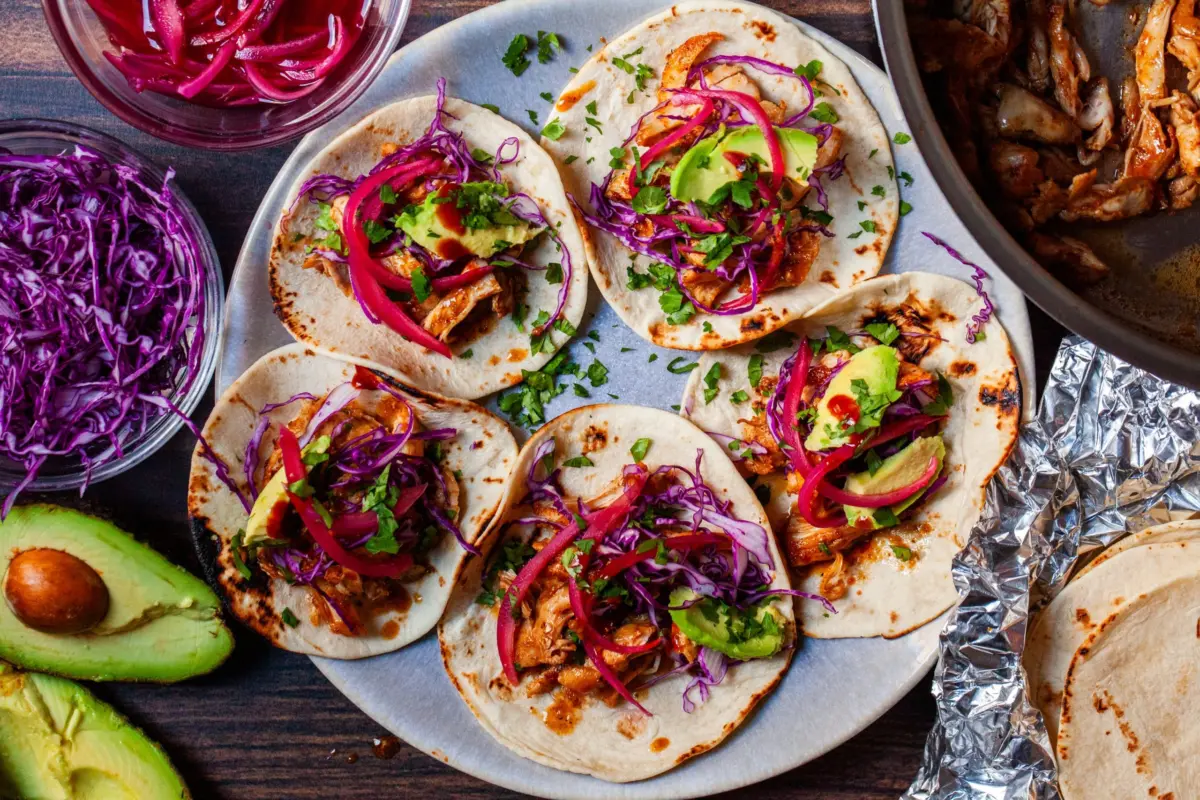
Reaching the twenty-year mark brings distinct professional advantages, chief among them the accumulated culinary confidence required to distill complex desires into their simplest and most practical components. These days, Perelman’s ideal midweek meal relies on a straightforward assemblage: freshly cooked skillet chicken, an avocado on its last legs found lingering in the back of the refrigerator, some finely shaved cabbage, a quick batch of pickled red onions utilizing a new microwave shortcut, and a favorite hot sauce. It is the kind of dependable, unpretentious meal that resists fatigue, and she hopes it will similarly come through for home cooks facing their own busy weeknights.

The technique for the accompanying skillet chicken reflects this commitment to efficiency and flavor. Preparation begins with the fixings to ensure everything is ready before the protein cools. Tortillas are wrapped in foil or placed in a warmer inside a 350-degree oven. The quick-pickled red onions are prepared by combining red onion, red wine vinegar, a tablespoon of water, kosher salt, and granulated sugar in a bowl. To accelerate the pickling process, Perelman employs a favorite new shortcut: placing the bowl in the microwave for ten to fifteen seconds just until the liquid heats up, then setting it aside to cool while the rest of the meal comes together, allowing the onions to turn pink and tangy much faster. For the cabbage, rather than prescribing tedious slicing directions, she notes that a sharp peeler can effortlessly render a head of cabbage into a fluffy, light pile of greens.
The chicken itself relies on a simple blend of salt, cumin, chili powder, paprika, and black pepper mixed in a small bowl and sprinkled lightly over chicken thighs spread across a tray. A large skillet is heated over medium-high heat until very hot before adding two to three tablespoons of olive oil. The chicken is arranged in a single layer and cooked until nicely browned underneath for about four to five minutes, then flipped to brown on the second side without worrying about whether it is fully cooked through at this stage. The chicken is transferred briefly to a plate while minced garlic is added directly to the empty skillet to cook for a minute until golden.

To build the sauce and finish the cooking process, chicken broth is poured into the pan, allowing the cook to scrape up any browned bits stuck to the bottom. As the broth quickly comes to a simmer, the chicken and any accumulated juices are returned to the pan, the heat is reduced to medium, and the meat simmers in the liquid for three to four minutes until the broth reduces to a thin, flavorful puddle. After turning off the heat, the chicken can either be shredded directly in the pan using two forks or cut into bite-sized pieces using the edge of a spatula, stirring it thoroughly into the remaining pan juices. The tacos are then assembled by piling warm tortillas high with the seasoned chicken, pan juices, and prepared toppings for a quick midweek meal designed to be repeated week after week.