
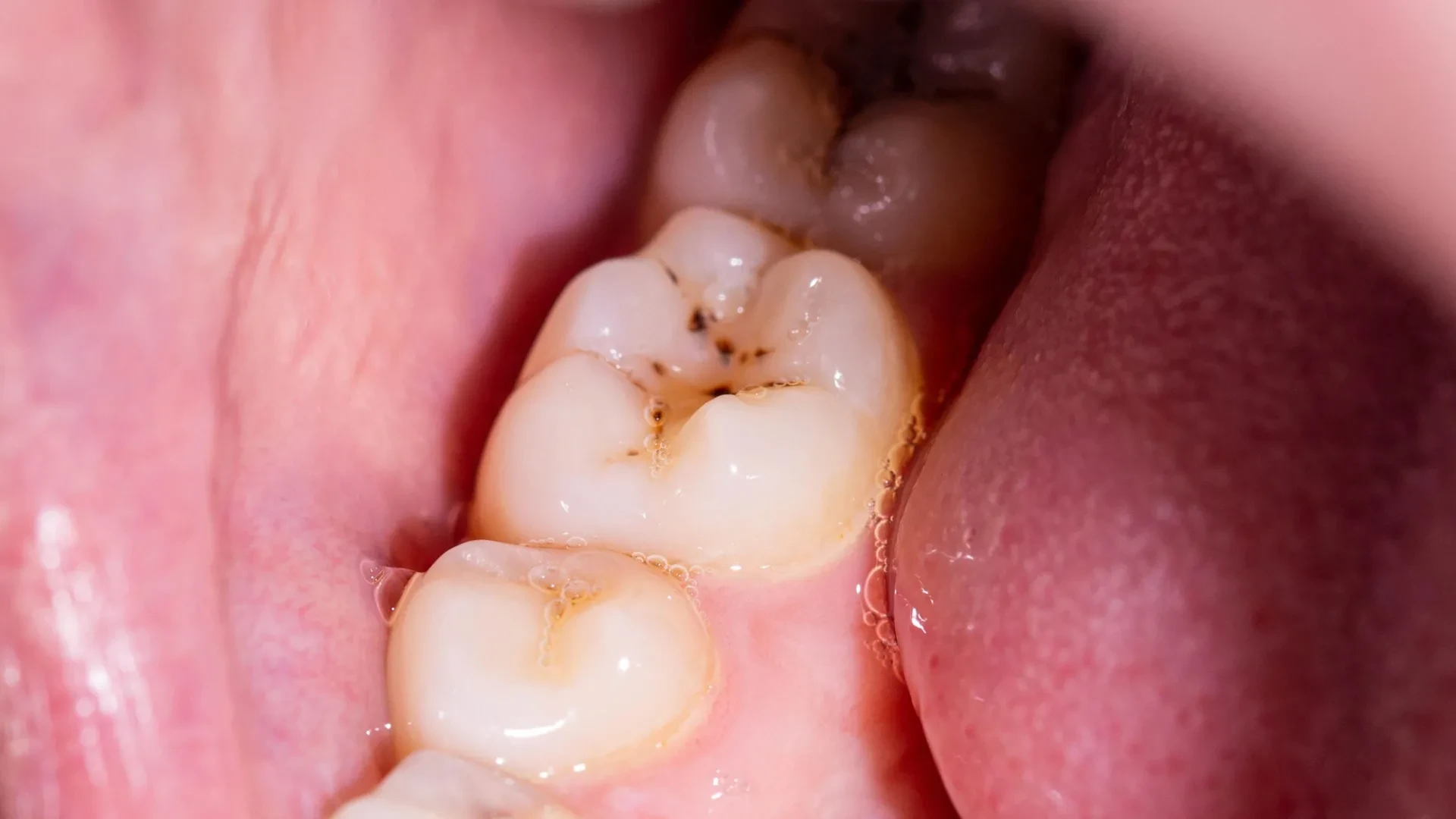
Scientists have developed a new gel that could make it possible to regrow damaged tooth enamel, potentially overcoming one of the most stubborn and enduring limitations in modern dental care. Unlike bones and many other biological tissues in the human body, tooth enamel cannot naturally regenerate once it has been lost or worn away. The new treatment offers a profoundly promising way to rebuild this vital protective layer, strengthen teeth from within, and help prevent future decay before it requires invasive procedures.
The innovation comes from a dedicated team of researchers at the University of Nottingham’s School of Pharmacy and Department of Chemical and Environmental Engineering. Their newly engineered material is directly inspired by the intricate biological processes that naturally form tooth enamel during early childhood development. It is purposefully designed to repair enamel that has been weakened by mineral loss or worn away by everyday erosion, while simultaneously reinforcing the enamel that remains healthy and intact.
The findings, which have been published in the prestigious academic journal Nature Communications, could pave the way for an entirely new generation of dental treatments that go far beyond merely protecting existing enamel and actually help restore its complex microscopic structure.
How the New Gel Regrows Tooth Enamel
One of the most promising and commercially viable features of the new technology is its remarkable simplicity. Dentists could theoretically apply the gel directly to a patient’s teeth using a clinical procedure very similar to existing fluoride treatments, making it potentially easy to incorporate into routine, everyday dental care without requiring specialized or cumbersome equipment.
Unlike conventional fluoride products that dominate the current market, however, the new gel contains zero fluoride. Instead, it utilizes an advanced material made from specific proteins that accurately imitate important characteristics of the natural proteins responsible for guiding enamel formation when human teeth first develop in youth.
Once applied by a dental professional, the gel forms a thin yet exceptionally durable coating that penetrates deeply into the tooth’s surface and meticulously fills microscopic cracks and gaps. This specialized coating then provides a robust structural framework for rebuilding the mineral architecture of the enamel.
The entire regenerative process relies heavily on calcium and phosphate ions, which are two essential mineral components naturally present in human saliva. The gel actively attracts these free-floating minerals and helps organize them into new crystals that grow in an orderly, highly structured pattern.
Scientists formally refer to this sophisticated biological process as epitaxial mineralization. Essentially, it means that newly formed mineral crystals grow in precise alignment with the existing, native enamel, allowing the newly synthesized material to become fully and structurally integrated with the original tooth surface.
This rigorous organization is especially crucial because natural enamel derives its exceptional hardness and durability from the precise, orderly arrangement of its mineral crystals. Simply depositing random minerals onto a tooth’s surface is fundamentally not enough to recreate the complex architecture that makes natural enamel so remarkably effective at withstanding physical and chemical stress.
By actively guiding crystal growth, the new gel can successfully restore both the microscopic architecture and the essential physical properties of healthy human enamel.
A Potential Solution for Tooth Sensitivity and Decay
Beyond restoring the crown of the tooth, the researchers also discovered that their versatile material can be applied directly to exposed dentine, which is commonly called dentin in the United States. Dentin is the critical layer of tooth tissue situated directly beneath the outer enamel. It is significantly softer than enamel and contains a vast network of tiny microscopic channels that can transmit sensations directly toward the sensitive nerves located deep inside the tooth.
When the outer enamel wears away over time, or when gums recede due to age or periodontal disease, exposed dentin can make teeth particularly sensitive and painful when reacting to hot, cold, sweet, or acidic foods and drinks.
The new gel can successfully encourage the formation of a protective, enamel-like mineral layer directly over this exposed dentin. This therapeutic action could help dramatically reduce chronic tooth sensitivity while simultaneously improving the mechanical attachment of various dental restorations, such as fillings and other adhesive treatments routinely used by dentists to repair damaged teeth.
The potential public health benefits of this innovation are extraordinarily significant. Enamel deterioration is a primary factor in the development of tooth decay and contributes heavily to dental problems that currently affect nearly half of the global population. These conditions frequently cause severe pain, painful infections, and eventually tooth loss if left unaddressed. Furthermore, poor oral health is increasingly associated by medical professionals with broader systemic health problems, including diabetes and cardiovascular disease.
One of the greatest historical challenges in the field of dentistry is the biological reality that enamel possesses no living cells capable of rebuilding it after teeth have fully erupted and developed. Although human saliva can naturally replace some microscopic minerals lost during the absolute earliest stages of enamel damage, the human body is entirely incapable of regenerating substantial amounts of enamel once it has been physically worn away.
Existing treatments, including professional fluoride varnishes and various over-the-counter remineralization products, can certainly help protect teeth and repair very early mineral loss. However, they are fundamentally incapable of fully reconstructing enamel that has already been lost to erosion or trauma.
The new technology aims to decisively overcome that fundamental limitation by encouraging the formation of brand-new mineral tissue possessing physical and chemical properties that closely resemble those of original, healthy enamel.
Regenerated Enamel Performs Like Natural Tooth Enamel
To validate their laboratory breakthroughs, the research team rigorously tested the mechanical strength and durability of the regenerated material under simulated conditions designed to closely mimic everyday human use.
These comprehensive experiments examined how the newly formed enamel responded to the exact physical activities and chemical exposures that human teeth routinely experience, including regular brushing, heavy chewing, and frequent contact with acidic foods and beverages.
The experimental results were remarkably encouraging. According to the researchers, the regenerated enamel displayed mechanical properties that were directly comparable to those of healthy natural enamel, strongly suggesting that the material could provide a permanent restoration rather than just a temporary protective coating.
Dr. Abshar Hasan, a postdoctoral fellow and the primary lead author of the study, explained why recreating the internal structure of enamel is so critical to the success of the treatment.
"Dental enamel has a unique structure, which gives enamel its remarkable properties that protect our teeth throughout life against physical, chemical, and thermal insults," Dr. Hasan noted. "When our material is applied to demineralized or eroded enamel, or exposed dentine, the material promotes the growth of crystals in an integrated and organized manner, recovering the architecture of our natural healthy enamel. We have tested the mechanical properties of these regenerated tissues under conditions simulating ‘real-life situations’ such as tooth brushing, chewing, and exposure to acidic foods, and found that the regenerated enamel behaves just like healthy enamel."
These compelling findings strongly suggest that the novel gel could eventually offer patients a reliable way to restore the structural strength and protective function of damaged enamel, rather than simply slowing down its inevitable further deterioration. However, the current laboratory results do not yet establish how exceptionally well the treatment will perform over extended periods of time inside human patients.
A New Era of Tooth Enamel Repair?
Beyond its remarkable biological ability to regenerate complex enamel, the researchers emphasize that the technology was intentionally developed with practical, real-world dental applications clearly in mind from the very beginning.
The gel is meticulously designed to be safe, exceptionally simple to apply in a standard clinical setting, and completely suitable for manufacturing on a larger commercial scale. Its inherent versatility could also allow it to be seamlessly incorporated into several different types of everyday dental products, potentially benefiting patients of all different ages who suffer from enamel erosion, persistent tooth sensitivity, or other clinical problems involving exposed dentin.
Professor Alvaro Mata, Chair in Biomedical Engineering and Biomaterials at the University of Nottingham, led the comprehensive research study and highlighted the immense potential for translating the academic discovery into tangible commercial products that everyday dentists can easily utilize in their practices.
"We are very excited because the technology has been designed with the clinician and patient in mind," Professor Mata stated. "It is safe, can be easily and rapidly applied, and it is scalable. Also, the technology is versatile, which opens the opportunity to be translated into multiple types of products to help patients of all ages suffering from a variety of dental problems associated with loss of enamel and exposed dentine. We have started this process with our start-up company Mintech-Bio and hope to have a first product out by next year; this innovation could soon be helping patients worldwide."
The research team has already begun working actively toward commercialization through their dedicated spin-off company, Mintech-Bio, with the ambitious goal of introducing an initial commercial product as early as the year following the announcement.
Although further development, rigorous safety testing, and extensive clinical validation will remain crucial before the technology becomes a widely established standard dental treatment, its verified ability to recreate the intricate structure and mechanical strength of natural enamel represents a uniquely promising advance in modern medicine.
If the innovative approach ultimately proves successful in human clinical trials, it could fundamentally revolutionize how dentists address enamel loss, opening up the tantalizing possibility of rebuilding tooth surfaces that previously could only be superficially protected or restored using conventional, non-regenerative dental materials.