
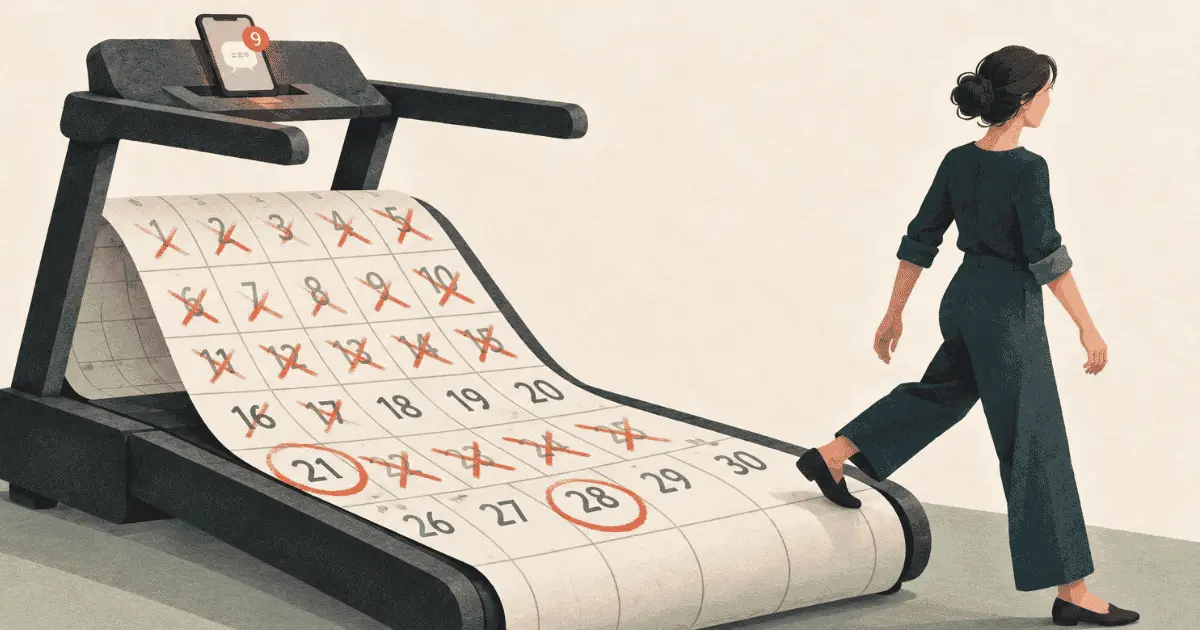
Advocating for grueling 80-to-100-hour work weeks, tech billionaire Elon Musk once famously posted on social media that “nobody ever changed the world on 40 hours a week.”
If hearing that makes you feel like a slacker, you are certainly not alone. It is meant to, of course. It stands as a prime example of the kind of thinking that has fueled toxic productivity for generations across corporate environments and entrepreneurial fields alike. In this new era of workplace “right-to-disconnect” policies and shifting societal values, however, a comment like that is far more likely to be met with eye-rolling than a thumbs-up.
Since the onset of the COVID-19 pandemic and the subsequent normalisation of remote work, a pronounced cultural shift has been quietly taking root across the modern workforce: a definitive rejection of the relentless rise-and-grind mindset. People across industries are stepping back to question how overworking became so deeply normalised, and why they have bought into it for so long.
Is hustle culture finally on its way out?
“I don’t think ambition is dying. I think our willingness to sacrifice our health in the name of ambition is starting to die,” says Toronto-based holistic coach Annie Gaudreault, founder of Veev Health & Wellness. “For years we’ve glorified being busy, exhausted, and constantly available as evidence that we’re committed and successful. But there is nothing high-performing about being chronically depleted.”
Hard work itself is not necessarily the problem, Gaudreault points out. Labor, dedication, and professional focus can be deeply fulfilling when channeled properly. But she argues that the future of work needs to be fundamentally about how well professionals can perform without sacrificing their physical and mental health to achieve those goals.
Focusing on impossible productivity standards is a direct expressway to burnout. The work-till-you-drop mindset routinely ignores the biological and psychological reality that human productivity tends to decline sharply after prolonged stretches of overwork. Eventually, as wellness experts frequently warn, your body sends you the bill.
Expectations Have Changed
Nowhere is this tension more visible than in the fast-paced, client-driven world of real estate. For decades, the profession has demanded round-the-clock availability, treating evenings, weekends, and holidays as prime working hours. But industry leaders note that the baseline expectations of both clients and agents are undergoing a fundamental transformation.
“Our clients’ expectations have changed, and so have ours,” says Kim Fairley, president of the Ontario Real Estate Association. Many people today place significantly more value on flexibility, mental health, family time, and experiences outside of work, she continues.
According to Fairley, answering every incoming message immediately and never taking a day off should no longer serve as the universal definition of a successful Realtor.
This cultural evolution is also being accelerated by rapid technological advancements. The widespread adoption of artificial intelligence tools, along with digital advances like e-signatures and virtual meetings, has helped pave the road to new, more automated ways of handling complex real estate transactions, she adds.
Don Kottick, president of Remax Canada, shares a similar perspective, observing a clear shift in how agents think about their daily professional lives. While traditionally real estate has been defined as an “always-on business,” the industry is gradually evolving, he observes, with Realtors embracing digital tools that help them operate far more efficiently. This technological integration has the strong potential to open up much-needed time for a healthier work-life balance.
“Technology can make a meaningful difference. AI can streamline day-to-day operations,” Kottick observes, pointing to the administrative relief modern software can provide to busy professionals.
A Business, Not a Job
Corbin Chivers, an agent with Stonehaus Realty in British Columbia, views the technological wave through an ambitious lens. He says he has “never seen anything improve this fast” in his entire lifetime. Yet, he finds that the majority of agents have not yet learned how to utilize artificial intelligence and modern automation properly to their full advantage.
By taking a deep dive into AI himself and successfully building out a supportive team, Chivers has managed to free up a substantial amount of time in his schedule.
“लेकिन working less isn’t what excites me,” he says, clarifying his personal outlook. “Building more is.”
Different strokes for different folks, as the saying goes. While Chivers remains genuinely in awe of the revolutionary strides being made by artificial intelligence and automation, he does not feel that these tools are fundamentally altering real estate’s deep-seated grind culture at this precise point in time.
“I don’t see hard-working agents working any less than they did 10 years ago. This is a business, not a job with set hours,” Chivers explains. “At the start, you invest your time. Later the goal is to buy some of it back. That’s what I’m building for—freedom. Not a lifetime of doing every job myself.”
The Grind Isn’t Dead Yet
So it appears that although real estate agents are increasingly attempting to shift toward more sustainable operational systems and prioritizing their mental health, the broader burnout culture is far from dead.
“I’m seeing a mix,” says B.C.-based Remax agent and coach Juliana Vallee. “The conversation has changed faster than the behaviour.”
Part of the underlying issue, Vallee notes, is that the real estate industry still heavily rewards the grind through public production rankings, corporate awards, and peer recognition that exclusively celebrate high sales volumes. Newer agents entering the field understandably assume that constant, unwavering availability is simply the mandatory price of admission for achieving success.
Promoting conscious awareness is her primary goal when mentoring agents. “It’s about noticing when one area of your life is taking too much, and having the awareness to counter-balance,” she says.
Among the most practical changes Vallee has observed and implemented with the agents she coaches are rigorous practices like time-blocking both professional tasks and personal life, alongside establishing firm communication boundaries and clear expectations with clients right out of the gate.
However, the current challenging economic and housing market complicates the picture significantly for many working in the sector.
“Nobody hands you a playbook for a market like this,” Vallee says.
“I don’t think there’s one simple answer. Almost every agent I talk to now says they want more balance, yet many are still answering texts at 10 pm and working through their kids’ sports games. They just feel guiltier about it than they used to.”