
By Market Watch Staff
As asset prices across the broader economy remain elevated, commercial real estate is undergoing a significant correction that could present investors with a historic buying window over the next five to ten years. While residential real estate, equities, and commodities continue to trade at high valuations, commercial sectors have experienced steep price drops of at least 20%, with office spaces plunging by as much as 50%. According to industry analysts, these ongoing declines may intensify, creating a generational opportunity for savvy investors akin to the housing market correction of 2007 and 2008.
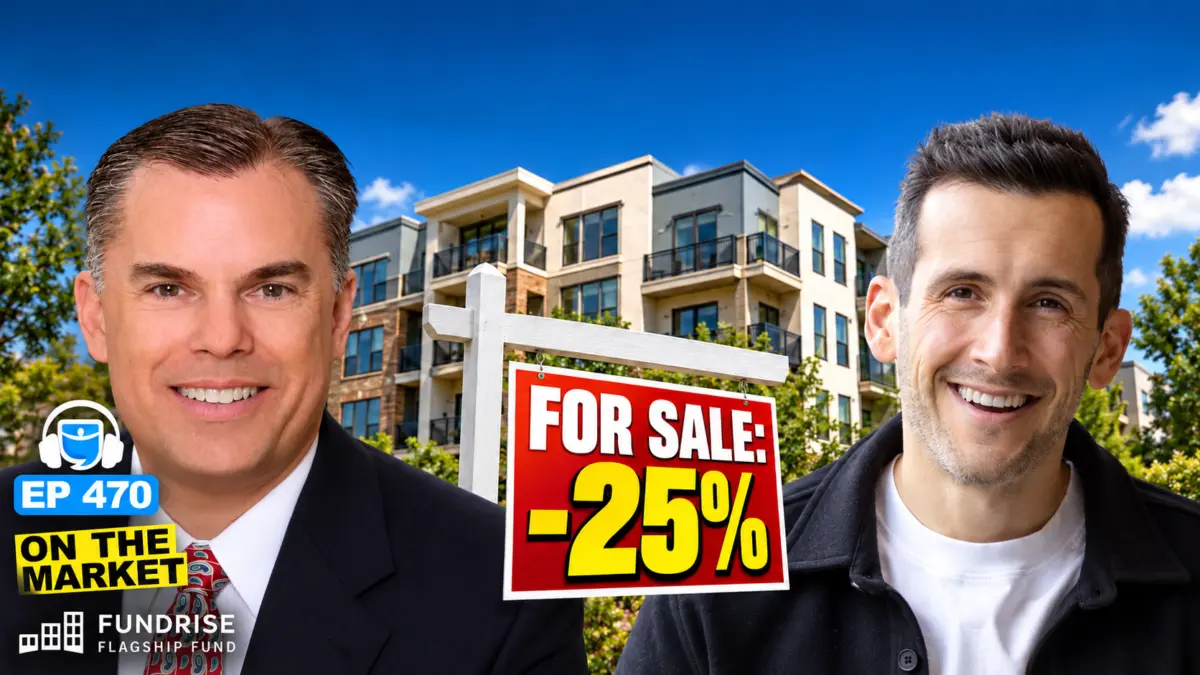
To examine the depth of this market shift and evaluate how investors should position themselves, host Dave Meyer welcomed seasoned real estate investor Brian Burke onto a recent episode of the On the Market podcast. Burke, a recognized expert in multifamily real estate and the head of Praxis Capital, shared his candid assessment of the current landscape, describing the multifamily market as facing severe distress that has been quietly compounding over the past several years.
A "Four-Way Traffic Collision" in the Multifamily Sector
Describing the current state of the apartment market, Burke did not mince words regarding the severity of the downturn. The crisis, he explained, is the result of multiple economic indicators converging simultaneously—a scenario he previously likened to a traffic collision at a four-way intersection where every traffic light was green before the crash.
During the pandemic and the subsequent low-interest-rate environment, buyers exhibited exuberant behavior, purchasing real estate at peak prices without paying close enough attention to deteriorating economic fundamentals. Cap rates, interest rates, rent growth, and occupancy levels all aligned in a way that ultimately triggered a massive correction.
At the same time, shifting demographic trends have added pressure to the apartment sector. The primary demographic for apartment rentals—individuals aged 18 to 30—is facing a shrinking pool of potential tenants due to declining birth rates over the past 18 years. Concurrently, population growth hit historic lows following the pandemic, and international immigration has seen sharp declines. Despite these softening demand indicators, developers aggressively built new apartment complexes in several major metro areas, creating a severe supply and demand dislocation in markets such as Austin, Texas, and Denver.
Understanding the Debt and Interest Rate Pressures
While many market participants initially anticipated that the Federal Reserve would swiftly cut interest rates and rescue the sector, Burke emphasized that the central bank does not control the key financial mechanisms driving multifamily debt. Although the Fed raised overnight borrowing rates—triggering increases in the Secured Overnight Financing Rate (SOFR) and impacting floating-rate debt—the 10-year Treasury bond dictates long-term debt rates in the commercial sector.
Because the 10-year yield has continued to climb, property owners with short-term, maturing debt have found themselves unable to refinance into more affordable long-term fixed-rate loans. The resulting gap between high interest rates and low property cap rates has generated widespread negative leverage, where the cost of borrowing significantly exceeds the income generated by the property.
Burke pointed out that selling real estate at four or five percent cap rates in a five-and-a-quarter-percent Treasury market defies basic financial logic. Consequently, brokers attempting to secure last year’s prices for their seller clients are struggling to find buyers willing to take on upside-down investments. Investors have grown more discerning, and without institutional or private funding flowing into overpriced assets, transactions have slowed significantly.
A Long Recovery and No Need to Rush
Evaluating the timeline of the correction, Burke cautioned that the current distress will likely take several years to fully work its way through the system. Rather than attempting to time the absolute bottom of the market—which can lead to extended periods of scraping along a trough—investors can afford to be patient.
Historical data indicates that double-digit declines in commercial real estate prices have only occurred twice in the last fifty years: once in the 1980s following tax law changes, and again during the 2008–2009 global financial crisis. Following both historical downturns, the market experienced multi-year bull runs lasting longer than a decade. Therefore, experts suggest that waiting for clear evidence that the market has stabilized and begun an uptrend carries significantly less risk while still capturing substantial long-term upside.
Investors monitoring the sector should watch for specific positive indicators, including declining rental concessions on new move-ins, positive lease trade-outs where new tenants pay higher rent than departing tenants, decreasing vacancy rates, and a return of organic rent growth in target markets.
Positioning for Future Opportunities
For investors looking to capitalize on upcoming distress, preparation is essential. Finding deeply discounted properties requires looking beyond standard public listings and building strong relationships with local property management companies and commercial real estate brokers. Property managers hired by lenders and asset managers to oversee distressed or foreclosed properties often receive advance notice of assets heading into receivership long before they reach the open market.
Furthermore, successful buyers must have reliable access to capital and demonstrate execution certainty to lenders eager to offload troubled assets by the end of a reporting quarter. Having a clearly defined buy box, established investor commitments, and a thorough understanding of debt options—ranging from transitional bridge financing to long-term fixed-rate agency debt—will separate prepared buyers from those sidelined by market complexity.
As the commercial real estate sector continues to navigate this multi-year correction, market participants who maintain disciplined underwriting standards and focus on strong operational fundamentals will find themselves well-positioned to take advantage of the chaos when stability finally returns.