
When a recipe calls for nothing more than lemon juice, sugar, and water, suggesting that it requires precise calibration might sound like an exercise in overcomplication. After all, what comes next—a detailed manual for producing salted water, simple syrup, or buttered noodles? Yet, in the peak of the season’s relentless heat waves, strong opinions inevitably surface, and the urge arises to share what constitutes the absolute correct, best formula for lemonade. Naturally, that formula belongs to the home kitchen where it was perfected, defended, and ultimately laminated into household lore.
The conviction behind this particular recipe runs so deep that a physical copy hangs prominently on the wall above the kitchen counter. Far from being a piece of rustic kitchen charm, its presence stems from a moment of domestic friction and petulant hostility. The backstory dates back to the previous autumn, when a brief trip away from home prompted a text message from a spouse. Eager to oblige a daughter’s request for homemade lemonade, they had pulled a random recipe off an online search engine, resulting in a beverage that was, by all accounts, far too bland and sweet.

For a dedicated cook who views flavor profiles as personal territory, the incident registered as a distinct slight. The subsequent exchange featured a pointed reminder that relying on random algorithmic results when a direct line of communication was available felt like an unnecessary domestic detour. Upon returning home, the definitive formula was taped securely to the wall to preempt any future culinary deviations.
The underlying philosophy is straightforward: the fewer ingredients a recipe contains, the more its success hinges on getting each proportion exactly right. While many cooks remain indifferent toward juices in general, a profound allegiance to lemonade changes the calculus entirely. True lemonade demands freshly squeezed fruit, as bottled lemon juice consistently fails the taste test, carrying a muted, tinny flavor directly attributable to pasteurization.

Preferences dictate a profile that avoids excessive sweetness, bypasses the fuss of making simple syrup, and resists excessive dilution. In fact, withholding a portion of the water is standard practice, preferring instead to finish each serving with a splash of seltzer to introduce a lively fizz. This method acknowledges a fundamental rule of beverage preparation: a tart mixture can always be diluted, but rescuing a beverage from the brink of blandness is impossible once the lemons have run out.
Inviting skepticism over the necessity of a published formula for lemon juice, sugar, and water is expected, but the encouragement to mix a batch during the next heat wave remains absolute. While tinkering with the baseline is entirely acceptable, wasting quality lemons on an arbitrary web search when a meticulously calibrated version is within reach misses the point of the season. Without it, summer simply does not feel complete.

House Lemonade
To construct the foundational base, freshly squeezed lemon juice is poured through a sieve to remove any rogue pulp before being transferred to a pitcher. Sugar is added and stirred continuously until completely dissolved, followed by the first two cups of cold water. This concentrated base keeps successfully in the refrigerator for several days, though it reaches its peak flavor profile during the first two days.
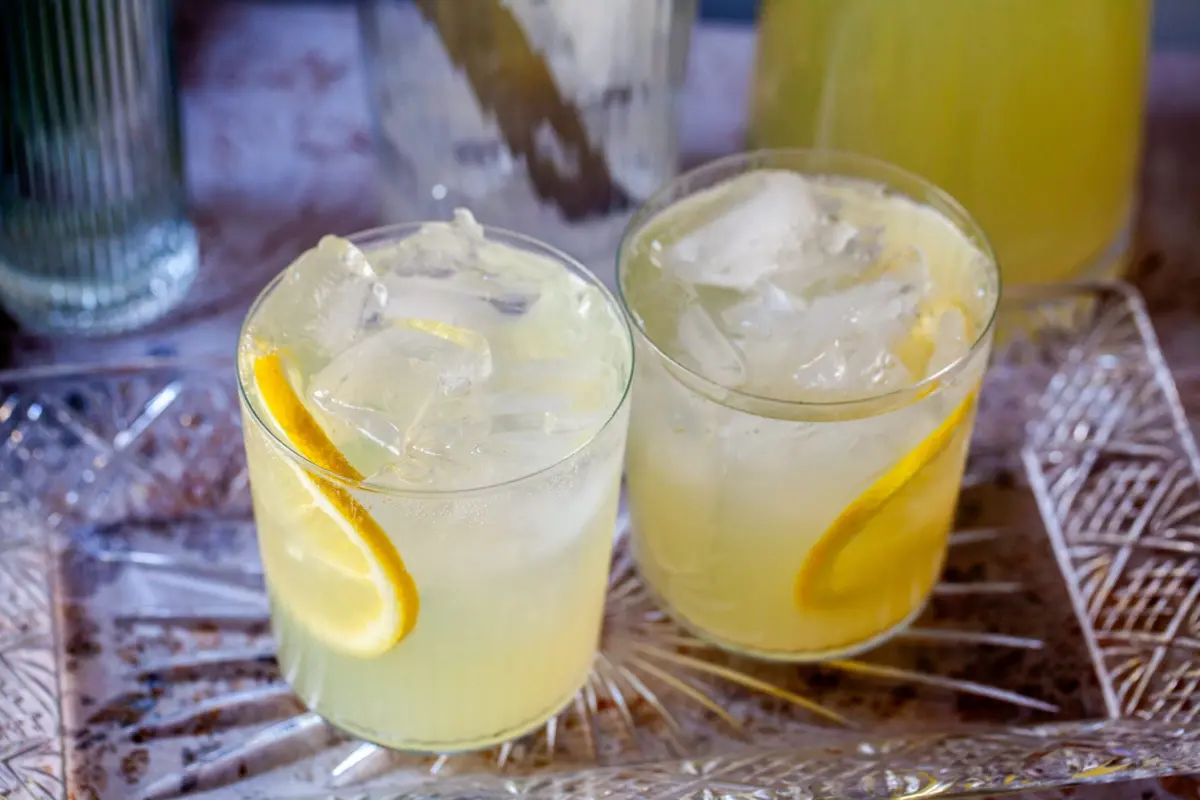
To transition the base into a finished pitcher of lemonade, ice is introduced alongside an additional half-cup to a full cup of cold water, adjusted according to individual taste. For an individual serving of fizzy lemonade, the base is poured over ice until the glass is roughly two-thirds to three-quarters full, then topped off with seltzer.

Variations on the theme offer room for creative exploration. One of the water cups can be swapped out entirely for fresh watermelon juice, or half a cup can be replaced with a strained raspberry or blackberry puree. Another variation, recently served to visiting friends, substitutes the sugar with maple syrup, shaking the mixture vigorously with fresh mint leaves and a measure of bourbon for an elevated seasonal cocktail.