
In professional life, creative conflicts happen with a predictable and often frustrating regularity. People frequently enter into collaborative projects fully convinced that they know precisely how an initiative should develop, only to discover that their colleagues harbor radically different perspectives, priorities, and aesthetic goals. This dynamic is not confined to the symphony hall; it permeates everyday professional environments. Writers pitching book proposals to major publishers often encounter this exact friction: publishing houses accept the foundational premise of an author’s idea yet insist on radically different visions for how the manuscript should be structured, marketed, and developed. Real collaboration, as the historical record of great artistic and professional partnerships demonstrates, requires the difficult acceptance that other people’s unorthodox ideas can elevate a project far beyond anything an individual could achieve in isolation.
To understand the weight of the Carnegie Hall clash, one must look at the stature of the figures involved. Leonard Bernstein was already a towering titan in the American musical landscape, celebrated universally for his boundless energy, charismatic stage presence, and boldly creative approach to composition and conducting. He had recently composed the music for West Side Story, a groundbreaking theatrical masterwork that permanently altered the trajectory of musical theatre by injecting it with serious socio-political subject matter, complex orchestration, and profound dramatic urgency. Beyond his own writing, Bernstein was an intensely innovative conductor who constantly sought out fresh interpretive angles and dynamic soloists, which naturally led him to extend an invitation to Glenn Gould to tackle the notoriously difficult solo part in Brahms’s D Minor Concerto.
When creative minds of this magnitude attempt to work in tandem, achieving a shared understanding of the core objective is rarely straightforward. During their early rehearsals leading up to the concert, Gould approached Bernstein with a mixture of mischief and earnest discovery, reportedly telling the conductor, "Oh boy, have I got some surprises for you; I have made such discoveries about this piece." While Bernstein historically welcomed bold, unconventional interpretations and fresh perspectives, Gould’s radical suggestions pushed the boundaries of what the conductor felt was musically viable. As the artistic leader on the podium, Bernstein found himself caught in a complex balancing act: he had to weigh his personal desire to foster innovation and support his fellow artist against the rigorous structural demands of the masterwork and the high expectations of an audience that had paid a significant sum to witness a traditional masterclass in Brahmsian interpretation.
These acute conflicts between established tradition and avant-garde re-interpretation present formidable challenges for both leaders and team members across all professional sectors. Most working professionals have witnessed this dynamic firsthand in modern corporate and creative settings: colleagues become rigidly entrenched in their own preconceived notions, stubbornly refusing to listen to competing viewpoints, which ultimately drives the project into a debilitating standstill. This phenomenon manifests itself universally, whether it is a team of architects designing a commercial skyscraper, co-founders launching a high-risk startup, or marketing professionals mapping out a nationwide brand campaign. For instance, one lead architect might envision a minimalist, highly functional design, whereas a co-creator might passionately argue for an ornate, expressive aesthetic. While such deep-seated disagreements routinely cause operational friction and project delays, if the participants maintain a degree of intellectual flexibility, the clash can pave the way for a vastly superior final outcome.
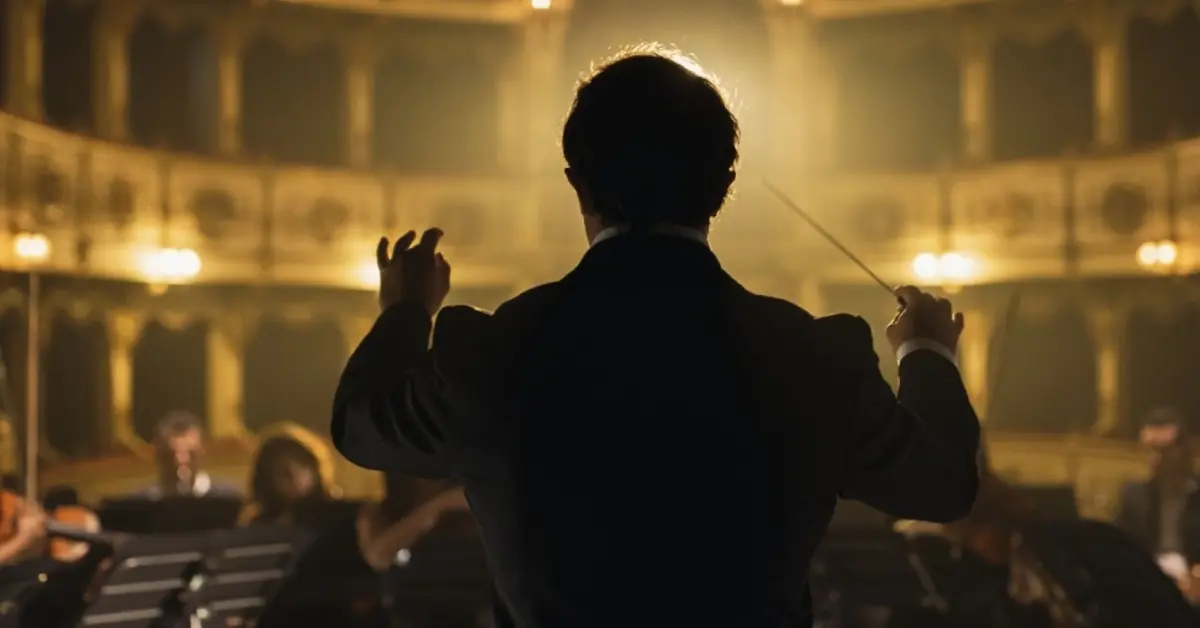
On the night of the Carnegie Hall performance, the creative tension between Bernstein and Gould reached an absolute breaking point. When the house lights dimmed and Bernstein walked out onto the wooden stage, he was greeted by the customary wave of loud applause, but Glenn Gould was conspicuously absent from his side. Their artistic differences had grown so vast and irreconcilable that Bernstein felt a profound obligation to break protocol and inform the audience directly about the extraordinary situation unfolding behind the scenes.
Addressing the crowd from the podium before a single note of music had been played, Bernstein prepared them for a jarring experience. "You are about to hear an ‘unorthodox performance’. A performance distinctly different from any I’ve ever heard, or even dreamt of, for that matter," Bernstein explained to the hushed auditorium. He went on to articulate his fundamental artistic disagreement with Gould’s radical conception of the Brahms concerto, yet he used the moment to pose a central, penetrating question regarding the nature of collaborative leadership: "What am I doing conducting it? I’m conducting it because Mr Gould is so valid and serious an artist that I must take seriously anything he conceives in good faith, and his conception is interesting enough so that I feel you should hear it, too."
Rather than pulling rank or turning the artistic dispute into an irreparable backstage feud, Bernstein actively built up the public excitement, transforming his colleague’s divergent opinion into a shared, participatory experience for everyone in the hall. Anticipating the obvious questions from the concertgoers, he asked aloud, "Why do I not make a minor scandal, get a substitute soloist, or let an assistant conduct?" He immediately answered his own rhetorical question: "Because I am fascinated, glad to have the chance for a new look at this much-played work." Moments later, Gould finally came onstage, and together they delivered a wildly unconventional, intellectually provocative performance that music historians and critics still analyze and discuss to this day.
A broader theoretical framework that helps illuminate the practical benefits of open-minded teamwork, such as the one demonstrated by Bernstein on that fateful evening, can be found in economist Thomas Sowell’s seminal book, A Conflict of Visions. In his analysis, Sowell describes how two well-meaning, intelligent colleagues can rapidly transition from cooperative partners into fierce opponents simply because they operate from fundamentally different worldviews: what he defines as the constrained vision and the unconstrained vision.
Bernstein’s actions on the Carnegie Hall stage serve as a textbook illustration of how to harness an unconstrained vision when collaborating with a fiercely independent peer. While it is undeniably difficult to produce world-class classical music with an open and flexible mind, it is arguably even more challenging to maintain that same level of intellectual agility in everyday corporate and professional environments, where deeply entrenched routines, bureaucratic hurdles, and standard operating procedures can easily make teams feel permanently stuck.
This reality explains why it stands out so vividly when colleagues working in fast-paced disciplines such as software engineering, corporate business, or academic science manage to transcend rigid, siloed thinking to actively support and build upon each other’s unorthodox ideas. A prominent corporate example of this dynamic can be seen in the early days of software giant Intuit. Co-founder Scott Cook noticed that his development team was so intensely focused on complex technical programming details that they were entirely neglecting the actual human user experience. By stepping back, listening to alternative viewpoints, and encouraging his team to approach software design with far greater creative flexibility, they ultimately revolutionized personal finance management by introducing intuitive, user-friendly products like Quicken, QuickBooks, and TurboTax.
Ultimately, Leonard Bernstein’s willingness to publicly explore and validate musical ideas that ran entirely counter to his own deeply held convictions remains a rare, highly instructive masterclass in modern teamwork. The legendary conductor demonstrated for posterity that true collaboration is not about enforcing absolute conformity or winning an argument, but rather about mastering the delicate art of knowing precisely when to lead from the front and when to step back and follow a brilliant, unpredictable colleague into uncharted territory.