
LOS ANGELES — Raising a child through the threshold of early adolescence offers a front-row seat to one of human development’s most fascinating sociological phenomena: the sudden, unmistakable sorting of young minds into distinct subcultures. According to Emmy Award-winning director, writer, and actress Kimmy Gatewood, the traditional, dated categories of yesteryear—the jock, the nerd, the cheerleader—have been replaced by a much more specific modern dichotomy. For parents navigating the turbulent waters of tweenhood, the landscape has narrowed down to a fundamental binary choice: you either have a Dragon Girl or a Sephora Girl.
As a mother of a self-proclaimed Dragon Girl who frequently co-mingles with Sephora Girls, Gatewood offers a humorous yet deeply perceptive field guide to these two dominant factions of the 10-to-12 age bracket. While the labels may sound whimsical, parents across the globe are finding themselves living out the very real financial, emotional, and spatial consequences of these subcultures daily.
To understand the Dragon Girl is to understand an intense dedication to mythology, literature, and the animal kingdom. As the moniker suggests, Dragon Girls harbor an all-consuming fascination with actual dragons, three-dimensional dragon art, dragon-adjacent mythical creatures, and metaphorical dragons—which, in the practical vernacular of a tween, means cats. Real cats, digital cat videos, cat stickers, and cat keychains populate their daily existence. Inevitably, this obsession reaches a critical juncture between the ages of 10 and 12, when the Dragon Girl will formally petition her parents to foster shelter animals.
Armed with carefully curated research regarding emotional regulation, the undeniable cuteness of felines, and solemn promises that the arrangement is merely temporary and entirely under their personal care, Dragon Girls test the resolve of even the most steadfast parents. Yielding to this pressure often results in long-term houseguests, transforming households into permanent sanctuaries for pets that prevent parents from ever investing in high-end rugs again.
Beyond their affinity for animals, Dragon Girls are defined by an intense, sedentary dedication to reading. They can routinely be found hunched in chairs, tightly curled into balls, or lingering far too long in restricted spaces simply to finish a chapter. Parents of Dragon Girls are intimately familiar with the daily routine of interrupting their children to announce imminent departures for public outings. The literary diet of a Dragon Girl consists of epic fantasy series such as "Wings of Fire," "His Majesty’s Dragon," "Warriors," "Skandar," "The Time Dragon," and "Impossible Creatures." True to form, a Dragon Girl presented with a list of her favorite titles will instantly spot any fabricated inclusions, responding with an immediate eye-roll and a shake of the head.
This hyper-fixation also spills over into complex, short-lived crafts that threaten to overtake family living spaces. A simple project involving cat masks can rapidly spiral into an ambitious procurement operation involving yards of felt, faux fur, fleece, foam, eye mesh, and custom-ordered 3D-printed teeth. What begins as a creative afternoon quickly morphs into an elaborate, albeit short-lived, business plan to manufacture hundreds of masks for commercial sale—leaving families with a basement stockpile of unsold inventory destined for local craft fairs before the enthusiasm evaporates entirely a month later.
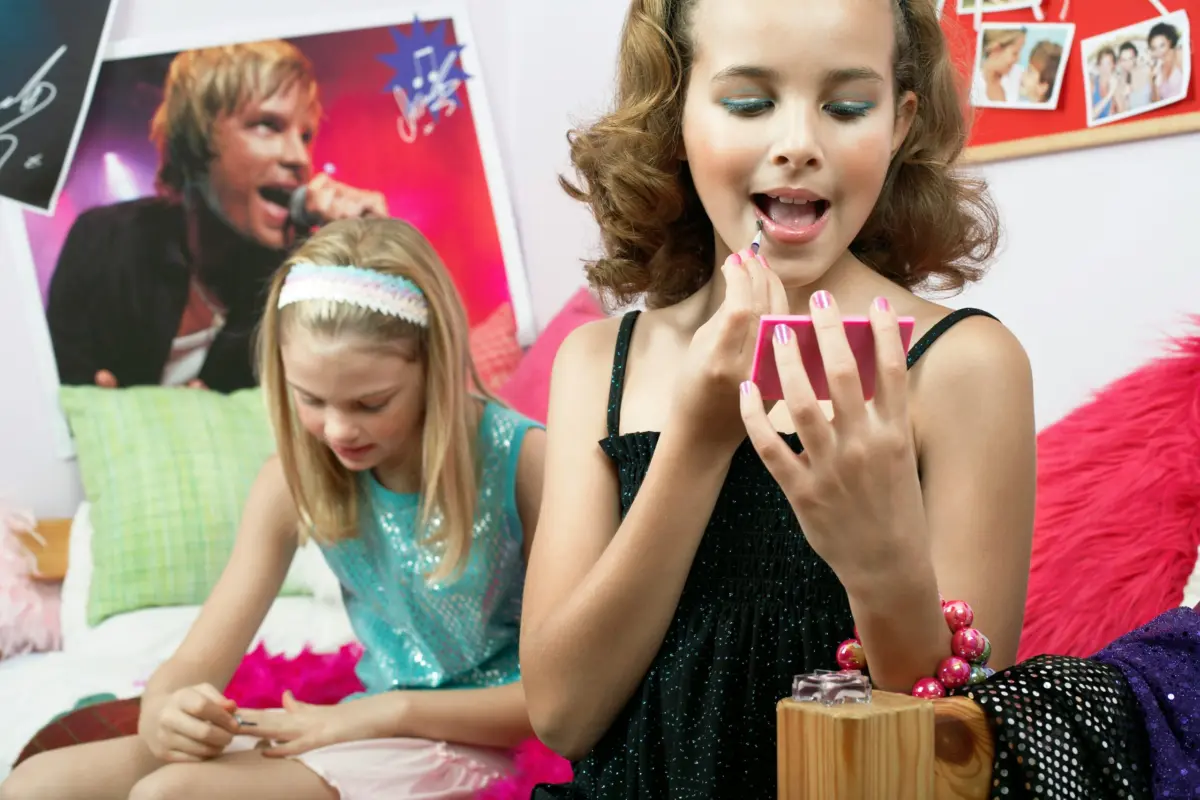
On the opposite end of the tween spectrum lies the Sephora Girl. Families encountering this subculture are easily identified during routine outings, such as a vacation to London where every single Sephora location along the tourist itinerary must be meticulously visited. While the name points directly to major beauty retailers like Sephora and Ulta, the subculture encompasses an overarching devotion to Korean beauty standards and whichever complex skincare regimen is currently trending across social media algorithms. Despite often not officially possessing social media accounts of their own, Sephora Girls absorb every detail of the digital landscape through mysterious cultural osmosis.
The consumer demands of a Sephora Girl involve specific, high-end brands and luxury skincare products. Thanks to generous relatives who recognize and support their passion for preventative dermatology, these tweens often command vanity collections featuring expensive serums and items like high-end sheer skin tints. This hobby rivals traditional extracurricular activities in terms of financial investment, turning routine trips to the local shopping mall into high-stakes replenishment missions while parents rely on long-expired drugstore anti-aging treatments.
The beauty rituals extend far beyond basic skincare routines into meticulous artistic expression. Among the defining trends of the mid-2020s is the deliberate application of fake freckles, painstakingly dotted across the face in varying shades of autumn brown and burnt sienna to mimic a constellation of sun exposure. Compounding this look is the ubiquitous presence of pimple patches worn openly in public and at school. Far from being hidden, these decorative facial accessories are worn proudly, driven by the immense cultural influence of tastemakers like Hailey Bieber. Meanwhile, tweens blessed with natural freckles find themselves tasked with covering them up to conform to the curated aesthetic.
Sensory experiences also define the Sephora Girl. Long before a Sephora Girl enters a room, she announces her presence through a potent olfactory blend. Whether it is a glow cream scented like sugary candy or a designer perfume described with abstract marketing descriptors like "sparkly," "vibes," or "cherish," the post-shower aura of a Sephora Girl is unmistakable. This sensory profile is often completed by specialized hair products aimed at achieving modern styles like "glass hair," carefully maintained with the assistance of young salon professionals.
Nail aesthetics are similarly dynamic, shifting rapidly between long, pointed claws and clean, short natural nails depending on the latest micro-trends dictated by adolescent nail technicians. For parents, witnessing these trends firsthand is inevitable, as sharing a mobile device for a brief moment of scrolling permanently alters the parent’s digital algorithm to serve an endless stream of professional nail tutorials.
Despite their apparent differences, Dragon Girls and Sephora Girls share a profound cultural touchstone: an unyielding obsession with the aesthetics of the early 2000s. Elements of turn-of-the-millennium pop culture that once induced embarrassment among older generations are now held sacred by both factions. Sephora Girls window-shop for retro sneakers while blasting classic pop anthems, while Dragon Girls frequent alternative retail outlets like Hot Topic to assemble outfits featuring oversized graphic tees, baggy black denim, chains, and fingerless gloves.
Ultimately, whether households find themselves raising a Dragon Girl, a Sephora Girl, or a hybrid of both, these young adolescents are navigating the bridge toward puberty with fierce independence and distinct entrepreneurial energy. While the journey involves navigating shifting trends, intensive craft projects, unexpected pets, and the distinct aromas of adolescence, the path forward remains an engaging and transformative experience for parents witnessing the next generation come into their own.