
“There’s a rock in the sink!” That was the takeaway last winter after the East Coast contingent of the newsletter writing team met for brunch at Flynn McGarry’s stylish, Scandi-inflected Gem Home in lower Manhattan. While the rest of the group waited for plates of Danish breakfast, Francky Knapp had shuffled off to the bathroom, returning to the table with newfound excitement at this unexpected interior find. Naturally, a firsthand inspection was required. The slab of stone occupied the entire industrial-style basin, featuring a patch of rust-colored mineral deposits at its center where the water hit. The initial reaction was simple: Weird! Then, it was promptly put out of mind for months.
That was until a casual coffee catch-up at Rhythm Zero in Greenpoint, Brooklyn, a cafe space that looks more like a room in an art museum than a standard neighborhood coffee shop. There, a large hunk of stone sat prominently in front of a massive mirror next to the counter. Yet another hunk of rock imposed itself in the restroom, positioned deliberately between the sink and the toilet, serving almost as a natural catchment or contrast for dripping hands making the trip to the hand dryer. Discovering two distinct establishments featuring prominent, heavy decorative rocks begged the question: was this a mere coincidence, or a deliberate design affectation sweeping the local hospitality scene?
The answer became abundantly clear upon visiting Pizza 4P’s, an ambitiously and intricately designed pizza import from Vietnam for which six literal boulders were transported into the restaurant from a stone wholesaler in New Jersey. Finding a third establishment embracing this motif signaled that something larger was happening across New York City design circles.

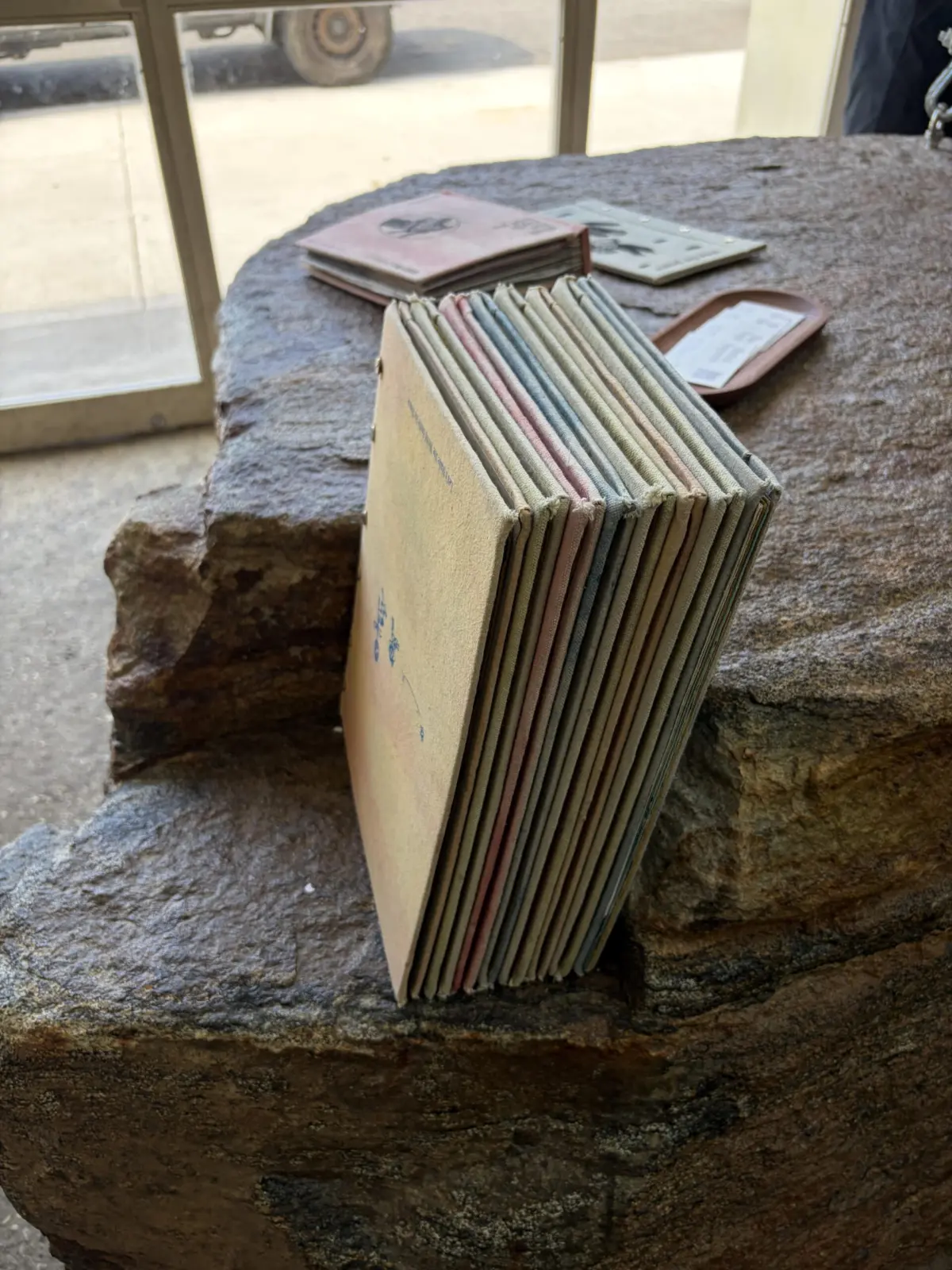
It is at Pizza 4P’s, which opened this summer in Brooklyn within a high-ceilinged industrial space, that this trend can be found in its most extreme manifestation. Upon pushing open the front door, visitors are immediately greeted by a host stand shaped from a massive, table-like boulder. The stone, which required a forklift to position inside the dining room, was specifically chosen for this utility because of its waist-high surface and a natural notch carved into its corner by nature, which happens to be the ideal shape for holding menus. An adjacent stone, lower and smaller in stature, doubles as an impromptu bench for diners waiting patiently for their tables to be prepared.
Four more monumental boulders erupt from the floor space, forcing the layout of the large dining room into a snaking, organic path that challenges traditional restaurant architecture. After the restaurant team sourced the stones, they fundamentally altered their interior layout to accommodate them. None of the stones have been artificially cut into geometric shapes; instead, they were hand-selected strictly for their raw size and form, allowing the restaurant to be designed entirely around them. Some of the stones sprout thick metal support wires, allowing them to anchor and weigh down the wooden frames along the walls that hold cascading hanging plants.
The largest stone, weighing in at approximately two tons toward the center of the dining room with a table butting directly up against it, is comparable in weight to the massive pizza oven itself. Alongside the lush hanging plants, these stones give the otherwise industrial space a profound semblance of nature, successfully bridging the gap between Brooklyn urbanism and the pastoral settings of the farms whose produce is highlighted on the menu.

For her rocks, Ivana Somorai, the owner of Rhythm Zero, drew inspiration from the subtle use of natural materials in traditional Japanese design. She explained via email that she ultimately wanted to introduce a natural, unexpected element into the shop’s interiors to disrupt conventional cafe expectations. Initially, the Greenpoint location featured several scattered rocks, minimal seating, and a striking tangerine tree. When she later redesigned the interior layout to feature a large couch and expanded seating options, the rocks stayed put—largely because they were simply too heavy to move. Knowing they would not be leaving the space for a foreseeable future anchored the design around them.
Since then, the rocks have evolved into a memorable, signature feature of the cafe. While every location in the brand looks different and maintains its own distinct style, the specific inclusion of stones has stuck. The rock positioned next to the mirror unexpectedly became a favorite, highly sought-after sitting area for regular patrons. What began as a specific design moment organically transformed into part of the daily life of the cafe and the way people utilize the physical space.
As for why the second rock ended up tucked away inside the bathroom, the rationale was rooted entirely in playful disruption. It represents the absolute last thing a guest would expect to encounter in a routine restroom visit. The goal was to spark genuine bewilderment when patrons pushed open the door, stepping into a dark room only to be confronted by a massive, immovable rock, prompting them to question its very presence.

A similar desire to pique curiosity and elicit surprise is likely part of the rationale at Gem as well. While Flynn McGarry was unavailable for direct comment regarding the Gem stone, a representative noted via email that, to their recollection, Gem Home, the now-closed Gem Wine, and Cove all featured rocks built into their restroom sinks. This peculiar design choice opens up a cascade of further questions about the underlying philosophy of bathroom geology in lower Manhattan.
As for Pizza 4P’s, those massive rocks fit seamlessly into a much larger corporate and culinary philosophy. The international chain operates dozens of locations across different countries, yet maintains a strict rule that each location must be entirely unique. Art, furniture, and spatial dynamics are designed completely custom—meaning boulders in Brooklyn do not translate to stones in Cambodia. Each country’s aesthetic is guided by a distinct thematic concept; in Indonesia, the focus centers on biodiversity, whereas the United States location is anchored by the conceptual idea of “what the earth told me.” To achieve this, the team approached the placement of heavy stones much like they approached sourcing raw culinary ingredients: the ultimate goal is to find something inherently beautiful in nature and then build a thoughtful experience around it.
Trends, however, are rarely permanent fixtures in the fast-paced New York City design landscape. On a subsequent visit to Rhythm Zero in Greenpoint, the signature rock stationed just outside the bathroom had vanished entirely. That disappearance was the result of an even more recent interior renovation. Rather than being discarded, the heavy stones were relocated to the nearby Transmitter Park—a departure that Somorai described with a sense of poetic finality as where they truly belong.