
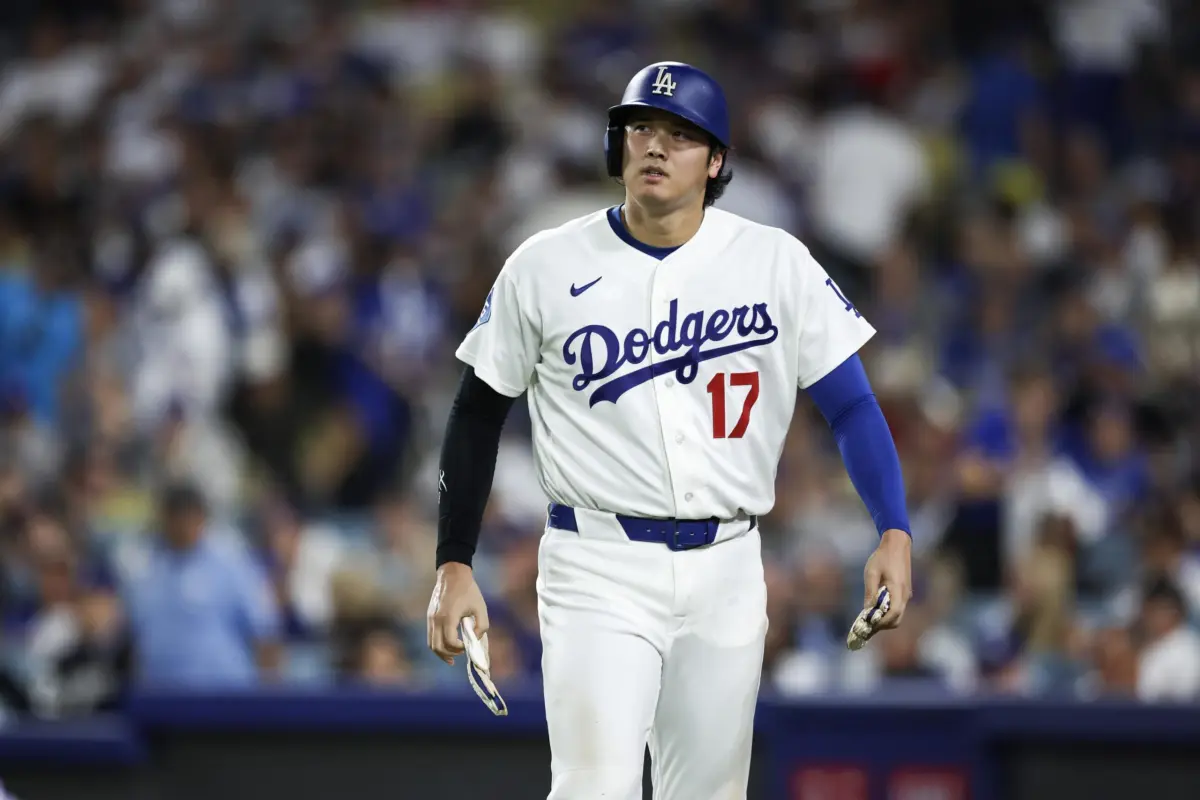
The Major League Baseball postseason has finally arrived, bringing with it the ultimate slate of drama, high stakes, and renewed optimism. A grueling 162-game regular season has been whittled down to a field of 12 playoff-bound franchises. The race right down to the wire provided unforgettable theatre, highlighted by the Houston Astros and the Philadelphia Phillies both securing their respective postseason tickets on the very final day of the regular season.
Now, the past six months of grueling play are wiped clean. Records across the board officially reset to 0-0, meaning all 12 remaining contenders technically possess an equal path to capturing the Commissioner’s Trophy. At least, that is how the theory goes on paper. In reality, a closer inspection of roster health, recent momentum, pitching depth, and structural flaws reveals that some teams are vastly better positioned than others as the October gauntlet gets underway.
Here is how all 12 teams in the MLB playoffs stack up, ranked from bottom to top by their actual chances of running the table and winning the World Series.
12. Houston Astros (81-81)
The Houston Astros carved their name into the baseball history books this season by becoming the first division champion in MLB history to capture a crown without finishing the year with a winning record. Finishing dead-even at 81-81, the Astros nevertheless managed to outlast their AL West rivals.
Offensively, this remains a terrifying group that can mash with the best of them. Houston led the entire majors with 226 home runs during the regular season, spearheaded by American League MVP candidate Yordan Alvarez, who launched 42 long balls. Four other regulars in the Astros lineup also cleared the 20-home-run plateau: Christian Walker, Jeremy Peña, Isaac Paredes, and Cam Smith.
The glaring vulnerability for Houston, however, lies on the mound. The pitching staff struggled immensely over 162 games, finishing 24th in Major League Baseball in team ERA and 21st in WHIP. Closer Josh Hader was brilliant down the stretch, locking down 16 saves in the second half while posting an elite 0.682 WHIP, and Bryan Abreu provided dependable high-leverage work ahead of him. Beyond that dynamic duo, the bullpen has looked distinctly fragile. If the starting rotation fails to work deep into games, the Astros could see a very short postseason stay.
11. Chicago White Sox (84-78)
After enduring the agony of losing more than 100 games in each of the three preceding seasons, the Chicago White Sox authored one of the most heartwarming turnaround stories in recent baseball memory. They commanded the upper hand in the American League Central for the vast majority of the summer before ultimately sliding into the postseason picture via a Wild Card berth.
Chicago’s resurgence is fueled by an explosive lineup featuring three distinct sluggers who each surpassed the 30-home-run mark: Munetaka Murakami, Colson Montgomery, and Miguel Vargas. As a collective unit, the White Sox posted a stellar .320 on-base percentage, trailing only the Tampa Bay Rays in the American League.
The ultimate obstacle standing between Chicago and a deep October run, however, is their starting pitching. White Sox starting pitchers labored to a collective 4.60 ERA, ranking 26th in the majors, alongside a 1.34 WHIP that sat 25th overall. That sets up a formidable opening hurdle in their Wild Card Series matchup against the Houston Astros. On the bright side, the South Siders enter the dance knowing they have the Pope firmly on their side.
10. Philadelphia Phillies (88-74)
The Philadelphia Phillies cut their magic number for postseason qualification down to a single win after defeating the Milwaukee Brewers early last week. What followed, however, was a jarring stumble. Philadelphia dropped their next four consecutive games by a combined score of 23-3, forcing them to sweat out a playoff berth until the final afternoon of the regular season.

The star-studded roster ultimately took care of business on Sunday, capturing the final National League Wild Card spot with a 7-3 victory over the Tampa Bay Rays. Now, they must immediately pivot to a dangerous series against the Atlanta Braves and prove their doubters wrong. The star power is undeniable, with Kyle Schwarber, Bryce Harper, and Trea Turner anchoring the lineup, while Jhoan Duran anchors the bullpen as one of the most lockdown closers in the sport.
Rotation concerns, nevertheless, loom large. Zack Wheeler and Cristopher Sánchez lead the starting staff, but manager Don Mattingly was forced to deploy Sánchez in the regular-season finale, complicating his availability for the opening series. Meanwhile, Aaron Nola is attempting to bounce back from an up-and-down regular season after making a spot start on short rest. Whether a fatigued rotation and an occasionally shaky bullpen can hold the fort remains the definitive question in Philadelphia.
9. Cleveland Guardians (85-77)
While the Chicago White Sox captured widespread attention as one of the season’s premier surprises, it was the Cleveland Guardians who steadily outpaced the competition to claim the AL Central crown and a coveted first-round playoff bye.
Cleveland’s reward for a brilliant regular season is twofold: they secure home-field advantage for their first series after the bye against the winner of the Houston-Chicago Wild Card matchup, and they completely avoid running into any powerhouse AL East squads until a potential American League Championship Series appearance.
The Guardians are driven primarily by pitching excellence. Cleveland boasts a remarkably stout rotation headed by Gavin Williams and Parker Messick, which produced the ninth-best starting ERA in baseball. Even more impressive is their shutdown bullpen, led by closer Cade Smith and a trio of elite setup arms in Hunter Gaddis, Eric Sabrowski, and Tim Herrin, which combined to post the sixth-best bullpen ERA in the majors. If the Cleveland offense can provide just enough run support, this pitching factory could easily carry them deep into October.
8. Boston Red Sox (87-75)
A disastrous opening stretch to the season cost manager Alex Cora his job, prompting the Boston Red Sox to orchestrate a breathtaking 32-5 surge that forcefully thrust them into the thick of the playoff race.
Boston ultimately cooled off from that blazing summer pace, leaving several lingering question marks as they cross the threshold into the postseason. One primary concern involves the overall health of the roster. Ceddanne Rafaela has returned after missing 16 games due to a quad injury, but questions remain about whether Willson Contreras will be fully recovered after taking a pitch directly to his right hand during the final week of the season. Additionally, the offense struggled noticeably through September, posting a meager .651 team OPS over the final month.
Pitching, thankfully, is not an issue. The starting trio of Payton Tolle, Sonny Gray, and Ranger Suárez stands among the finest remaining rotations in the tournament, while Aroldis Chapman continues to deliver high-velocity dominance at the back of the bullpen. Boston could even welcome back Garrett Crochet for relief duty, while Tanner Houck—who miraculously made his return to start Game 162 more than 500 days after his last MLB appearance following Tommy John surgery—adds another intriguing arm to the mix. The ultimate X-factor for Boston will simply be which version of the team chooses to show up.
7. Chicago Cubs (89-73)
The Chicago Cubs feature one of the most dynamic offenses in the entire sport, spearheaded by MVP candidate Pete Crow-Armstrong, who etched his name in history by becoming the first center fielder in MLB history to achieve a 40/40 season. This explosive lineup led the major leagues with a combined .767 OPS and a .428 slugging percentage. Beyond Crow-Armstrong, the supporting cast provided immense power, with Alex Bregman, Ian Happ, Michael Busch, and Seiya Suzuki all clearing the 20-home-run threshold.
Defensively, the Cubs are equally formidable, largely due to Crow-Armstrong’s extraordinary range in center field. He posted an astonishing Fielding Run Value of +26 this season, leading all major league defenders, while the Cubs as a team paced the league with a +72 FRV.

The persistent hurdle for Chicago, however, is the pitching staff. Cubs starters labored to a 4.27 team ERA, the highest among all National League playoff qualifiers, and the team surrendered the third-most home runs in the majors. A rotation already dealing with durability concerns received another fright when Kevin Gausman suffered a non-throwing shoulder injury during a tag play last week. Manager Craig Counsell desperately needs him available for their upcoming series against the San Diego Padres. The Cubs possess the offense and defense to win plenty of ballgames, but their pitching depth faces a monumental stress test.
6. San Diego Padres (91-71)
If team momentum could be quantified scientifically, the San Diego Padres would be registering off the charts. The Padres put together a blistering 17-11 run through August followed by an 18-6 tear in September to decisively lock down a Wild Card spot. This represents a remarkable redemption arc for a franchise that was actively discussed as a potential trade-deadline seller earlier in the year.
Outfielder Fernando Tatis Jr. anchored the charge, recovering from an empty home run column through his first 55 games to finish the year with 25 homers and 38 stolen bases following a scorching finish. Meanwhile, Jackson Merrill shook off a sluggish start to finish with 26 home runs and 27 steals, giving San Diego their first-ever 25/25 tandem in franchise history. As a cohesive offensive unit, the Padres ranked second in both OPS and slugging percentage following the All-Star break, trailing only the Cubs.
Complementing the offense is a formidable bullpen anchored by closer Mason Miller, who is currently operating at the peak of his powers, backed reliably by setup men Adrian Morejon and Bradgley Rodriguez. San Diego will host the Cubs in the Wild Card Series; while Chicago won the regular-season series 5-1, those meetings occurred long before the Padres ignited their late-season surge.
5. New York Yankees (93-68)
When the New York Yankees were forced to navigate an extended stretch of the regular season without superstar Aaron Judge, the remainder of the lineup rose admirably to the challenge. Although Judge ultimately appeared in just 66 games and hit 18 home runs, the Yankees as a team still mashed 223 long balls, finishing second overall in the major leagues.
With Judge’s immediate availability for the Wild Card Series against Boston remaining uncertain, the supporting cast will once again be tasked with carrying the offensive burden. A matchup against the Red Sox presents an exceptionally stiff challenge, as Boston is expected to deploy a formidable pitching trio of Payton Tolle, Sonny Gray, and Ranger Suárez, supported by one of the premier bullpens in the game. Navigating that pitching gauntlet without Judge’s bat in the middle of the order will require an immense team effort.
4. Atlanta Braves (94-67)
While the Atlanta Braves undoubtedly would have preferred to secure a coveted first-round bye, finding themselves mathematically out of reach of the Los Angeles Dodgers and Milwaukee Brewers turned out to have a silver lining. It allowed Atlanta to meticulously line up their starting rotation for the Wild Card Series over the final week of the schedule.
Ace Chris Sale made his final regular-season start last Wednesday on extra rest and will take the ball for Game 1 operating on that same comfortable schedule. The identical strategy applies to Tyler Mahle, who will similarly benefit from extra rest ahead of a projected Game 2 start.
Furthermore, the Braves draw a pairing with the Philadelphia Phillies in the opening round. The Phillies gave their fanbase considerable anxiety over the final days of the regular season by dragging out their playoff qualification until the absolute final out of Game 162.
3. Tampa Bay Rays (98-64)
Few pundits gave the Tampa Bay Rays a realistic chance when the 2026 campaign originally got underway. Many analysts initially relegated the Rays to longshot status alongside the Diamondbacks, Athletics, and Twins.

Yet here stand the Rays, perched proudly as the champions of the formidable AL East and one of the absolute teams to beat in the American League. MVP candidate Junior Caminero delivered monstrous production for Tampa Bay, slashing .276/.360/.524 while launching 42 home runs to anchor an offense that applies relentless pressure from top to bottom. As a team, the Rays batted .258, leading the American League and tying the Brewers for the top batting average in the majors, while their .728 team OPS ranked second in the AL behind only Houston.
When paired with a pitching staff that posted a major-league-best 1.14 team WHIP—sharing that elite defensive distinction with the Dodgers—the Rays possess all the necessary ingredients to orchestrate a deep October run.
2. Los Angeles Dodgers (100-62)
The Los Angeles Dodgers followed their familiar script by roaring out of the gates with a scorching start, only to endure a troubling mid-season slump that prompted heavy skepticism regarding their potential to secure a three-peat. However, the Dodgers enter the postseason having emphatically answered those questions.
Kyle Tucker’s prolonged season-long slump appears to have evaporated right on schedule for the playoffs, as he slashed an imposing .266/.362/.557 through the month of September in his finest stretch of the year. Both Shohei Ohtani and Will Smith have returned to anchor the batting order, while closer Edwin Díaz has rediscovered his untouchable form, pitching flawlessly across four September appearances with just one hit allowed and eight strikeouts. Mookie Betts has similarly returned to elite form, slashing .345/.447/.690 over the final month.
When an organization has tasted championship glory as frequently as the Dodgers, they inherently understand when to flip the switch. Los Angeles appears to have executed that transition precisely over the past thirty days.
1. Milwaukee Brewers (103-59)
The Milwaukee Brewers occupy the top spot in these postseason power rankings after officially surpassing the 100-win plateau for the first time in franchise history.
For this club, however, the ultimate test arrives squarely in October. The Brewers have now captured the National League Central crown in four consecutive seasons and five of the past six years. Yet their tangible postseason reward for that sustained dominance has yielded just two playoff series victories, punctuated by a frustrating sweep at the hands of the Dodgers in last year’s NLCS.
Jacob Misiorowski gives Milwaukee a bona fide, terrifying ace. The towering right-hander dominated the majors this season, leading the sport in ERA (1.86), ERA+ (225), WHIP (0.803), and strikeouts per nine innings (13.1). He is ably supported by Logan Henderson, who has blossomed into a dependable No. 2 starter. If left-hander Kyle Harrison can somehow recapture his brilliant first-half form—he posted an 8-2 record with a 3.01 ERA prior to the All-Star break before struggling to a 3-3 record and a 7.31 ERA down the stretch—the Brewers just might finally break through and conquer the baseball world.